Departure

Return


Loading

Casablanca Travel from Canada: The Complete Guide

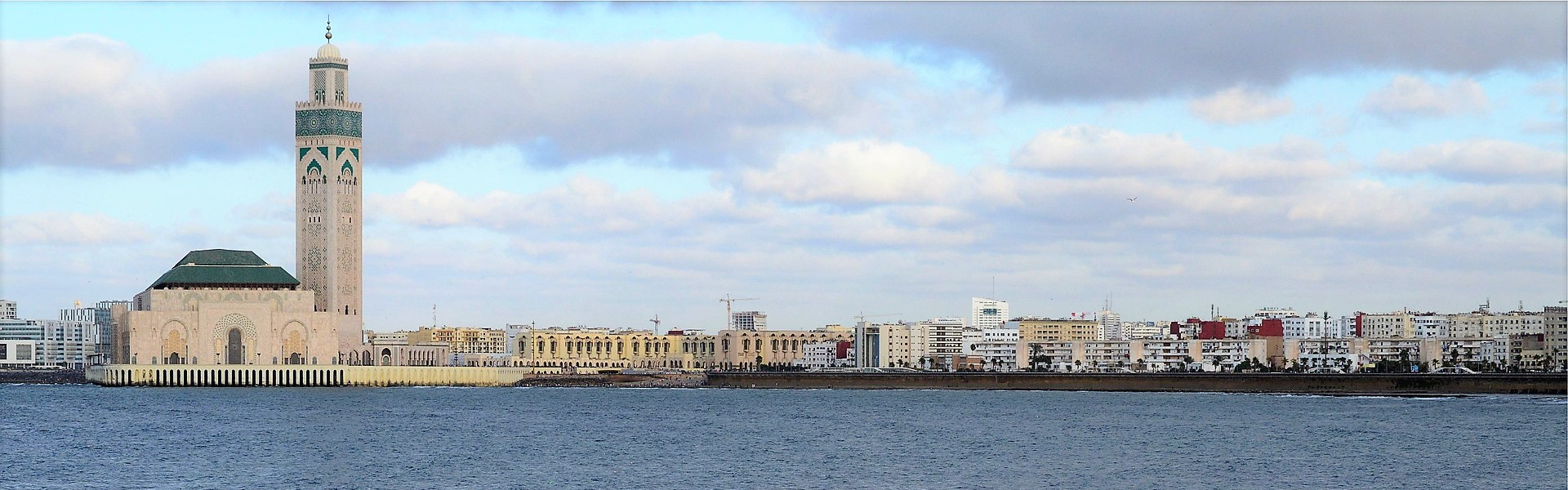
Casablanca is the easiest Moroccan city to reach from Canada: Air Canada and Royal Air Maroc fly nonstop from Montréal in about 7 hours, and Royal Air Maroc has flown nonstop from Toronto since December 2024, in roughly 7 hours 20 minutes. Canadian citizens do not need a visa for stays under 90 days in Morocco. The kingdom's economic capital runs on business more than tourism, which is exactly what makes it interesting: this is today's Morocco, from skyscrapers to the Art Deco downtown of the protectorate years and the vast Hassan II Mosque set over the Atlantic. An oceanic climate keeps temperatures mild in every season. Most travellers give it two or three days before taking the train on to Rabat, Fès or Marrakech.

The essentials at a glance

QuestionAnswer
Flight from CanadaNonstop from Montréal in about 7 h (Air Canada, Royal Air Maroc) and from Toronto in about 7 h 20 min (Royal Air Maroc)
Visa for CanadiansNo visa for stays under 90 days
Time difference5 hours ahead of Eastern Time in summer, 6 in winter (one hour less during Ramadan)
CurrencyMoroccan dirham (MAD); 1 MAD is worth about $0.15 CAD
LanguageArabic and Amazigh (official); French everywhere, English common in hotels
Best time to goApril to June and September to November; pleasant nearly year-round
DrivingRight-hand side; dense traffic, tram and taxis more practical in town
Electricity220 V, type C and E plugs; adapter needed

Why Casablanca

Casablanca is the logical gateway to Morocco for Canadians: the nonstop flights from Montréal and Toronto land here, and the airport rail link puts downtown about 40 minutes away. Rather than rushing through, give it two days. The city rewards walkers: protectorate-era boulevards, Art Deco facades from the 1920s and 1930s, a central market piled with fresh fish, and cafés where businessmen share tables with regulars in djellabas.

The Hassan II Mosque alone justifies the stop. Completed in 1993 on a platform reclaimed from the ocean, it holds 25,000 worshippers inside, and its minaret, among the tallest in the world, dominates the entire coastline. Unusually for Morocco, non-Muslims can visit on guided tours, offered in English and French. The craftsmanship on display, from zellige tilework to carved plaster and painted cedar, is a masterclass in Moroccan artisanship before you ever set foot in a medina.

Casablanca also shows the country's most contemporary face. The Gauthier and Anfa districts line up creative restaurants, galleries and terraces; the Aïn Diab Corniche draws families and joggers along the Atlantic; and the Morocco Mall, one of Africa's largest shopping centres, anchors the end of the seafront. This urban energy, absent from the more touristic cities, makes a useful counterpoint before the souks of Marrakech or Fès.

When to go

PeriodClimate and atmosphereVerdict
December to February13 to 18 °C by day, possible rain, rough oceanFine for a city stopover; pack a rain jacket
March to May18 to 24 °C, clear light, busy terracesVery good window
June to AugustAround 26 °C, frequent morning haze on the coast, mild eveningsPleasant; a cool refuge while inland Morocco bakes
September to November20 to 27 °C, ocean at its warmest, less hazeThe best period
During Ramadan (February-March in the coming years)Slower days, most cafés closed until sunset outside hotels, lively nightsDoable in the city; plan lunches at your hotel

How to get there from Canada

The Canada-Casablanca link is one of the most direct between North America and Africa. From Montréal-Trudeau, Air Canada and Royal Air Maroc fly nonstop in about 7 hours, with up to two daily departures in high season. From Toronto Pearson, Royal Air Maroc has operated nonstop service since December 2024, in roughly 7 hours 20 minutes. Overnight flights leave in the late afternoon or evening and land at Mohammed V Airport in the morning, so you start your first day without losing time. Royal Air Maroc then connects onward to Marrakech, Agadir, Fès and Ouarzazate.

From the terminal, trains reach Casa Voyageurs and Casa Port stations in 40 to 45 minutes at a modest fare, while official white grand taxis take about 30 minutes depending on traffic. In town, combine walking, the modern tramway and small red metered taxis. To continue across the country, Casa Voyageurs is Morocco's rail hub: Rabat in about an hour, Marrakech in 2 hours 40 minutes, and Tangier in just over two hours on the Al Boraq high-speed train.

Casablanca's neighbourhoods and highlights

The Hassan II Mosque and the seafront

Set above the waves, the mosque can only be visited on guided tours at fixed times, outside prayer hours, with English and French departures. Expect a retractable-roof prayer hall, monumental hammams below ground and an esplanade swept by sea spray; allow about an hour and dress to cover shoulders and knees. Come early for morning light on the minaret.

The Art Deco downtown

Between Place Mohammed V and the boulevard of the same name, the 1920s left an ensemble of Art Deco and neo-Moorish architecture unique in Africa: the Rialto cinema, wrought-iron balconies, the central post office, the courthouse. Look above the shop signs; the best details sit on the upper floors. The Marché Central nearby serves Oualidia oysters and grilled fish at lunch.

The old medina

More modest than those of Fès or Marrakech, the old medina takes about an hour to wander, past neighbourhood stalls, laundry lines and small mosques. It offers a genuine slice of working-class Casablanca life, provided you keep your camera discreet and an eye on your pockets. Rick's Café, a careful recreation of the 1942 film set, occupies a mansion at the medina's edge.

The Habous quarter

Built by the French in the 1920s as an idealized medina, the Habous new medina lines up regular arcades, bookshops, famous patisseries (gazelle horns at Bennis Habous) and craft shops with gentler prices than Marrakech. The olive market and the Mahkama du Pacha, a former courthouse with ornate halls, round out the stroll.

The Aïn Diab Corniche and Anfa

Facing the Atlantic, the Corniche strings together pools, cafés and beach clubs for several kilometres, out to the El Hank lighthouse and the Morocco Mall. Hillside Anfa hides villas and some of the country's best restaurants. This is family Casablanca on Sundays, and the right place to end the day at sunset.

Rabat, the easy day trip

An hour by train from Casa Port, the UNESCO-listed capital is walkable: the Kasbah of the Udayas above the Bouregreg estuary, the Hassan Tower, the Mausoleum of Mohammed V and a peaceful medina. Frequent departures make it the simplest add-on to a Casablanca stay.

The budget, in Canadian dollars

ItemBudgetComfortHigh end
Round-trip flight from Montréal$900 to $1,100$1,100 to $1,500$2,500 to $4,500 (business)
Accommodation (per night, 2 people)$70 to $130$140 to $280$300 to $700
Meals (per day, per person)$20 to $35$40 to $75$90 to $160
Local transport (per day)$3 to $10$15 to $35$70 to $150 (car with driver)
Activities and visits (per day)$10 to $25$25 to $55$70 to $150

These ranges are provided as a guideline only, based on rates and prices observed in 2025-2026. As a business city, Casablanca's hotels run slightly above the Moroccan average on weekdays; weekends often bring better rates at business-oriented properties.

Entry requirements and health for Canadian citizens

  • Visa: no visa required for tourist stays under 90 days in Morocco.
  • Passport: valid for at least six months beyond your planned departure date.
  • Official advisory: the Government of Canada advises a high degree of caution in Morocco due to the threat of terrorism. Check travel.gc.ca for updates before departure.
  • Health: hepatitis A vaccination recommended; bottled water advised even in the city. Casablanca has the country's best private clinics.
  • Travel insurance: essential; confirm coverage for private care and repatriation.
  • Money: the dirham is a closed currency; exchange on arrival and convert back before leaving. Cards are widely accepted in hotels and restaurants; carry cash for the medinas.
  • Customs: modest dress is appreciated outside business districts and the Corniche; alcohol is served only in licensed establishments.
  • Urban safety: pickpockets work the medina and train stations; use metered petits taxis or app-booked rides.

One last tip: two full days cover Casablanca's essentials, three if you add Rabat. The city makes the most sense at the start or end of a Moroccan circuit, anchored to the nonstop flights from Montréal and Toronto and to the rail network radiating from Casa Voyageurs.

Ready to land beside the Atlantic and start Morocco with its most modern city? The advisors at Voyages AquaTerra build your custom itinerary. 450-628-6241 | 1-866-628-6241 | info@voyagesaquaterra.com

Voyages AquaTerra est titulaire d'un permis du Québec.

Frequently Asked Questions

No. Canadian citizens enter Morocco visa-free for tourist stays under 90 days. Your passport must remain valid for at least six months beyond your departure date from the country.
About 7 hours nonstop from Montréal with Air Canada or Royal Air Maroc, and roughly 7 hours 20 minutes nonstop from Toronto with Royal Air Maroc, which launched the route in December 2024. These are among the shortest direct links between Canada and Africa.
The oceanic climate keeps the city pleasant nearly year-round. April to June and September to November bring days of 20 to 27 °C. Summer stays temperate around 26 °C thanks to the Atlantic, while inland Morocco swelters.
The Government of Canada advises a high degree of caution for Morocco overall, without advising against travel. In Casablanca, take big-city precautions: watch for pickpockets in the medina and around train stations, avoid deserted streets at night, and use official metered taxis or recognized ride apps.
As a guideline, budget travellers spend $1,700 to $2,200 CAD per person for a week including flights, and $2,400 to $3,500 CAD for a comfortable trip. In practice most visitors spend two or three days in Casablanca, then continue to Marrakech, Fès or Rabat.
Casablanca is 5 hours ahead of Montréal and Toronto in summer and 6 hours ahead in winter, since Morocco stays on GMT+1 all year. During Ramadan the country sets clocks back an hour, temporarily narrowing the gap.
Yes, and it is a rarity in Morocco: the Hassan II Mosque is one of the only mosques open to non-Muslims, on guided tours at fixed times, offered in several languages including English and French. Dress to cover shoulders and knees.
The train is the simplest option, linking the terminal to the central stations (Casa Port and Casa Voyageurs) in about 40 to 45 minutes. Official grand taxis take around 30 minutes depending on traffic; agree on the fare before departure or insist on the meter.
Two full days cover the Hassan II Mosque, the Art Deco centre, the Habous quarter and the Corniche. The city works best at the start or end of a Moroccan circuit, since Canadian nonstop flights land here. Add a day for Rabat, an hour away by train.
The 1942 film was shot on a Hollywood soundstage, but a restaurant named Rick's Café, opened in 2004 in a mansion by the old medina, faithfully recreates the set, piano included. Evening reservations are strongly recommended.
  • #Casablanca
  • #visit Casablanca
  • #Casablanca tourism
  • #Hassan II Mosque
  • #Casablanca beach
  • #Habous district
  • #Casablanca corniche
  • #modern downtown
  • #shopping in Casablanca
  • #Moroccan cuisine
  • #art deco architecture
  • #Casablanca port
  • #business trip Casablanca
  • #nightlife Casablanca
  • #Moroccan cinema
  • #hotel in Casablanca
  • #day trip
  • #Mohammed V International Airport
  • #Casablanca medina
  • #festivals in Casablanca
  • #