Departure
Return
Loading
Choose a country or city
Frequently Asked Questions
Yes. A visa is required for India: the e-Tourist Visa (30 days, 1 year or 5 years) is applied for online at indianvisaonline.gov.in before departure. Your passport must be valid for 6 months beyond arrival, with two blank pages.
There are no direct flights between Canada and Goa. Count on 20 to 26 hours total: Air Canada's nonstop to Delhi from Toronto or Montréal plus a domestic flight of about 2 h 45, or connections via Mumbai (1 h 15 domestic hop), Doha or Dubai.
November to March: dry weather, calm seas and 28 to 33 °C. December and January are the peak of high season. The monsoon, June to September, brings massive rain and closes most beach shacks.
The Government of Canada advises a high degree of caution in India. Goa remains one of the country's most relaxed states for visitors; the main precautions concern swimming currents, scooter riding and belongings on the beach. Check travel.gc.ca before you go.
As a guideline, plan on 2,400 to 3,900 CAD per person for one week including flights, at a comfortable mid-range level. On the ground Goa is very affordable: seafood dinners under 15 CAD and scooter rentals around 8 to 15 CAD per day.
Goa runs on India Standard Time (UTC+5:30) all year. That puts it 9 h 30 ahead of Montréal and Toronto in summer (daylight time) and 10 h 30 ahead in winter (standard time).
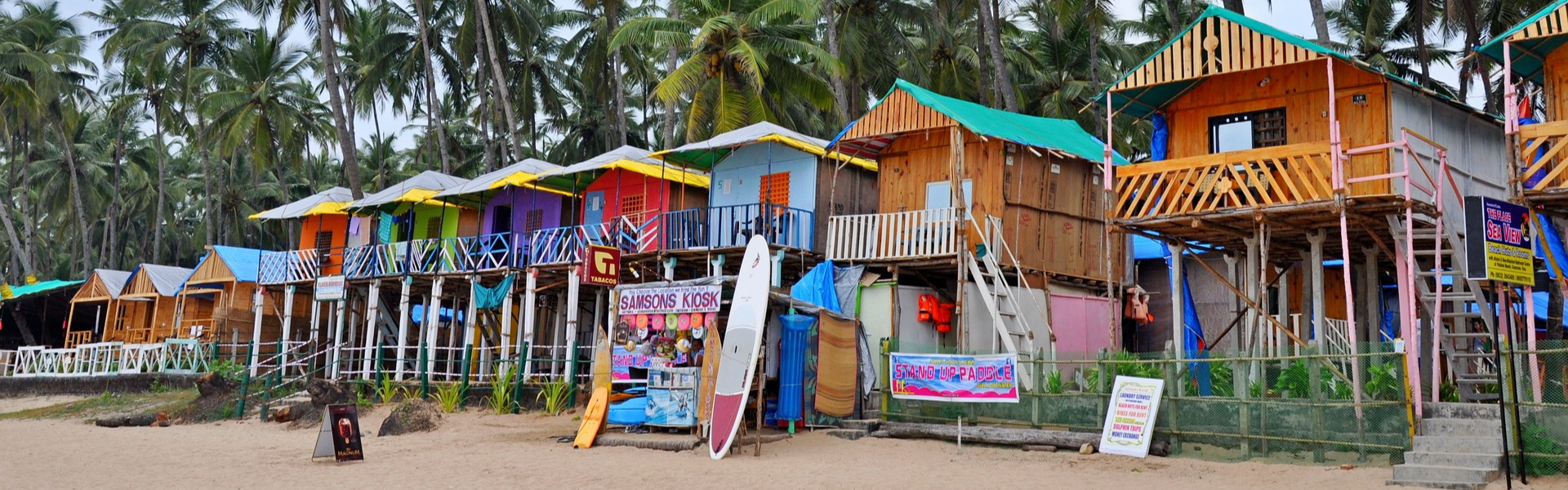
The north (Baga, Calangute, Anjuna) concentrates the action: markets, beach bars, nightlife. The south (Palolem, Agonda, Colva) offers longer, cleaner, quieter beaches with resorts set among the palms. Couples and families generally prefer the south.
Goa has two airports: Dabolim (GOI), central and handy for the southern beaches, and Manohar International at Mopa (GOX), opened in 2023 in the state's north. Match your airport to your hotel zone; the two halves of Goa sit about an hour's drive apart.
Yes, it is the most common way to get around, at roughly 8 to 15 CAD per day. An international driving permit is required, helmets are mandatory and traffic keeps to the left. Ride in daylight only: narrow roads and unpredictable traffic demand experience.
Yes from November to March, when the Arabian Sea is calm; stay within lifeguarded zones and respect the flags. Currents turn dangerous during and around the monsoon, from May to September, when swimming is strongly discouraged.


