Departure

Return


Loading

Hotels of Sicily

Sicily Travel from Canada: The Complete Guide

Sicily now has its first nonstop link with Canada: Air Canada flies direct from Montréal to Catania three times a week from June 4 to October 22, 2026, a trip of about 9 hours. From Toronto, one-stop routings via Montréal, Rome or Frankfurt take 11 to 14 hours. Canadian citizens do not need a visa for stays of 90 days or less in the Schengen area. The Mediterranean's largest island packs Greek temples among the best preserved anywhere, UNESCO-listed baroque towns and Mount Etna, an active volcano above 3,300 metres that you can climb by cable car and 4x4. May, June, September and October offer the best mix of warmth, sea and manageable crowds. As a guideline, plan on 2,400 to 3,800 Canadian dollars per person for a week, flight included.

The essentials at a glance

QuestionAnswer
Flight from CanadaNonstop Montréal-Catania with Air Canada (about 9 h, June to October 2026); from Toronto, one stop via Montréal, Rome, Frankfurt or Munich (11 to 14 h)
Visa for CanadiansNone for stays of 90 days or less in the Schengen area
Time difference6 hours ahead of Montréal and Toronto (briefly 5 hours around the March and late-October clock changes)
CurrencyEuro (€); 1 € is worth about 1.62 Canadian dollars
LanguageItalian; Sicilian is widely spoken; English is common in tourist areas
Best time to goMay, June, September and October
DrivingOn the right; an International Driving Permit is recommended; watch for ZTL restricted zones in historic centres
Electricity230 V, 50 Hz; type C, F and L plugs (adapter required)

Why Sicily

Sicily concentrates on one island what the rest of Italy spreads across twenty regions. The Valley of the Temples at Agrigento lines up Doric temples better preserved than many sites in Greece, the ancient theatre of Taormina frames both Mount Etna and the Ionian Sea, and the baroque towns of the Val di Noto, rebuilt after the 1693 earthquake, hold UNESCO World Heritage status. Between visits, the food does the rest: arancini, pasta alla norma, cannoli and lemon granita cost under 15 Canadian dollars a meal in the markets of Palermo or Catania.

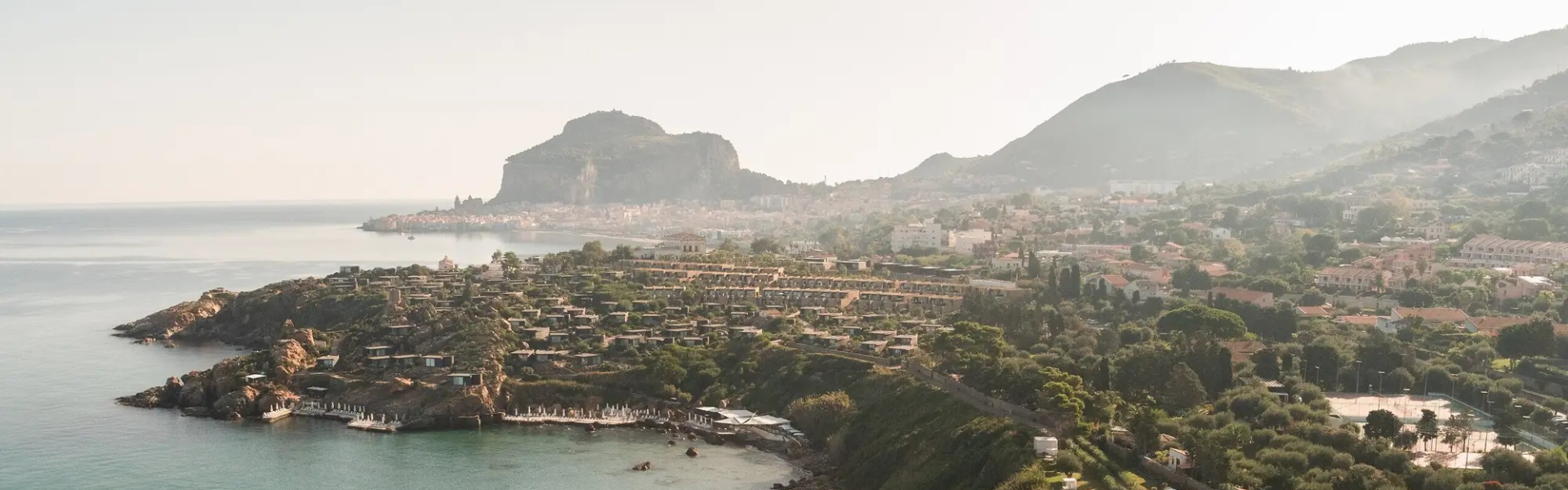
The island also remains more affordable than Tuscany or the Amalfi Coast. Like-for-like accommodation typically runs 20 to 30 percent less than in Florence or Positano, and a full restaurant meal stays under 30 euros outside the busiest spots. The scenery shifts with every hour on the road: sandy beaches at San Vito Lo Capo, the white marl cliff of the Scala dei Turchi, vineyards planted in Etna's black lava and hill villages such as Erice and Castelmola.

Sicily also pairs naturally with the mainland. Domestic flights link Catania and Palermo to Rome, Naples and Milan in just over an hour, which makes it easy to bolt the island onto a classic itinerary like those in our Italy travel guide. Just plan for a different pace: inland roads are slow, and that is usually where the island shows its best side.

When to go

PeriodClimate and atmosphereVerdict
November to MarchMild (10 to 16 degrees), passing showers, a quiet island, snow on Etna's summitFor crowd-free archaeological sites and the lowest prices
April to May18 to 25 degrees, countryside in bloom, sea still coolExcellent for culture, hiking and the cities
JuneHot and dry, sea around 23 degrees, crowds still reasonableOne of the best months of the year
July to AugustVery hot (often above 32 degrees), packed beaches, peak pricesFor beach time above all, if the heat does not put you off
SeptemberThe warmest sea of the year, easing heat, grape harvestThe best overall compromise; book early
October20 to 25 degrees, soft light, swimming still possible early in the monthA very good choice, especially in the southeast

How to get there from Canada

From June 4 to October 22, 2026, Air Canada links Montréal-Trudeau to Catania nonstop, the first direct route between Canada and Sicily. The Boeing 787-8 departs Tuesday, Thursday and Saturday in the early evening and lands late the next morning after roughly 9 hours; returns leave Catania on Wednesday, Friday and Sunday. Torontonians can connect through Montréal on a single ticket, which protects the connection and checks bags through. Seats sell quickly for July through September, so book several months ahead.

Outside the season, plan on one stop: ITA Airways via Rome, or Air Canada and Lufthansa via Frankfurt, Munich or Zurich serve both Catania and Palermo in 11 to 14 hours overall from Montréal or Toronto. The airport you choose shapes the trip: Catania-Fontanarossa opens onto the east (Taormina, Syracuse, Mount Etna), while Palermo serves the west (Cefalù, Trapani, Agrigento). An open-jaw ticket, into Catania and out of Palermo, saves you from backtracking across the island.

The must-see regions of Sicily

Palermo and Monreale

Sicily's capital is best experienced through its markets, Ballarò and Il Capo, where street-fried snacks cost a few euros and are eaten standing up. The Palatine Chapel, sheathed in gold-ground Byzantine mosaics, justifies the stop on its own, as does Monreale Cathedral, 20 minutes from the centre, whose mosaic cycle ranks among the largest of the medieval world. Give the city at least two nights and keep an evening for the Kalsa district.

Mount Etna and Catania

Europe's highest active volcano rises above 3,300 metres and can be visited year-round. From Rifugio Sapienza, a cable car climbs to about 2,500 metres, then guided 4x4s continue toward 2,900 metres when activity permits; pack warm layers even in August. On the lower slopes, nerello mascalese vineyards produce some of Italy's most sought-after reds, and Catania itself, rebuilt in lava stone after 1693, deserves a day for its fish market and the via Etnea.

Taormina

Taormina's Greco-Roman theatre delivers the most photographed view in Sicily, with Etna smoking behind the stage. The town unfolds along the Corso Umberto, between palazzi, flowered lanes and café terraces; a cable car drops to the sea and the beach at Isola Bella. Summer crowds are real: visit the theatre at opening or late in the day, and sleep in Castelmola or Giardini Naxos to soften the bill.

Syracuse and the Val di Noto

Syracuse rivalled Athens in antiquity, and its island of Ortigia remains one of Italy's finest historic centres: a cathedral built around a Greek temple, the Arethusa spring and a lively morning market. The Neapolis archaeological park holds a 15,000-seat Greek theatre and the cave known as the Ear of Dionysius. Within an hour, Noto, Modica and Ragusa Ibla stage the island's most theatrical baroque; in Modica, try the cold-worked chocolate made to an Aztec-era recipe.

Agrigento and the south coast

The Valley of the Temples at Agrigento, Italy's Capital of Culture in 2025, lines seven Doric temples along a ridge facing the sea; the Temple of Concordia, nearly intact after 2,400 years, is at its best in late-afternoon light. Fifteen minutes away, the white marl cliff of the Scala dei Turchi drops into turquoise water. The quieter south coast also hides the UNESCO-listed Roman mosaics of the Villa del Casale at Piazza Armerina.

Trapani, Erice and the western islands

Western Sicily plays a different tune: windmill-dotted salt pans between Trapani and Marsala, the medieval village of Erice reached by cable car at 750 metres, and the lone Doric temple of Segesta. Offshore, the Egadi Islands, including Favignana and its glass-clear coves, are 30 minutes away by hydrofoil. It is the ideal corner for ending the trip slowly, glass of marsala in hand.

The budget, in Canadian dollars

ItemBudgetComfortHigh end
Round-trip flight from Montréal$900 to $1,200$1,200 to $1,800$2,500 and up (business class)
Accommodation (per night, 2 people)$90 to $150$160 to $300$350 to $800
Meals (per day, per person)$40 to $60$70 to $110$130 and up
Local transportation (per day)$10 to $25 (train, bus)$35 to $70 (rental car)$100 and up (private driver)
Activities and sightseeing (per day)$10 to $25$30 to $60$100 and up (Etna by 4x4, private guides)

These ranges are provided as a guideline, based on rates and prices observed in 2025-2026. They shift with the season and the exchange rate; in July and August, coastal accommodation easily climbs 30 to 50 percent, while winter brings the same addresses well below these figures.

Entry requirements and health for Canadian citizens

  • Visa: no visa is required for tourist stays of 90 days or less in the Schengen area, counted over any 180-day period.
  • Passport: it must be valid for at least 3 months beyond your planned departure from the Schengen area; a 6-month buffer is a prudent habit.
  • EES: the European Entry/Exit System, in force since October 2025, records your photo and fingerprints on your first entry into the Schengen area. Allow a few extra minutes at border control.
  • ETIAS: this electronic travel authorization is not yet in force; its launch is expected in late 2026. Check travel.gc.ca before departure.
  • Official advisory: the Government of Canada advises exercising a high degree of caution in Italy due to the threat of terrorism in Europe. On the ground, the most concrete risk remains pickpocketing at busy tourist spots.
  • Health: make sure routine vaccinations are up to date, including measles. Tap water is safe to drink; in summer, the heat calls for steady hydration and avoiding shade-free sites at midday.
  • Travel insurance: essential, since provincial health plans reimburse only a fraction of care received abroad. Confirm coverage for activities such as the Etna ascent.
  • Driving: an International Driving Permit is recommended in Italy. Beware of camera-enforced ZTL zones in historic centres, which generate fines that follow you back to Canada.

One last tip: a week lets you dig into one side of the island, either the east (Catania, Mount Etna, Taormina, Syracuse) or the west (Palermo, Trapani, Agrigento); allow twelve to fifteen days for the full loop. Sicily also pairs well with the Aeolian Islands, reached by hydrofoil from Milazzo, or with Rome and Naples thanks to short domestic flights.

Ready to watch Etna smoke from the stands of a Greek theatre? The advisors at Voyages AquaTerra build your custom itinerary. 450-628-6241 | 1-866-628-6241 | info@voyagesaquaterra.com

Voyages AquaTerra is a holder of a Québec permit.

Frequently Asked Questions

No visa is required for tourist stays of 90 days or less in the Schengen area, which includes Italy. Your passport must remain valid for at least 3 months beyond your planned departure from the Schengen area. Since October 2025, the EES border system records your photo and fingerprints on first entry; the ETIAS travel authorization, expected in late 2026, is not yet in force.
Air Canada flies nonstop from Montréal to Catania in about 9 hours, three times a week from June 4 to October 22, 2026. From Toronto, one-stop itineraries via Montréal, Rome, Frankfurt or Munich take roughly 11 to 14 hours to Catania or Palermo.
May, June, September and October strike the best balance: 22 to 28 degrees, a warm sea and thinner crowds at the major sites. July and August regularly top 32 degrees, with packed beaches and peak prices. Winter stays mild at around 15 degrees, ideal for archaeological sites without the crowds.
The Government of Canada advises exercising a high degree of caution in Italy due to the threat of terrorism in Europe, an advisory that covers the whole country. In practice, the main risk for visitors is pickpocketing in markets, stations and public transit. Violent crime very rarely affects tourists.
As a guideline, budget 2,400 to 3,800 Canadian dollars per person for a week at a mid-range level, flight included. A budget-minded trip in low season can come in around 1,900 dollars, while a high-end itinerary with five-star hotels and private guides easily passes 5,500 dollars.
Sicily runs 6 hours ahead of Montréal and Toronto for most of the year. The gap briefly narrows to 5 hours for two to three weeks in March and about a week in late October and early November, because Europe and North America change their clocks on different dates.
A car is the best way to explore the interior, the south coast and the hill towns. In the cities, park it: Palermo and Catania are walkable, and their historic centres are full of camera-enforced ZTL restricted-traffic zones that generate steep fines. Trains link Palermo, Cefalù, Catania, Taormina and Syracuse well if you stick to the coasts.
Yes, and it is one of the island's defining experiences. From Rifugio Sapienza at about 1,900 metres, a cable car climbs to around 2,500 metres, and guided 4x4 vehicles continue toward 2,900 metres when volcanic activity allows. Bring warm layers even in summer: it is often 15 to 20 degrees colder than at the coast.
Catania suits a first trip focused on the east: Mount Etna, Taormina and Syracuse are all within about 90 minutes, and the Montréal nonstop lands there. Palermo is the natural base for the west, with Monreale, Cefalù, Trapani and Agrigento within driving range. The smart play is an open-jaw ticket, arriving at one airport and departing from the other.
Easily. Domestic flights connect Catania and Palermo to Rome, Naples and Milan in just over an hour, often for under 150 Canadian dollars. The Aeolian Islands, including the active volcano of Stromboli, are reached by hydrofoil from Milazzo. Allow at least twelve days to pair Sicily with Rome or the Amalfi Coast at a reasonable pace.
  • #Travel
  • #Tourism
  • #Sicily
  • #Italy
  • #Visit
  • #Destinations
  • #History
  • #Culture
  • #Cuisine
  • #Art
  • #Island
  • #Beaches
  • #Mountains
  • #Volcanoes
  • #Archaeological Sites
  • #Palermo
  • #Catania
  • #Agrigento
  • #Syracuse
  • #Nature
  • #Hiking
  • #Diving
  • #Budget
  • #Tips
  • #Itineraries
  • #Weather
  • #Language
  • #Transportation
  • #Accommodation
  • #Activities.