Departure

Return


Loading

Bangkok Travel from Canada: The Complete Guide

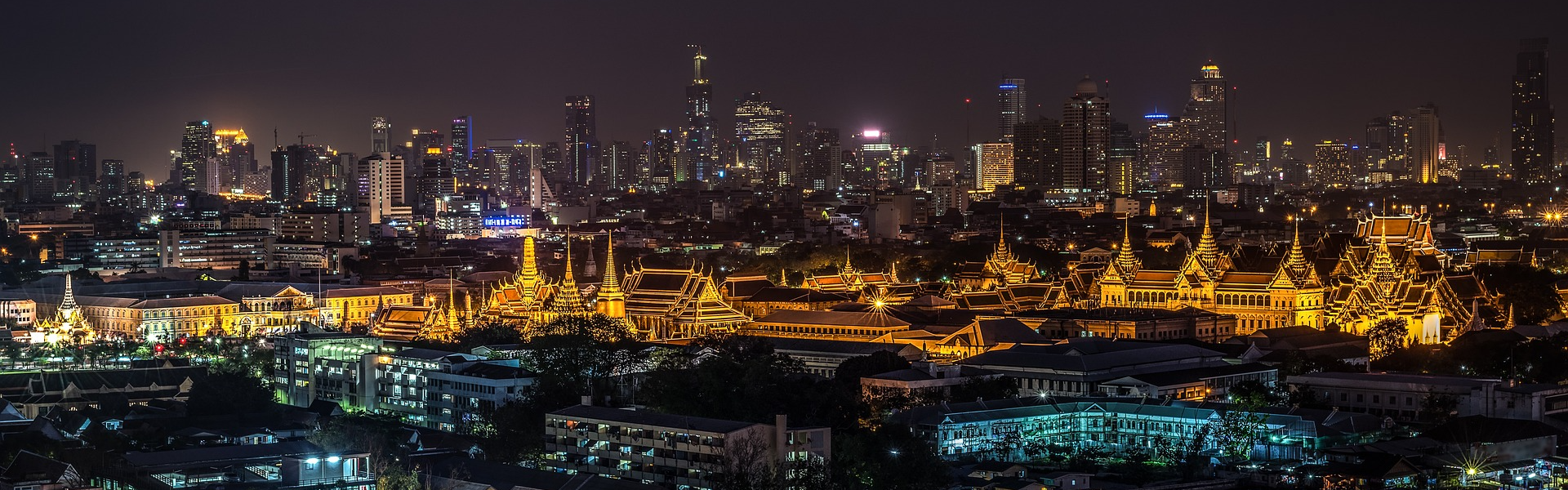
Bangkok is reachable from Montréal and Toronto with a single stop, most often through Doha with Qatar Airways, Istanbul with Turkish Airlines or Taipei with EVA Air, for a total journey of about 20 to 23 hours. Canadian citizens enter Thailand under a 60-day visa exemption, provided they complete the Thailand Digital Arrival Card (TDAC) online before departure. The Thai capital is at its best from November to February, when the heat eases and rain becomes scarce. Home to more than 10 million people, the city layers royal temples, street markets, glass towers and one of the world's great food scenes. Three or four nights cover the essentials, and Bangkok doubles as the natural hub for the rest of Thailand.

The essentials at a glance

QuestionAnswer
Flight from CanadaOne stop from Montréal or Toronto (Doha, Istanbul, Taipei, Seoul), about 20 to 23 hours
Visa for Canadians60-day visa exemption; TDAC digital arrival card required before landing
Time difference12 hours ahead of Eastern Time in winter, 11 hours in summer
CurrencyThai baht (THB); 100 baht is worth about $4 CAD
LanguageThai; English widely spoken in hotels and tourist areas
Best time to goNovember to February, the dry and cooler season
DrivingLeft-hand side; transit and taxis are far more practical in the city
Electricity230 V, plug types A, B, C and O; an adapter is sometimes needed

Why Bangkok

Bangkok is one of the few megacities where a ten-minute boat ride separates a futuristic shopping mall from an 18th-century temple wrapped in incense smoke. Constant contrast is the city's signature: saffron-robed monks on the Skytrain, flower-draped spirit houses at the foot of office towers, Chinatown alleys where the same family has worked a wok for three generations. Curious travellers who allow themselves to get slightly lost are the ones the city rewards most.

The food is exceptional at every price point. A bowl of noodles in a Yaowarat alley costs $3 CAD, a tasting menu at a Michelin-starred restaurant books for a fraction of Toronto or Montréal prices, and night markets like Jodd Fairs let you sample twenty specialties in a single evening. Cooking classes, usually opening with a guided market visit, rank among the most popular activities with Canadian travellers.

The city also works as Southeast Asia's great crossroads. From Suvarnabhumi and Don Mueang airports, low-cost domestic flights reach Chiang Mai, Phuket and Krabi in just over an hour, and neighbouring capitals in two or three. Starting and ending a circuit in Bangkok, with a few nights on each side, remains the most efficient formula for a first trip to Thailand.

When to go

PeriodClimate and atmosphereVerdict
November to FebruaryDry season, 24 to 32°C, pleasant evenings, peak seasonThe best window for the city
March to AprilRising heat, often above 35°C; Songkran water festival in mid-AprilDraining, but festive at Songkran
May to JuneEarly monsoon, brief showers, humid heatDecent, with cheaper hotels
July to AugustMonsoon in full swing, rain mostly in late afternoonWorkable with an umbrella and flexibility
September to OctoberPeak rainfall, violent storms and occasional flooded streetsThe least favourable period
December and JanuaryThe coolest months, ideal for walking; strong hotel demandBook several months ahead

How to get there from Canada

From Montréal, the standard play is a single stop in a major hub: Qatar Airways via Doha or Turkish Airlines via Istanbul, for about 20 to 23 hours total into Bangkok-Suvarnabhumi (BKK). Toronto travellers get additional one-stop choices across the Pacific, including EVA Air via Taipei, Korean Air via Seoul and Cathay Pacific via Hong Kong, on comparable travel times. Air Canada's seasonal winter nonstop from Vancouver to Bangkok is worth considering for anyone open to a domestic connection through YVR.

On arrival, the Airport Rail Link reaches downtown in about 30 minutes for under $2 CAD, and metered official taxis queue at the arrivals level. Some low-cost and domestic flights use the second airport, Don Mueang (DMK), north of the city: double-check which airport your onward domestic flight leaves from, since crossing town can take over an hour at rush hour.

Bangkok's neighbourhoods and must-sees

Rattanakosin, the royal heart

The historic island district concentrates the Grand Palace and Wat Phra Kaeo, shrine of the Emerald Buddha, along with Wat Pho and its 46-metre gold-leafed reclining Buddha. Arrive at opening time, around 8:30 a.m., to beat both the heat and the tour groups. Directly across the river, Wat Arun photographs best at sunset from the east-bank terraces.

Chinatown (Yaowarat)

One of the world's oldest Chinatowns comes alive after dark, when neon signs light up over stalls grilling seafood and ladling noodle soups. The Wat Mangkon MRT station drops you in the middle of the action. Come hungry and graze from stall to stall rather than settling at a single table.

Sukhumvit and Thonglor

Bangkok's modern artery lines up international hotels, rooftop bars and giant malls such as EmQuartier. The side streets of Thonglor and Ekkamai hide the cafés and cocktail bars favoured by young Bangkokians. This is the most practical area to stay for a first visit, directly on the BTS Skytrain line.

The Chao Phraya River and the klongs

The river remains the most scenic route to the monuments: orange express boats cost under $1 CAD per ride and stop at the main piers. A long-tail boat ride through the klongs of Thonburi, the canals of old Bangkok, reveals a stilt-house city few visitors take time to see. Budget roughly $40 to $60 CAD for a private one-hour boat.

Chatuchak and the markets

The Chatuchak weekend market gathers around 15,000 stalls of clothing, crafts, antiques, plants and street food. Go Saturday or Sunday morning before the heat peaks. On weekdays, night markets like Jodd Fairs and neighbourhood food markets take over for relaxed dinners.

Ayutthaya as a day trip

About 80 km north, the former Siamese capital and UNESCO World Heritage Site works perfectly as a day trip from Bangkok. Its brick temple ruins and the famous Buddha head wrapped in fig-tree roots are best explored by bicycle or with a driver. The commuter train from Bang Sue station makes it a very inexpensive outing.

The budget, in Canadian dollars

ExpenseBudgetMid-rangeHigh-end
Round-trip flight from Canada$1,300 to $1,700$1,700 to $2,300$4,500 and up (business class)
Accommodation (per night, 2 people)$40 to $80$100 to $180$300 and up
Meals (per day, per person)$12 to $25$30 to $60$100 and up
Local transport (per day)$3 to $8$10 to $25$60 and up (private driver)
Activities and sights (per day)$10 to $20$25 to $60$120 and up

These ranges are provided as a guideline only, based on exchange rates and prices observed in 2025-2026. Bangkok ranks among the world's most affordable major capitals: the Grand Palace, the city's priciest attraction, charges 500 baht, about $21 CAD, and most temples ask less than $5 CAD.

Entry requirements and health for Canadian citizens

  • Visa: 60-day visa exemption for Canadian citizens, extendable once by 30 days at a Thai immigration office. Airlines sometimes ask for proof of onward travel at check-in.
  • Passport: must be valid for at least 6 months at the time of entry into Thailand.
  • TDAC card: the free, mandatory Thailand Digital Arrival Card is completed online before arrival, ideally within 72 hours of the flight.
  • Official advisory: the Government of Canada recommends a high degree of caution in Thailand, partly due to possible demonstrations in Bangkok. Check travel.gc.ca before departure.
  • Health: hepatitis A and B vaccines are recommended; discuss typhoid and rabies at a travel clinic. Dengue is present in the city year-round, so apply repellent from dusk onward.
  • Travel insurance: essential. Bangkok's private hospitals, such as Bumrungrad, deliver world-class care, but bills climb fast without coverage.
  • Local laws: penalties for drugs and for any disrespect toward the monarchy are severe. Vaping is illegal in Thailand and e-cigarettes can be confiscated.
  • Common scams: decline tuk-tuk drivers offering a 20-baht city tour and strangers claiming a temple is closed; both detours almost always end at commission shops.

Final tip: three or four nights cover the capital's highlights, with one day set aside for Ayutthaya. The most natural pairing links Bangkok with northern Thailand or a southern island such as Phuket, connected by short, inexpensive domestic flights.

Ready to taste Bangkok, from gilded temples to sizzling night markets? The advisors at Voyages AquaTerra build your custom itinerary. 450-628-6241 | 1-866-628-6241 | info@voyagesaquaterra.com

Voyages AquaTerra is a holder of a Québec permit.

Frequently Asked Questions

Canadians enter Thailand visa-free for stays of 60 days or less, extendable once by 30 days in-country. Your passport must be valid for at least 6 months on arrival, and the Thailand Digital Arrival Card (TDAC) must be completed online before your flight.
From Montréal, one-stop routings via Doha (Qatar Airways) or Istanbul (Turkish Airlines) take about 20 to 23 hours in total. From Toronto, add EVA Air via Taipei, Korean Air via Seoul and Cathay Pacific via Hong Kong to the list, on similar total times. Air Canada also offers a seasonal nonstop from Vancouver to Bangkok in winter.
November to February brings the driest, least hot stretch of the year, with highs around 32°C. March to May is punishingly hot, and the monsoon runs June to October with mostly late-day downpours.
The Government of Canada advises a high degree of caution in Thailand, partly due to occasional demonstrations in the capital. Violent crime against tourists is rare; the classic pitfalls are tuk-tuk overcharging and gem or tailor scams. Check travel.gc.ca before departure.
As a guideline, plan on $2,500 to $4,000 CAD per person for a week including flights. The city offers outstanding value: four-star hotels commonly run $100 to $180 CAD per night and street meals cost a few dollars.
Bangkok is 12 hours ahead of Eastern Time in winter and 11 hours ahead during daylight saving time, since Thailand never changes its clocks. Give yourself two or three days to absorb the jet lag on arrival.
The BTS Skytrain and MRT subway cover the central districts, with fares under $2 CAD. Chao Phraya express boats serve the riverside temples and the old town. For taxis, insist on the meter or use the Grab or Bolt apps.
Street food is one of the city's great experiences and is generally safe. Pick busy stalls where dishes are cooked to order at high heat, and drink bottled water rather than tap water.
Shoulders and knees must be covered at the Grand Palace, Wat Pho and every temple, for men and women alike. Light pants or a long skirt with a sleeved top works well, and shoes come off before entering sacred buildings.
Ayutthaya, the UNESCO-listed former capital, lies about 80 km north and makes an easy one-day outing by train or with a driver. The Damnoen Saduak floating market and the Maeklong railway market combine into a half-day tour, while Kanchanaburi and the bridge on the River Kwai need a full day.
  • #Travel
  • #Tourism
  • #Thai Cuisine
  • #Temples
  • #Attractions
  • #Hotels
  • #Restaurants
  • #Markets
  • #Shopping
  • #Nightlife
  • #Transportation
  • #Districts
  • #Culture
  • #History
  • #Beaches
  • #Tours
  • #Travel Guide
  • #Weather
  • #Visa
  • #Budget
  • #Itineraries
  • #Airport
  • #Monuments
  • #Festivals
  • #Entertainment
  • #Activities
  • #Events
  • #Public Transportation
  • #Special Offers.