Departure

Return


Loading

Hotels of Charlevoix

Charlevoix Travel from Canada: The Complete Guide

Charlevoix sits about 4 to 4.5 hours by road from Montréal, via Highway 40 and Route 138 past Québec City, and roughly 9 hours from Toronto, or a short flight plus a rental car. There is no passport, no currency exchange and no time change: the sense of elsewhere comes entirely from the landscape, shaped by a meteorite impact some 400 million years ago and designated a UNESCO World Biosphere Reserve in 1988. Between whale cruises at the mouth of the Saguenay, the summits of the Hautes-Gorges, the art galleries of Baie-Saint-Paul and the farm-to-table Flavour Trail, the region packs one of Québec's finest samplers into 100 km. Whales show from May to October, fall colours peak in late September, and Le Massif takes over in winter.

The essentials at a glance

QuestionAnswer
Flight from CanadaNo commercial flights into the region: drive 4 to 4.5 h from Montréal, about 9 h from Toronto, or fly to Québec City and rent a car
Visa for CanadiansNone: a domestic destination; driver's licence and provincial health card are all you need
Time differenceNone: Eastern time, same as Montréal and Toronto
CurrencyCanadian dollar
LanguageFrench; English service available at the main tourist establishments
Best time to goMay to October for whales; late September for colours; December to March for skiing
DrivingRoute 138 for access; scenic Route 362 between Baie-Saint-Paul and La Malbaie, with steep grades
Electricity120 V, type A and B outlets: identical to the rest of Canada

Why Charlevoix

Few regions stage such a meeting of river and mountain. Here the St. Lawrence behaves like a sea, with tides, seals and fin whales, while the backcountry raises summits above 1,000 m at the edge of the taiga. The geography owes much to a meteorite strike roughly 400 million years ago: Baie-Saint-Paul and La Malbaie literally sit inside the crater, whose story is told at the Observatoire de l'astroblème in La Malbaie.

The region also holds a head start at the table. The Flavour Trail (Route des Saveurs) links farms, cheesemakers, cider houses and restaurants built around local product: Laiterie Charlevoix cheeses, Charlevoix lamb, microbrewery beers, market vegetables from Les Éboulements. You can meet the producer and eat the result the same day, which is why so many of Québec's chefs have settled here.

Charlevoix works in any format: a three-day getaway around Baie-Saint-Paul, a full week out to the mouth of the Saguenay, or one leg of a broader Canada trip combining Québec City, the fjord and the North Shore. In season, the Train de Charlevoix turns even the journey itself into an attraction, running along the shoreline from June to October.

When to go

PeriodClimate and atmosphereVerdict
December to MarchTrue winter, abundant snow, skiing at Le Massif and frosted river viewsExcellent for skiers
April and MayThaw, sugar shacks early on, whale cruises resume in late MayFair, quiet season
June to AugustMild summers (20 to 25 °C), whales, terraces, festivals and hikingPrime time, book early
SeptemberGolden light, whales still present, first colours at elevationThe most complete month
Late September to mid-OctoberPeak fall colours, scenic drives at their bestSuperb, busy on weekends
NovemberGrey shoulder season, many activities pausedSkip it, unless you want solitude

How to get there from Canada

By car from Montréal, allow 4 to 4.5 hours to Baie-Saint-Paul: Highway 40 to Québec City, then Route 138 east. From Toronto, the drive runs about 9 hours; many visitors instead fly to Québec City (under 1 h 30 from Toronto) or Montréal and pick up a rental car. Beyond Baie-Saint-Paul, cliff-hugging Route 362 through Les Éboulements and Saint-Irénée is one of Québec's great scenic drives, with steep grades that deserve caution in winter.

Without a car, the seasonal Train de Charlevoix links Montmorency Falls, near Québec City, to Baie-Saint-Paul and La Malbaie at the water's edge from June to October, and coach services also run from Québec City. The classic itinerary pairs two nights in Québec City with three or four in Charlevoix, following the river east.

Charlevoix's essential stops

Baie-Saint-Paul

The region's cultural capital: art galleries along Rue Saint-Jean-Baptiste, a contemporary art museum and gourmet shops. Cirque du Soleil traces its origins here, to the street performers of Baie-Saint-Paul in the early 1980s. The public market and nearby cheesemakers set the tone for the whole trip: you eat well, everywhere.

Isle-aux-Coudres

A free 15-minute ferry from Saint-Joseph-de-la-Rive crosses to this island, 23 km around and ideal by bicycle. Restored watermills and windmills, cider houses, orchards and views of both shores fill an unhurried day. Jacques Cartier named the island in 1535 for its wild hazel trees, the coudriers.

Hautes-Gorges-de-la-Rivière-Malbaie National Park

Rock walls up to 800 m drop straight into the river, the most dramatic scenery in southern Québec. The Acropole des Draveurs hike (10 to 11 km, 800 m of gain) earns a top-of-the-world view over the glacial valley; the riverboat cruise offers the contemplative version. Reserve access through Sépaq in high season.

La Malbaie and the Manoir Richelieu

The birthplace of resort holidays in Canada, La Malbaie has welcomed summer visitors since the 19th century. The Fairmont Le Manoir Richelieu, a 1929 clifftop castle at Pointe-au-Pic, stands beside the Casino de Charlevoix, and the area hosted the G7 summit in 2018. Golf, a spa and shoreline trails round out a stop that rewards even non-guests.

Baie-Sainte-Catherine and the whales

At the region's eastern tip, where the Saguenay meets the St. Lawrence, cold nutrient-rich waters draw fin whales, minke whales and the year-round belugas of the Saguenay-St. Lawrence Marine Park. Cruises run from May to October, by large ship or zodiac, with the most consistent sightings from August to October. A free ferry then crosses to Tadoussac on the far shore.

Le Massif de Charlevoix and winter

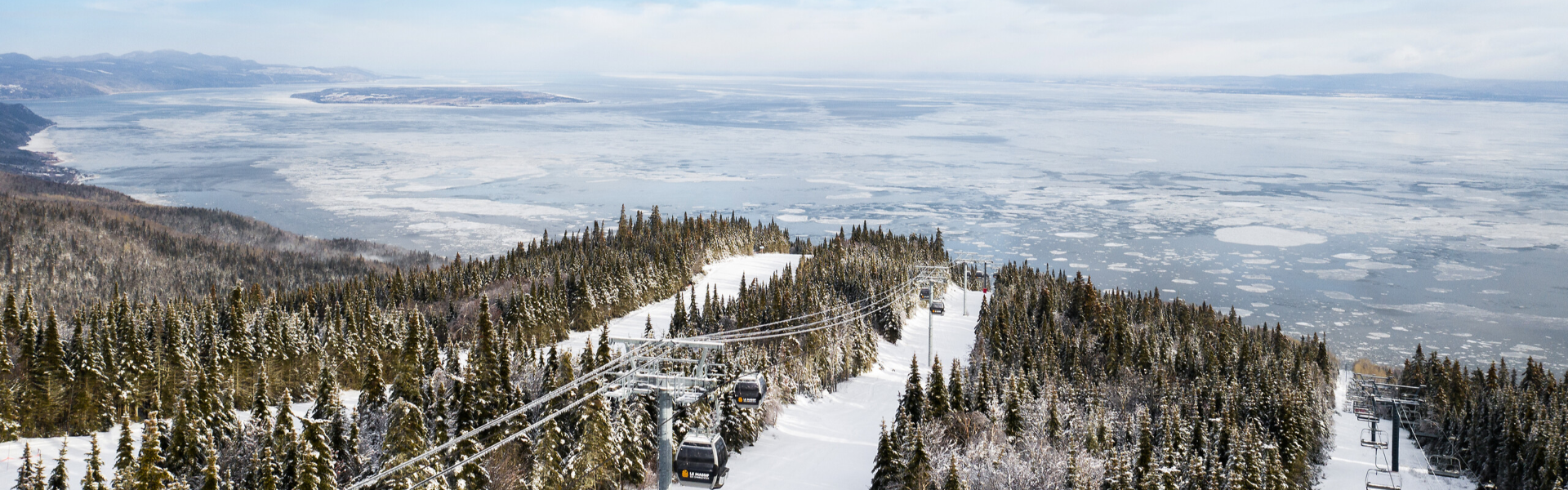
At Petite-Rivière-Saint-François, Le Massif claims Canada's highest skiable vertical east of the Rockies, 770 m dropping toward the river: the sensation of skiing straight into the St. Lawrence is unlike anywhere else. A multi-kilometre alpine sled run, gladed terrain and views over the ice floes complete the winter offer; in summer the mountain opens for gondola rides and biking.

The budget, in Canadian dollars

ItemBudgetMid-rangeHigh-end
Transport from Montréal (car, round trip)$90 to $130 in fuel$150 to $250 (car plus seasonal train)$400 and up (vehicle rental)
Accommodation (per night, 2 people)$110 to $170$200 to $350$450 and up
Meals (per day, per person)$40 to $60$70 to $110$160 and up
Local transport (per day)$15 to $25 (fuel)$30 to $50$90 and up
Activities and sights (per day)$15 to $40$60 to $120 (cruise, Sépaq)$200 and up (golf, spa, skiing)

These ranges are provided as a guideline, based on rates and prices observed in 2025-2026; they climb during Québec's late-July construction holiday, fall-colour weekends and the holiday season. Booking lodging several weeks ahead remains the best way to keep the budget in check.

Entry requirements and health for Canadian citizens

  • Visa: none, Charlevoix is a domestic destination; no passport needed for residents of Canada.
  • Documents: a valid driver's licence for the road and your provincial health card.
  • Official advisory: none; check Québec 511 for road conditions, especially in winter on Routes 138 and 362.
  • Health: hospitals in Baie-Saint-Paul and La Malbaie; no special vaccinations. In the woods, pack insect repellent in summer and check for ticks after hikes.
  • Insurance: for visitors from outside Québec, supplemental travel insurance is prudent, since interprovincial coverage does not always reimburse care in full.
  • Reservations: national park access (Sépaq), whale cruises and the best-known restaurants should be booked ahead in summer and during the colours.
  • Winter driving: winter tires are mandatory in Québec from December 1 to March 15; the grades of Route 362 call for care in snow.

One last tip: three days cover Baie-Saint-Paul, Isle-aux-Coudres and Route 362, while a full week adds the Hautes-Gorges and the whales without rushing. The region pairs naturally with Québec City, the Saguenay fjord and Tadoussac within a single Canadian itinerary.

Ready to watch a fin whale surface between two mountains? The advisors at Voyages AquaTerra build your custom itinerary. 450-628-6241 | 1-866-628-6241 | info@voyagesaquaterra.com

Voyages AquaTerra is a licensed travel agency in Québec.

Frequently Asked Questions

None beyond the everyday: Charlevoix is in Québec, about 400 km from Montréal. A driver's licence and your provincial health card are all you need. Visitors from other provinces should consider supplemental travel insurance, since out-of-province care is not always fully covered.
About 4 to 4.5 hours by road from Montréal via Highway 40 and Route 138 through Québec City, plus 45 minutes to La Malbaie. From Toronto, count on roughly 9 hours of driving or a short flight to Montréal or Québec City followed by a rental car. There are no commercial flights into the region.
Every season has its case: whales from May to October, fall colours from late September to mid-October, skiing at Le Massif from December to March and summer terraces along the Flavour Trail. For the widest mix, September is probably the most complete month.
Cruises depart from Baie-Sainte-Catherine, at the mouth of the Saguenay, from May to October. Fin whales, minke whales and belugas frequent the Saguenay-St. Lawrence Marine Park; the belugas live there year-round. Zodiac departures are the most immersive option, and warm clothing is essential even in July.
As a guideline, CAD $1,200 to $2,800 per person travelling as a couple, covering fuel, lodging, meals and activities. Inns and the region's best tables book up early in summer and during fall-colour weekends.
No. Charlevoix runs on Eastern time, like Montréal and Toronto, and everything is paid in Canadian dollars. It is one of the few complete changes of scenery that requires no passport, no currency exchange and no adjustment.
A touring train that hugs the shoreline beneath the cliffs, linking Montmorency Falls (Québec City), Baie-Saint-Paul and La Malbaie, in season from June to October. It ranks among the finest rail panoramas in Eastern Canada; book seats on the river side.
It is a demanding trail in Hautes-Gorges-de-la-Rivière-Malbaie National Park: about 10 to 11 km round trip with 800 m of elevation gain, ending high above the glacial valley. Allow 4 to 6 hours, sturdy footwear and plenty of water. Park access is reserved through Sépaq.
A meteorite struck the region roughly 400 million years ago, leaving a crater more than 50 km across whose rim still shapes today's mountains. It explains much of the dramatic relief, and the Observatoire de l'astroblème in La Malbaie tells the story.
Cheeses from Laiterie Charlevoix and the Migneron family, ciders from Isle-aux-Coudres, Charlevoix lamb, beers from MicroBrasserie Charlevoix and market produce from Les Éboulements. Many farms and workshops welcome visitors; reserve the best-known tables several days ahead in summer.
  • #Tourism
  • #Accommodation
  • #Activities
  • #Region
  • #Town
  • #Explore
  • #Tourist attractions
  • #National park
  • #Landscapes
  • #Restaurants
  • #Inns
  • #Vacations
  • #Culture
  • #Artisans
  • #Events
  • #Nature
  • #Saint Lawrence River
  • #Excursions
  • #Hiking trails
  • #Beaches