Departure

Return


Loading

Mumbai (Bombay) Travel from Canada: The Complete Guide

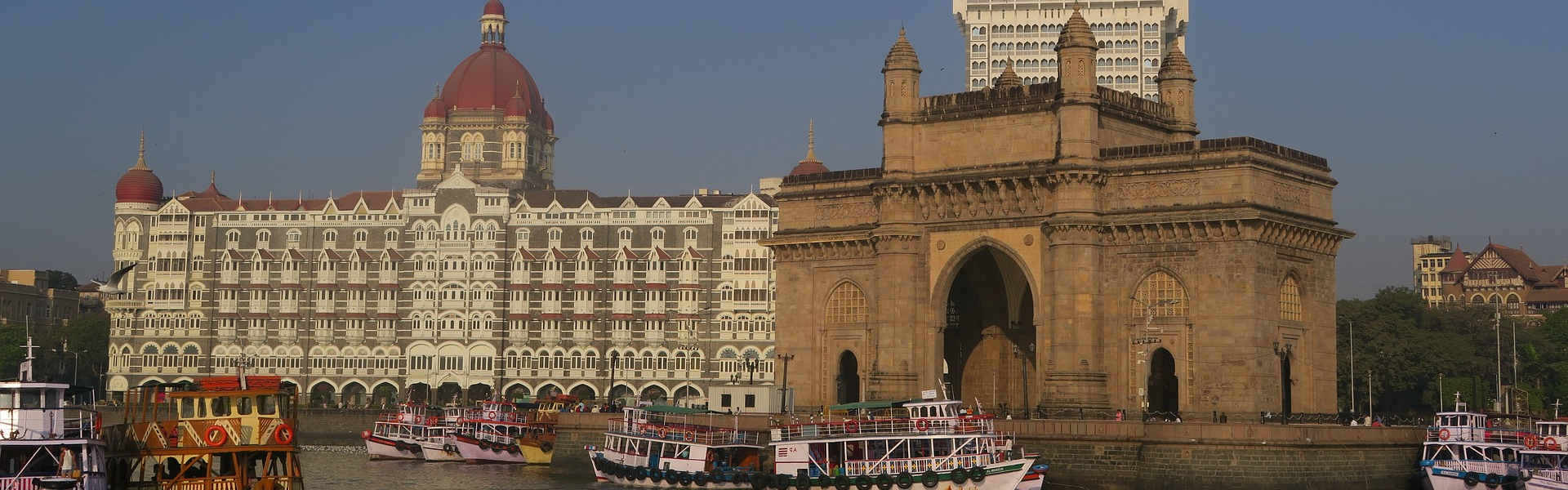
Mumbai is reached from Canada with a single stop: via Delhi on Air Canada's nonstop flights from Toronto or Montréal plus a two-hour domestic connection, or via Europe and the Gulf with Air France, Lufthansa, Qatar Airways or Emirates, for a total journey of 19 to 23 hours. Canadian citizens need an e-Tourist Visa, issued online before departure. The dry season from November to February offers the best conditions to explore India's economic capital. The former Bombay lines up the Gateway of India, UNESCO-listed Victorian railway stations and the Art Deco curve of Marine Drive, all facing the Arabian Sea. As a guideline, budget 2,400 to 3,800 CAD per person for a week, flights included.

The essentials at a glance

QuestionAnswer
Flight from CanadaOne stop: via Delhi with Air Canada or Air India, or via Europe and the Gulf; 19 to 23 h total
Visa for CanadiansYes: e-Tourist Visa applied for online before departure
Time difference+9 h 30 in summer, +10 h 30 in winter; India never changes its clocks
CurrencyIndian rupee (INR); 100 rupees are worth about 1.60 CAD
LanguageMarathi, Hindi and English; English is widely used in business and tourism
Best time to goNovember to February (dry and mild); intense monsoon June to September
DrivingOn the left; taxis, Uber and Ola apps and cars with drivers replace self-driving
Electricity230 V, 50 Hz, plug types C, D and M; adapter required

Why Mumbai

Mumbai is to India what New York is to America: the city where everything converges. More than 20 million people, the stock exchange, Bollywood and the country's largest port share a narrow peninsula on the Arabian Sea. The energy differs from Delhi's: more mercantile, more cosmopolitan, turned toward the water. You come here to feel the pulse of contemporary India as much as to tick off monuments.

The built heritage is surprisingly coherent. Chhatrapati Shivaji Maharaj Terminus, a neo-Gothic railway cathedral from 1888, is UNESCO-listed, as is the Victorian and Art Deco ensemble framing the Oval Maidan and Marine Drive: Mumbai holds one of the world's largest concentrations of Art Deco buildings after Miami. Add the Gateway of India, completed in 1924 facing the harbour, and the Elephanta Caves an hour away by ferry, and the historic core already fills two full days.

The city's food scene justifies the trip on its own. A vada pav (spiced potato fritter in a bun) costs under a dollar from a street stall, the century-old Irani cafés of Fort serve bun maska with tea, and seafood houses share the map with the fine-dining rooms of the grand hotels. The contrast of scales, from the dabbawalas delivering 200,000 lunches a day to the towers of Nariman Point, tells the story of India better than many museums.

When to go

PeriodClimate and atmosphereVerdict
November to FebruaryDry, sunny, 20 to 32 °C, pleasant evenings on Marine DriveThe best window
March to MaySteadily rising heat and humidity, 30 to 38 °CFine early in the period
June to SeptemberMonsoon: torrential rain, over 2,000 mm in a summer, occasional street floodingAvoid
OctoberMonsoon tail end, sun gradually returning, humid heatGood
DecemberMildest and liveliest, holiday season festivitiesExcellent, book early

How to get there from Canada

Since nonstop Canada-Mumbai service ended in March 2026, the journey involves one stop. The most Canadian option pairs Air Canada's nonstop flights to Delhi, daily from Toronto (about 14 to 15 hours) or up to five times weekly from Montréal (about 14 hours), with a two-hour domestic connection to Mumbai on Air India or IndiGo. The one-stop alternatives are plentiful: Air France via Paris, Lufthansa via Frankfurt, British Airways via London, Qatar Airways via Doha, Emirates via Dubai or Etihad via Abu Dhabi, for 19 to 23 hours door to door.

You land at Chhatrapati Shivaji Maharaj International Airport (BOM), some twenty kilometres north of the historic centre. Allow 45 minutes to 1 h 30 by road to Colaba depending on traffic, by prepaid taxi or ride-hailing app. Mumbai then serves as the gateway to western and southern India: Goa is 1 h 15 away by air, Udaipur 1 h 30, Kochi 2 hours, and Aurangabad, the base for the Ajanta and Ellora caves, under an hour.

Mumbai's neighbourhoods and must-sees

Colaba and the Gateway of India

At the city's southern tip, the basalt arch of the Gateway of India, completed in 1924, faces the harbour and the Taj Mahal Palace hotel, an institution open since 1903. Colaba's streets line up stalls, cafés and the Colaba Causeway market. Café Leopold, founded in 1871, remains the travellers' meeting point. This is the best area to stay if you want everything on foot.

Fort and Kala Ghoda

The historic business district concentrates the Victorian legacy: Chhatrapati Shivaji Maharaj Terminus with its gargoyles, the High Court, and the university overlooking cricket pitches. Kala Ghoda, the arts crescent, gathers the CSMVS museum and its Indian art collections, galleries and the last Irani cafés such as Kyani and Co. A street art festival animates the area every February.

Marine Drive and Girgaon Chowpatty

The 3.6 km promenade curving along the bay earned the nickname Queen's Necklace for its string of lamps glowing after dark. The Art Deco buildings lining it belong to the ensemble inscribed by UNESCO in 2018. Finish at Girgaon Chowpatty beach with a bhel puri at sunset, as generations of Mumbaikars have before you.

Bandra and the Sea Link

To the north, linked to the centre by the cable-stayed Bandra-Worli Sea Link, Bandra plays the fashionable village: Chapel Road street art, the seafront Bandstand promenade, Hill Road boutiques and stylish cafés. Several Bollywood stars keep homes here, and the city's most creative restaurant scene settles in year after year.

Elephanta Island

An hour by ferry from the Gateway of India, the UNESCO-listed Elephanta Caves shelter Hindu sanctuaries cut into basalt between the 5th and 8th centuries. The Trimurti, a monumental three-faced Shiva nearly 6 metres tall, justifies the crossing on its own. Closed Mondays; go in the morning to beat the afternoon swell.

Markets and street life

Crawford Market (1869) overflows with fruit, spices and flowers beneath friezes designed by Rudyard Kipling's father. At Sassoon Dock, the fish auction starts at dawn. And at the Mahalaxmi Dhobi Ghat, hundreds of washers process the city's laundry in the open air: the view from the railway bridge is enough to grasp the scale of the system.

The budget, in Canadian dollars

ItemBudgetMid-rangeHigh-end
Round-trip flight from Montréal or Toronto$1,400 - $1,900$1,900 - $2,600$5,000 and up (business)
Accommodation (per night, 2 people)$70 - $120$160 - $320$450 - $1,200
Meals (per day, per person)$12 - $25$30 - $60$80 - $160
Local transport (per day)$3 - $10$15 - $40$80 - $150 (car with driver)
Activities and sightseeing (per day)$5 - $15$20 - $50$70 - $140

These ranges are indicative, based on rates and prices observed in 2025-2026. Mumbai's hotels are the country's most expensive, especially from December to February; booking early makes a real difference at Colaba's heritage addresses.

Entry requirements and health for Canadian citizens

  • Visa: required. The e-Tourist Visa (30 days, 1 year or 5 years) is applied for on the official site indianvisaonline.gov.in, at least 4 days before departure; Mumbai is among the authorized entry airports.
  • Passport: valid for at least 6 months beyond arrival, with two blank pages.
  • e-Arrival Card: since October 2025, the electronic arrival card must be completed online within 72 hours before landing in India.
  • Official advisory: the Government of Canada advises a high degree of caution in India. Mumbai carries no specific regional warning; basic vigilance applies in crowds and on suburban trains. Details at travel.gc.ca.
  • Health: hepatitis A and typhoid vaccines are recommended; dengue circulates during and after the monsoon. Sealed bottled water only, and street food chosen from busy stalls serving freshly cooked dishes.
  • Monsoon: from June to September, rains can paralyze the city and delay flights; build slack into your itinerary if travelling in that season.
  • Travel insurance: full medical and repatriation coverage is essential; Mumbai's private hospitals rank among India's best but require a payment guarantee.

One last tip: three or four nights cover Mumbai's essentials. The city pairs naturally with Goa, 1 h 15 away by air, or with a Rajasthan circuit via a short domestic flight: a city-and-beach or city-and-palace balance that works every time.

Curious to see Bombay, from the Gateway of India to the lights of Marine Drive? The advisors at Voyages AquaTerra build your tailor-made itinerary. 450-628-6241 | 1-866-628-6241 | info@voyagesaquaterra.com

Voyages AquaTerra is a licensed Quebec travel agency.

Frequently Asked Questions

Yes. A visa is required for India: the e-Tourist Visa (30 days, 1 year or 5 years) is applied for online at indianvisaonline.gov.in before departure. Your passport must be valid for 6 months beyond arrival, with two blank pages.
There is currently no nonstop service between Canada and Mumbai; Air Canada's last direct routing ended in March 2026. Count on 19 to 23 hours total with one stop: via Delhi with Air Canada or Air India plus a domestic connection, or via Paris, Frankfurt, London, Doha, Dubai or Abu Dhabi.
November to February: dry, sunny and relatively mild, between 20 and 32 °C. March to May turns hot and humid, and the monsoon brings torrential rain from June to September.
The Government of Canada advises a high degree of caution in India. Mumbai is regarded as one of India's safer big cities for visitors; the main risks are pickpockets in crowds and packed suburban trains. Check travel.gc.ca before you go.
As a guideline, plan on 2,400 to 3,800 CAD per person for one week including flights, at a comfortable mid-range level. Mumbai has India's priciest hotels, but meals and transport remain very affordable.
Mumbai runs on India Standard Time (UTC+5:30) all year. That puts it 9 h 30 ahead of Montréal and Toronto in summer (daylight time) and 10 h 30 ahead in winter (standard time).
Ferries leave from the Gateway of India and reach the island in about an hour. A small train and a stairway lead to the UNESCO-listed Hindu cave temples, carved between the 5th and 8th centuries. Allow half a day and avoid Mondays, when the site is closed.
Colaba and the Fort district concentrate the main monuments, museums and heritage hotels: the best choice for a first visit. Bandra offers a more residential, fashionable vibe and sits closer to the airport for departure day.
Yes. Official guided tours of Film City, in the city's north, show soundstages and outdoor sets, usually as a half-day visit booked in advance. Mumbai turns out one of the world's largest annual outputs of films, and several tours add behind-the-scenes context.
Easily. The Mumbai-Goa domestic flight takes about 1 h 15, with many daily departures at low fares. Three nights in Mumbai followed by four or five nights on Goa's beaches makes a well-balanced city-and-beach combination.
  • #Travel
  • #Tourism
  • #City
  • #Maharashtra
  • #Visit
  • #Bollywood
  • #Economy
  • #Culture
  • #Food
  • #Beaches
  • #History
  • #Shopping
  • #Nightlife
  • #Monuments
  • #Neighborhoods
  • #Best Time
  • #Budget
  • #Accommodation
  • #Transportation
  • #Airport
  • #What to Do
  • #Tours
  • #Tips
  • #Travel Information
  • #Attractions
  • #Mumbai Guide
  • #Experience
  • #Photos
  • #Nearby Cities.