Switzerland Travel from Canada: The Complete Guide
Switzerland is an easy nonstop hop from Canada: Air Canada flies daily from Montréal to Geneva in about 7 hours 30 minutes, while SWISS links Montréal to Zurich several times a week and both Air Canada and SWISS fly nonstop from Toronto to Zurich in about 8 hours. Canadian citizens do not need a visa for stays of 90 days or less in the Schengen area. The country works year-round: hiking and scenic trains from June to September, skiing from December to April, cities and Christmas markets in between. A famously punctual rail network means you can see everything without renting a car. As a guideline, plan on CAD 3,000 to 5,000 per person for a week, flights included.
The essentials at a glance
| Question | Answer |
|---|
| Flight from Canada | Nonstop: Montréal to Geneva (Air Canada, about 7 h 30) and Montréal or Toronto to Zurich (SWISS, Air Canada, 7 h 30 to 8 h) |
| Visa for Canadians | None for stays of 90 days or less (Schengen area) |
| Time difference | 6 hours ahead of Eastern Time (briefly 5 hours in March and early November) |
| Currency | Swiss franc (CHF); 1 CHF is worth about CAD 1.75 |
| Language | German, French, Italian and Romansh, depending on the region |
| Best time to go | June to September for hiking; December to April for skiing |
| Driving | Right-hand side; motorway vignette required (CHF 40 per calendar year) |
| Electricity | 230 V, type J sockets; adapter required |
Why Switzerland
Few countries pack this much scenery into so little space. Switzerland would fit inside Nova Scotia, yet it holds 48 peaks above 4,000 m, UNESCO-listed terraced vineyards along Lake Geneva and perfectly preserved medieval cities like Bern. In a single week you can eat breakfast facing the Matterhorn, cross three language regions and end the day at a riverside café on the Limmat in Zurich.
The train changes how you travel. Swiss Federal Railways reach practically every village at metro-like frequency, with connections timed to the minute. The Swiss Travel Pass gives unlimited access to trains, buses and boats plus entry to more than 500 museums. Panoramic lines like the Glacier Express and Bernina Express turn a simple transfer into the day's main event, something no rental car can match.
The Swiss mountains also welcome non-climbers. Cogwheel trains and cable cars lift everyone to the Gornergrat, the Jungfraujoch or the summit of Pilatus with zero effort. For an itinerary built around the peaks, see our Swiss Alps guide: Zermatt, the Jungfrau region and the Engadine are covered there in detail, winter and summer alike.
When to go
| Period | Climate and atmosphere | Verdict |
|---|
| December to March | Peak ski season in the Alps, Christmas markets in December, quiet and affordable cities | Best for skiing |
| April to May | Melting snow, blooming meadows, some high trails still closed | Quiet and cheaper |
| June to August | 18 to 28 °C in the lowlands, every pass and trail open, maximum crowds | The big season |
| September | Often stable weather, golden alpine pastures, far thinner crowds | Excellent compromise |
| October to mid-November | Shoulder season: valley fog, many lifts and mountain hotels closed | Skip it for the mountains |
| Late November to December | Christmas markets in Basel, Zurich and Montreux, first snowfalls | Lovely for cities |
How to get there from Canada
From Montréal, Air Canada operates a daily nonstop to Geneva (AC802) on a Boeing 777, leaving in the evening and landing the next morning after about 7 hours 30 minutes. SWISS flies nonstop between Montréal and Zurich (LX86) several times a week; the westbound return takes about 8 hours 20 minutes against the jet stream. From Toronto, Air Canada flies daily to Zurich (AC880) and SWISS operates the route six days a week (LX81), both in about 8 hours.
Starting 16 June 2027, Air Canada opens a second gateway with a seasonal nonstop between Montréal and Basel. The appeal reaches beyond Switzerland: Basel-Mulhouse serves German-speaking Switzerland, the Black Forest and Alsace at once, and puts the Rhine valley within immediate reach. Schedules and the start of sales remain subject to change by the carrier.
Both Swiss gateways sit directly on the rail network, with the station under the terminal: Bern, Lausanne or Lucerne are one to two hours away. With a connection, Lufthansa via Frankfurt or Munich, Air France via Paris and KLM via Amsterdam also serve Geneva, Zurich and Basel. Pick your gateway to match the itinerary, Geneva for Lake Geneva, Valais and Zermatt, Zurich for Lucerne, the Bernese Oberland and Graubünden, and consider an open-jaw ticket to avoid backtracking.
Switzerland's essential regions
Geneva and Lake Geneva
Geneva delivers big-city polish with its 140 m water jet, international organizations and hilltop old town. The real pleasure starts along the lake: Lausanne and its Olympic Museum, the terraced Lavaux vineyards, then Montreux and Chillon Castle, the most visited monument in the country. Everything connects by regional train or Belle Époque steamer.
Zurich
Switzerland's largest city pairs a compact medieval core with the Kunsthaus art museum and a surprising food scene in the former industrial district of Zurich-West. In summer, locals swim right in the Limmat river and the lake, using wooden bathing pavilions from the 19th century. Zurich is also the best base for a side trip to the Rhine Falls, Europe's most powerful waterfall.
Bern
The federal capital surprises by its modesty: 140,000 residents and a UNESCO-listed old town wrapped in a bend of the Aare river. Six kilometres of medieval arcades hide shops and cafés, and the Zytglogge clock tower has performed on the main street since the 16th century. In summer, locals float down the Aare after work, a cherished institution.
Lucerne and Central Switzerland
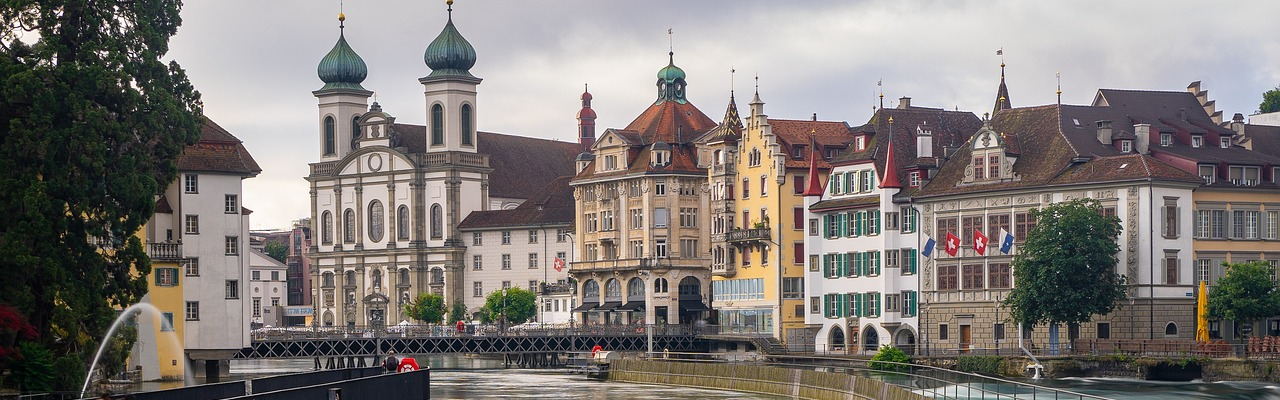
With its 14th-century Chapel Bridge and a lake ringed by peaks, Lucerne concentrates the classic Swiss postcard. It is the launch pad for Mount Pilatus, home to the world's steepest cogwheel railway at 48 percent, and for the Rigi, reached by paddle steamer and historic train. Two days cover the city; add one per mountain.
Valais and Zermatt
The most alpine canton lines up legendary resorts: Zermatt below the Matterhorn, Verbier with its 400 km of pistes, sunny Crans-Montana. Zermatt bans gas-powered cars; you arrive by train from Visp. The Valais vineyard, Switzerland's largest, deserves a stop in Sion or Sierre to taste petite arvine and cornalin.
The Bernese Oberland
Between Interlaken and the walls of the Eiger, Mönch and Jungfrau, this region condenses the best of accessible high mountains: the Lauterbrunnen valley with its 72 waterfalls, Grindelwald's state-of-the-art gondolas, and the railway to the Jungfraujoch at 3,454 m. Our Swiss Alps page details the itineraries and the most practical bases.
The budget, in Canadian dollars
| Item | Budget | Comfort | High end |
|---|
| Round-trip flight from Montréal | $900 to $1,300 | $1,300 to $1,800 | $4,000 and up (business) |
| Accommodation (per night, 2 people) | $150 to $250 | $300 to $500 | $700 and up |
| Meals (per day, per person) | $50 to $80 | $100 to $160 | $250 and up |
| Local transportation (per day) | $25 to $50 | $60 to $100 | $150 and up |
| Activities and sightseeing (per day) | $20 to $40 | $60 to $120 | $250 and up |
These ranges are provided as a guideline, based on rates and prices observed in 2025-2026, with the Swiss franc around CAD 1.75. Mountain lifts weigh heavily on the total: the Swiss Travel Pass, regional guest cards and supermarket picnics make a real difference.
Entry requirements and health for Canadian citizens
- Visa: no visa required for tourist stays of 90 days or less within any 180-day period (Schengen rule).
- Passport: valid for at least 3 months beyond your planned departure from the Schengen area, with blank pages available.
- EES and ETIAS: since October 2025, the EES system records a photo and fingerprints on first entry into the Schengen area. The ETIAS travel authorization is not yet in force; its launch is expected in late 2026. Check travel.gc.ca before departure.
- Official advisory: the Government of Canada advises taking normal security precautions in Switzerland, its lowest level.
- Health: keep routine vaccinations up to date. Tick-borne encephalitis is a risk in forested areas from April to November; cover up on hikes and check your skin afterwards.
- Travel insurance: essential, with medical and evacuation coverage. Swiss health care is among the most expensive in the world.
- Money: cards are accepted nearly everywhere; amounts of CHF 10,000 or more must be declared at the border.
One last tip: allow at least 8 to 10 days to combine a lakeside city, Lucerne or Bern and a mountain stay without rushing. Switzerland also pairs naturally with Alsace, Milan or Bavaria, each a few train hours away.
Ready to watch the Matterhorn turn pink from the Gornergrat terrace? The advisors at Voyages AquaTerra build your custom itinerary. 450-628-6241 | 1-866-628-6241 | info@voyagesaquaterra.com
Voyages AquaTerra is a licensed Quebec travel agency.