Departure

Return


Loading

Dakar Travel from Canada: The Complete Guide

Dakar now has a nonstop link with Canada: Air Transat flies from Montréal to Blaise Diagne airport from June 17 to October 21, 2026, twice weekly, in about 7 hours 30 minutes. Canadian citizens do not need a visa for stays of 90 days or less in Senegal. Set on the Cap-Vert peninsula, the westernmost point of continental Africa, the Senegalese capital combines the memory of Gorée Island, first-rate museums, humming markets and year-round surf. The dry season, November to May, brings the most comfortable conditions. With only a 4- or 5-hour time difference from Eastern Canada, jet lag barely registers.

The essentials at a glance

QuestionAnswer
Flight from CanadaNonstop Air Transat from Montréal (June to October 2026, about 7 h 30 min); otherwise via Paris, Brussels or Casablanca from Montréal and Toronto
Visa for CanadiansNone for stays of 90 days or less; passport valid 6 months beyond your departure date
Time difference4 hours ahead of Eastern Time in summer, 5 in winter (Dakar stays on UTC year-round)
CurrencyCFA franc (XOF), pegged to the euro; 1,000 CFA francs are worth about 2.40 Canadian dollars
LanguageFrench (official); Wolof everywhere in daily life; limited English
Best time to goNovember to May (dry season); rains from July to September
DrivingRight-hand side; dense traffic, taxis and drivers beat renting a car in the city
Electricity230 V, type C and E plugs; adapter required

Why Dakar

Dakar is the easiest major city in sub-Saharan Africa to reach from eastern Canada, and one of the most stimulating. A recognized cultural capital of the continent, it saw the birth of the négritude movement under Senghor, hosts the Dakar Biennale of contemporary art and dances late into the night to mbalax rhythms. Between a concert, a gallery and a fabric market, the city is something you live rather than simply visit, and French speakers find every door open.

Geography adds a rare draw: built on a peninsula, Dakar faces the ocean on three sides. Surfing runs year-round, from the Ngor waves made famous by the film The Endless Summer to the beach breaks of Yoff; a five-minute pirogue ride reaches the coves of Ngor Island; the day ends with sunset at the Pointe des Almadies, continental Africa's westernmost point.

The capital also works as the perfect base camp for the rest of Senegal: the pink lake is 35 km away, the Bandia wildlife reserve and the Petite Côte beaches about an hour and a half, the Sine-Saloum delta three hours. Many travellers give Dakar three days before heading for the beaches or the bush, a split that pairs naturally with the nonstop flight.

When to go

PeriodClimate and atmosphereVerdict
November to FebruaryDry season, 24 to 27 C, cool nights, constant breezeExcellent: the best months for the city
March to MayDry and warm, ocean still cool, occasional dusty hazeVery good; the Dakar Biennale animates spring in even years
JuneHumid heat building, ocean warmingDecent, and the Montréal nonstop begins
July to SeptemberRainy season: sometimes heavy showers, 30 C and above, green cityVisitable between downpours; high humidity
OctoberRains ending, heat easing, warm oceanGood month, just before high season

How to get there from Canada

From June 17 to October 21, 2026, Air Transat operates the only nonstop between Canada and West Africa: Montréal to Dakar, Wednesdays and Saturdays, in about 7 hours 30 minutes. Flights land at Blaise Diagne International Airport (DSS), some fifty kilometres from downtown: allow about an hour by taxi or hotel shuttle to reach the capital.

Outside that season, and from Toronto year-round, routings pass through Europe or Morocco: Air France via Paris, Brussels Airlines via Brussels, Royal Air Maroc via Casablanca or TAP via Lisbon, for 12 to 16 hours total. The small time difference, only 4 or 5 hours, makes arrival surprisingly gentle: land in the evening, start the first day with a clear head. Our Senegal page outlines the circuits possible beyond the capital.

The neighbourhoods and highlights of Dakar

The Plateau

The historic and administrative core gathers colonial buildings, the cathedral, the presidential palace and two emblematic markets: Sandaga for fabrics and bustle, Kermel for flowers and fresh produce under a restored circular hall. It is also home to the Museum of Black Civilizations, opened in 2018, whose collections trace the contribution of African cultures to world history. Explore on foot, ideally on weekday mornings.

Gorée Island

Twenty minutes from the port by ferry, Gorée is a UNESCO World Heritage Site. The House of Slaves and its Door of No Return recount the Atlantic slave trade with a restraint that stays with visitors long after. The island is entirely car-free, a maze of ochre houses, bougainvillea and artists' studios; seafront terraces make it easy to linger until the last boat.

Les Almadies and Ngor

The western tip of the peninsula concentrates the capital's seaside life: fish restaurants with tables in the sand, oceanfront hotels and lively nightlife. Surfers share the right and left breaks of Ngor, the legendary wave from The Endless Summer, and a five-minute pirogue crossing reaches Ngor Island and its coves. The Pointe des Almadies marks continental Africa's westernmost point, sunset guaranteed.

Ouakam and the Mamelles

Between two volcanic hills, Ouakam holds the African Renaissance Monument, a bronze statue of about 50 metres unveiled in 2010; from the top of the hill the view sweeps the whole peninsula. Below, the Mosque of the Divinity raises its twin white minarets over a fishermen's cove. The Mamelles lighthouse on the neighbouring hill offers the city's finest dusk viewpoint.

The Médina and the western corniche

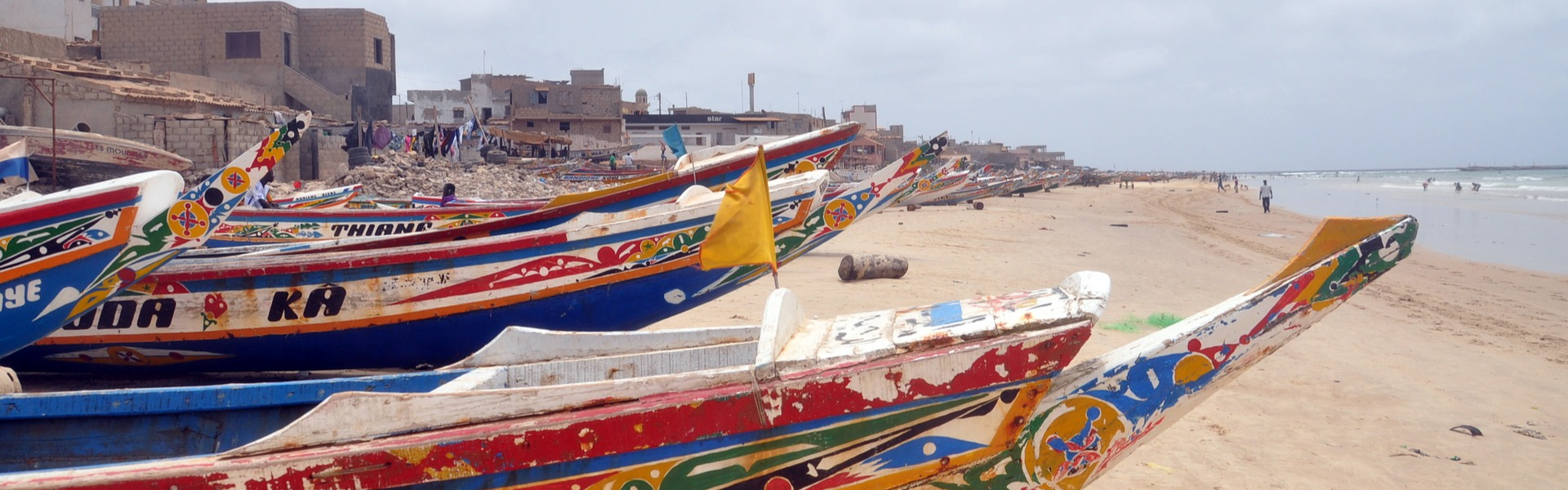
A working-class district laid out on a grid in 1914, the Médina buzzes around the Tilène market and its artisans' workshops; the Grand Mosque of Dakar raises a minaret inspired by Casablanca's. The western corniche follows the ocean to the Soumbédioune craft village, where fishing pirogues return in late afternoon for the fish auction, one of the city's most photogenic scenes.

Lake Retba and the surroundings

Some 35 km northeast, Lake Retba owes its pink tint to micro-organisms thriving in water ten times saltier than the ocean. The colour, strongest in the dry season around midday, comes with a landscape of dunes where salt harvesters work as they have for generations. The excursion combines with a dune buggy ride or a beach stop and fits into half a day from Dakar.

The budget, in Canadian dollars

ItemBudgetComfortHigh end
Round-trip flight from Montréal$1,100 to $1,500$1,500 to $2,000$2,000 and up
Accommodation (per night, 2 people)$60 to $120$120 to $250$250 to $550
Meals (per day, per person)$15 to $30$30 to $60$60 to $130
Local transportation (per day)$5 to $15$15 to $50$50 to $120
Activities and visits (per day)$10 to $25$25 to $60$60 to $150

These ranges are provided as a guideline, based on rates and prices observed in 2025-2026. The yellow-and-black taxis are negotiated before you get in, around 3 to 8 Canadian dollars for a ride in town; ride-hailing apps also operate in Dakar and take the guesswork out of pricing.

Entry requirements and health for Canadian citizens

  • Visa: none required for tourist stays of 90 days or less in Senegal.
  • Passport: valid for at least six months beyond your expected departure date.
  • Yellow fever: vaccination is recommended; proof is required on arrival if you are coming from a country where yellow fever occurs.
  • Malaria: preventive medication is recommended for most travellers, even for a city stay; protect yourself from mosquitoes in the evening. See a travel health clinic six weeks before departure.
  • Other vaccines: hepatitis A and B, typhoid and up-to-date routine immunizations. Drink bottled water.
  • Official advisory: the Government of Canada advises a high degree of caution in Senegal due to crime; in Dakar, petty theft targets markets, beaches and busy areas after dark. Check travel.gc.ca before departure.
  • Travel insurance: medical coverage including evacuation is essential; Dakar's private clinics offer the country's best care, paid on the spot.
  • Swimming: riptides are common on the ocean beaches; swim at supervised spots and ask locally about conditions.

One last tip: three or four days cover Dakar's essentials, Gorée and the pink lake included. The most satisfying formula remains a one-week combination with the Petite Côte or the Sine-Saloum, less than three hours away by road, adding beaches and mangroves to the city.

Curious to see West Africa open up just one nonstop flight from Canada? The advisors at Voyages AquaTerra build your custom itinerary. 450-628-6241 | 1-866-628-6241 | info@voyagesaquaterra.com

Voyages AquaTerra est titulaire d'un permis du Québec.

Frequently Asked Questions

Canadian citizens do not need a visa for tourist stays of 90 days or less in Senegal. Your passport must remain valid for at least six months beyond your expected departure date.
About 7 hours 30 minutes on Air Transat's nonstop from Montréal, operating June 17 to October 21, 2026, on Wednesdays and Saturdays. The rest of the year, and from Toronto, plan on 12 to 16 hours via Paris, Brussels or Casablanca. Dakar is one of the closest major African cities to eastern Canada.
November to May, during the dry season: 24 to 30 C, clear skies and a steady ocean breeze. December to February brings pleasantly cool nights. The rainy season, July to September, means humid heat and showers, though the city remains visitable between downpours.
The Government of Canada advises a high degree of caution in Senegal due to crime; in Dakar this mostly means pickpocketing and bag snatching in markets, on beaches and in busy areas, especially at dawn and after dark. Keep valuables out of sight, use taxis recommended by your hotel and check travel.gc.ca before departure.
As a guideline, budget 2,200 to 3,500 Canadian dollars per person for a week, flight included. On the ground, a meal at a local eatery runs 8 to 15 dollars, a good restaurant in Les Almadies 30 to 60 dollars, and decent hotels start around 80 to 120 dollars a night for two.
Dakar stays on UTC all year with no daylight saving time. It is 4 hours ahead of Montréal and Toronto in summer and 5 hours ahead in winter, so jet lag barely registers, a real advantage for a one-week trip.
A ferry leaves the port of Dakar roughly every hour or two depending on the season; the crossing takes about twenty minutes. Allow half a day for the House of Slaves, the memorial, the car-free lanes and the seafront terraces, or a full day to wander without watching the clock.
Yellow fever vaccination is recommended, with proof required if you arrive from a country where the disease occurs. Antimalarial medication is recommended for most travellers, along with hepatitis A and B and typhoid vaccines. Visit a travel health clinic six weeks before departure.
Yes, as a half-day excursion: Lake Retba lies about 35 km northeast of the city. Its pink hue, produced by salt-loving micro-organisms, varies with season and time of day and shows best in the dry season under midday sun. You can watch the traditional salt harvest and float in water saltier than the Dead Sea.
Les Almadies and Ngor gather oceanfront hotels, restaurants and nightlife, halfway between the airport road and downtown. The Plateau suits travellers who want to walk to museums and markets. For a laid-back vibe, guesthouses cluster near the beaches of Yoff and tiny Ngor Island.
  • #Travel
  • #Tourism
  • #History
  • #Culture
  • #Cuisine
  • #Beaches
  • #Accommodation
  • #Excursions
  • #Transportation
  • #Districts
  • #Languages
  • #Climate
  • #Visa
  • #Crafts
  • #Markets
  • #Museums
  • #Nightlife
  • #Festivals
  • #Music
  • #Dance
  • #Experience
  • #Itineraries
  • #Photography
  • #Sports
  • #Events
  • #Practical Information
  • #Travel Tips
  • #Daily Life
  • #Streets
  • #Public Transportation.