Departure

Return


Loading

Jakarta Travel from Canada: The Complete Guide

Jakarta is reachable from Canada with a single stop: from Montréal, the usual routings run through Doha with Qatar Airways or Istanbul with Turkish Airlines, and from Toronto the options widen to Hong Kong, Taipei, Seoul and Tokyo, for a total of 22 to 27 hours to Soekarno-Hatta (CGK). Canadian citizens get a 30-day visa on arrival, extendable once. The capital of Indonesia concentrates more than 10 million people, three times that with its metro area, and serves as the logical gateway to Java and one of Southeast Asia's major aviation hubs. Two or three days cover the essentials, from the Dutch colonial old town of Kota Tua to one of the continent's richest street food scenes. The dry season, June through September, offers the best conditions.

The essentials at a glance

QuestionAnswer
Flight from CanadaNo nonstop; one stop from Montréal or Toronto (Doha, Istanbul, Hong Kong, Tokyo), 22 to 27 hours to CGK
Visa for CanadiansVisa on arrival or e-VOA: 500,000 IDR (about $40 CAD), 30 days, extendable once
Time difference11 hours ahead of Eastern Time in summer, 12 in winter
CurrencyIndonesian rupiah (IDR); 10,000 IDR is worth about $0.80 CAD
LanguageIndonesian; English common in hotels and business circles
Best time to goJune to September, during the dry season
DrivingLeft-hand side; traffic is intense, use the MRT, taxis and ride-hailing apps instead
Electricity230 V, type C and F plugs; Canadian devices need an adapter

Why Jakarta

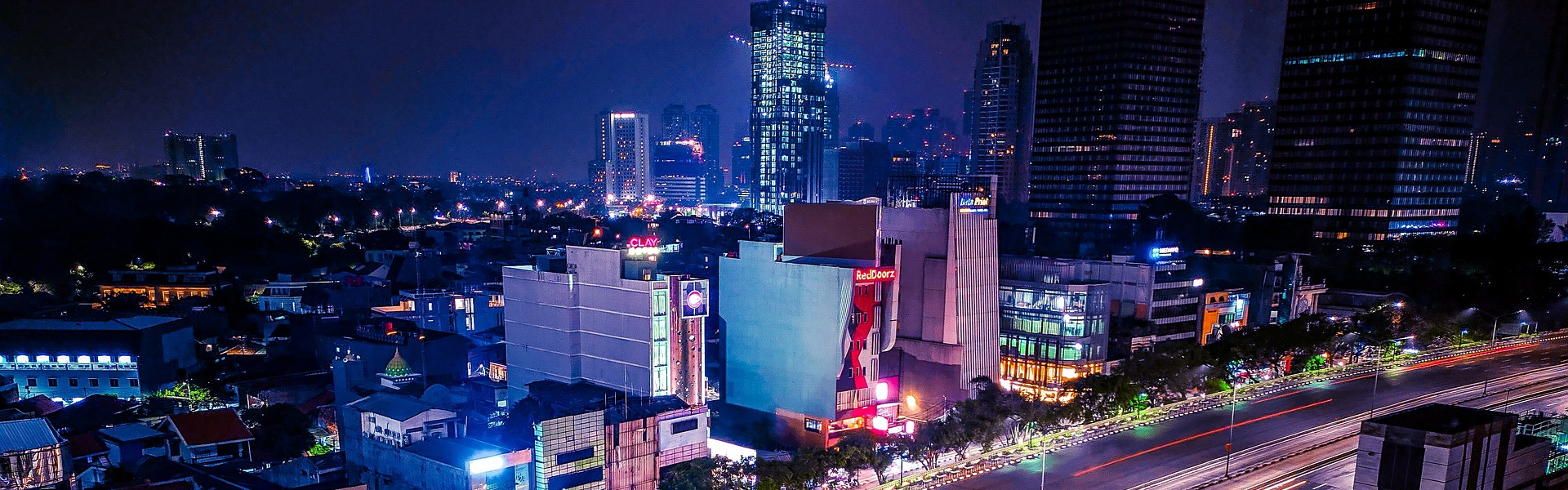
Jakarta is no museum city: it is Southeast Asia on fast-forward, glass towers rising beside traditional kampung neighbourhoods, mega-malls next to century-old street markets. Travellers who give it two or three days before heading to Bali or Yogyakarta get an unfiltered immersion in the real Indonesia, the place where decisions are made and where cultures from across the archipelago mix.

The food alone justifies the stop. Every Indonesian region keeps a kitchen in the capital: creamy soto betawi from Jakarta's own Betawi heritage, Sumatran rendang in padang canteens open around the clock, satay grilled on the sidewalks. A street meal costs $2 to $4 CAD; a feast at a good restaurant rarely tops $25. Coffee lovers will also find a serious local scene, Indonesia being the world's fourth-largest producer.

The city has also become easier to visit. The MRT, opened in 2019, runs punctual, air-conditioned trains along the north-south spine; Grab and Gojek apps have replaced haggling for taxis; and the national museums, led by the National Museum of Indonesia and its Hindu-Buddhist bronzes, provide valuable context before you explore the rest of the country.

When to go

PeriodClimate and atmosphereVerdict
June to SeptemberDry season, 31 to 33°C, slightly lower humidityExcellent
May and OctoberTransition months, hot days, possible late-day showersGood
November to DecemberIncreasing rain, frequent afternoon thunderstormsFair
January to FebruaryHeart of the monsoon, heavy rain, flood risk in some districtsLess favourable
March to AprilRain tapering off, humid heatFair

How to get there from Canada

There are no nonstop flights between Canada and Jakarta. From Montréal, Qatar Airways offers the simplest routing: about 12 hours to Doha, then 9 hours to Soekarno-Hatta, one of Asia's busiest airports; Turkish Airlines does the same through Istanbul, for 23 to 27 hours door to door. From Toronto, one-stop alternatives multiply: Cathay Pacific via Hong Kong, EVA Air via Taipei, Korean Air via Seoul, or Air Canada to Tokyo with a partner connection onward. Routings through Singapore also work well for combining two destinations in one trip.

On arrival, the Railink airport train reaches downtown in about 50 minutes for roughly $5 CAD, a smart alternative at rush hour when the road can take more than two hours. Jakarta often serves as the entry point before a domestic flight: Yogyakarta is about an hour away by air and Bali about two, with dozens of daily frequencies. Our Indonesia guide outlines the most popular combinations.

Jakarta's neighbourhoods and must-sees

Kota Tua, the old town

The heart of Dutch-era Batavia centres on Fatahillah Square, ringed by 18th-century colonial buildings converted into museums, including the Jakarta History Museum and the Wayang Museum devoted to puppetry. Café Batavia, an institution in an 1830 building, deserves a stop. Nearby, the old port of Sunda Kelapa still lines up wooden pinisi schooners loaded by hand.

Monas and Menteng

The National Monument (Monas), a 132-metre tower topped with a gilded flame, dominates Merdeka Square; its observation deck gives you the full measure of the megacity. Within walking distance stand the essential National Museum of Indonesia, the Istiqlal Mosque, Southeast Asia's largest, and the neo-Gothic cathedral facing it, a symbol of Indonesian pluralism. Leafy Menteng, the embassy district, is made for strolling.

Glodok, the Chinatown

One of Southeast Asia's oldest Chinatowns should be explored hungry: noodles, dumplings and traditional kopi follow one another along Gang Gloria. The Jin De Yuan temple, founded in the 17th century, is thick with incense. The contrast with the neighbouring towers sums up Jakarta in a single image.

The south: Kemang, Senopati and Blok M

South Jakarta concentrates the nightlife and the fashionable tables. Kemang lines up galleries, cafés and independent boutiques; Senopati draws a well-heeled crowd to its chef-driven restaurants; Blok M, with its market and izakayas inherited from the Japanese community, comes alive after dark. This is the best area to feel contemporary Jakarta.

The Thousand Islands (Kepulauan Seribu)

One to two hours by boat from the Ancol marina, this string of coral islets offers a surprising beach escape from the capital: calm beaches, snorkelling and simple bungalows on Pulau Macan or Pulau Pramuka. A day trip works fine; an overnight lets you enjoy the islands after the weekend visitors head home.

Day trip to Bogor

An hour away by commuter train, Bogor hosts one of the world's great botanical gardens, founded in 1817: 87 hectares, thousands of tropical species and the presidential palace as a backdrop. The city, cooler than Jakarta thanks to its altitude, pairs well with the tea plantations of the Puncak Pass.

The budget, in Canadian dollars

ItemBudgetComfortHigh end
Round-trip flight from Montréal$1,400 to $1,800$1,800 to $2,500$4,000 and up (business)
Accommodation (per night, 2 people)$40 to $70$90 to $180$220 to $450
Meals (per day, per person)$10 to $20$25 to $50$70 and up
Local transport (per day)$3 to $10$15 to $30$50 and up
Activities and sights (per day)$5 to $15$20 to $40$60 and up

These ranges are provided as a guideline only, based on rates and prices observed in 2025-2026. Jakarta ranks among Asia's most affordable major capitals: international five-star hotels frequently sell for under $250 CAD a night. For a week combining Jakarta with another Javanese stop, plan on $2,200 to $3,500 CAD per person including airfare.

Entry requirements and health for Canadian citizens

  • Visa: visa on arrival (VOA) costing 500,000 IDR, about $40 CAD, valid 30 days and extendable once. The electronic version (e-VOA), at evisa.imigrasi.go.id, speeds up the process at Soekarno-Hatta. Proof of onward travel is required.
  • Passport: valid at least 6 months beyond your date of entry into Indonesia, with at least one blank page.
  • Arrival declaration: the electronic All Indonesia form is completed within 72 hours before arrival; keep the QR code for immigration and customs.
  • Official advisory: the Government of Canada advises exercising a high degree of caution in Indonesia. Jakarta carries no specific advisory; check travel.gc.ca before departure.
  • Health: routine vaccinations up to date, hepatitis A recommended, typhoid depending on travel style. Dengue circulates in the city, so apply repellent morning and evening. Jakarta is considered malaria-free.
  • Air quality and flooding: air pollution can bother sensitive travellers, especially in the dry season; from January to February, heavy rains occasionally flood some districts. Follow local news.
  • Water: tap water is unsafe to drink; bottled or filtered water only.
  • Travel insurance: essential, with medical and evacuation coverage; Jakarta's good private hospitals require a payment guarantee.

One last tip: two or three days are enough to take Jakarta's pulse before continuing to Yogyakarta, Bali or Sumatra. The city pairs naturally with a Java rail itinerary, one of Southeast Asia's most pleasant train networks. Arrive a day earlier than strictly needed to absorb the jet lag before the rest of the trip.

Thinking of Jakarta as the gateway to your Indonesian adventure? The advisors at Voyages AquaTerra will build your custom itinerary. 450-628-6241 | 1-866-628-6241 | info@voyagesaquaterra.com

Voyages AquaTerra is a licensed travel agency under the Quebec permit system.

Frequently Asked Questions

Yes: the visa on arrival costs 500,000 IDR (about $40 CAD), is valid 30 days and can be extended once. The online version (e-VOA), at evisa.imigrasi.go.id, speeds things up at Soekarno-Hatta airport. A passport valid 6 months beyond entry and proof of onward travel are required.
Count 22 to 27 hours total with one stop. From Montréal, the smoothest routings run through Doha (Qatar Airways) or Istanbul (Turkish Airlines); from Toronto, one-stop options also go via Hong Kong, Taipei, Seoul or Tokyo. There are no nonstop flights from Canada.
The dry season, June through September, with days at 31 to 33°C and fewer downpours. January and February bring monsoon rains and occasional flooding in some districts.
The Government of Canada advises a high degree of caution for Indonesia, with no specific advisory for Jakarta. In practice, the main irritants are petty theft in crowds, road traffic and air quality. Tourist and business districts are fine to explore with normal awareness.
As a guideline, $2,200 to $3,500 CAD per person including airfare, at a comfort level. Jakarta is one of Asia's most affordable major capitals: street meals cost $2 to $4 and five-star hotels often sell under $250 a night.
Jakarta runs on Western Indonesia Time (UTC+7) with no daylight saving. The city is 11 hours ahead of Montréal and Toronto during our summer and 12 hours ahead in winter.
Two or three days cover the essentials: Kota Tua, the National Museum, the Istiqlal Mosque, Glodok and an evening in the city's south. Most travellers then continue to Yogyakarta, Bali or Sumatra by domestic flight or train.
The north-south MRT is air-conditioned and punctual; Grab and Gojek apps provide cheap cars and motorbike taxis; the Railink train links the airport to downtown in 50 minutes. Skip self-driving: Jakarta's traffic ranks among the world's heaviest.
This string of coral islets, one to two hours by boat from Ancol, offers beaches, snorkelling and simple bungalows. It makes a pleasant escape at the end of a stay, especially on weekdays; on weekends, Jakartans crowd the islands.
If time is short, Bali and Yogyakarta come first. Jakarta rewards those who stop, though: regional cooking from across the archipelago, national museums and the striking contrast between the colonial port and the modern megacity. Two days give you an honest read on urban Indonesia.
  • #Travel
  • #Tourism
  • #Indonesia
  • #Capital
  • #Attractions
  • #Modern Jakarta
  • #Culture
  • #Food
  • #Hotels
  • #Nightlife
  • #Shopping
  • #Districts
  • #Transportation
  • #Historic Jakarta
  • #Visit
  • #Activities
  • #Museums
  • #Monuments
  • #Climate
  • #Budget
  • #Tips
  • #Safety
  • #Experience
  • #Business Travel
  • #Beaches
  • #Population
  • #Language
  • #Authentic Jakarta
  • #Contemporary Jakarta
  • #Traditional Jakarta.