Departure

Return


Loading

Netherlands Destinations

Netherlands Travel from Canada: The Complete Guide

The Netherlands is one of the easiest European countries to reach from Canada: KLM and Air Canada each fly nonstop daily from Montréal to Amsterdam-Schiphol in about 6 hours 45 minutes, while Toronto counts four daily nonstops with Air Canada, KLM and Air Transat in about 7 hours 30 minutes. Canadian citizens do not need a visa for stays of 90 days or less in the Schengen area. The country reveals itself at bicycle height: flat, compact, laced with cycle paths and frequent trains that put Rotterdam, Utrecht and The Hague within an hour of Amsterdam. Tulip season, from late March to mid-May, remains the headline event. As a guideline, plan on CAD 2,200 to 3,500 per person for a week, flights included.

The essentials at a glance

QuestionAnswer
Flight from CanadaNonstop: Montréal (KLM, Air Canada, about 6 h 45) and Toronto (Air Canada, KLM, Air Transat, about 7 h 30)
Visa for CanadiansNone for stays of 90 days or less (Schengen area)
Time difference6 hours ahead of Eastern Time (briefly 5 hours in March and early November)
CurrencyEuro (EUR); 1 euro is worth about CAD 1.60
LanguageDutch; English spoken almost everywhere
Best time to goMid-March to mid-May for tulips; June to September for long days
DrivingRight-hand side; a car is unnecessary, trains and bikes cover the country
Electricity230 V, type C and F sockets; adapter required

Why the Netherlands

The country fits in a pocket: 41,500 km², smaller than Vancouver Island, yet packed with a density of art cities, canals and polders no other corner of Europe matches. From Amsterdam, trains put Haarlem 15 minutes away, Utrecht 27 minutes and Rotterdam about 40 minutes. You change atmosphere every day while keeping the same hotel bed.

Cycling culture transforms the trip. With more than 35,000 km of bike paths, multi-storey bicycle garages and rentals on every corner, pedalling between villages along a canal becomes the main activity rather than mere transportation. The UNESCO-listed windmills of Kinderdijk and the flower fields around Lisse are genuinely better seen by bike than by coach.

The artistic legacy commands respect: Rembrandt and Vermeer at the Rijksmuseum, Van Gogh in his own Amsterdam museum, the Girl with a Pearl Earring at the Mauritshuis in The Hague. As a counterpoint, Rotterdam, flattened in 1940, reinvented itself as an architecture lab with cube houses and a spectacular covered market. Few countries put a Golden Age and the avant-garde 40 train minutes apart.

When to go

PeriodClimate and atmosphereVerdict
December to February3 to 7 °C, short days, quiet museums, Christmas markets and skating rinksFor museum lovers
Mid-March to mid-May8 to 16 °C, tulips in bloom, Keukenhof open, King's Day on April 27The signature season
June to August17 to 23 °C, daylight until 10 p.m., terraces and festivals, peak crowdsLively, book early
SeptemberLingering warmth, golden light, thinning crowdsExcellent compromise
October to NovemberMore frequent rain, mist over the canals, falling ratesFine for city breaks

How to get there from Canada

From Montréal-Trudeau, two daily nonstops serve Amsterdam-Schiphol: KLM in the late afternoon (KL672) and Air Canada in the evening (AC900), about 6 hours 45 minutes eastbound with morning arrivals. From Toronto-Pearson, the choice widens to four daily nonstops: two KLM frequencies, Air Canada's Boeing 787 and Air Transat's A321neo, all around 7 hours 30 minutes. Competition on these routes regularly produces attractive fares, especially outside summer.

Schiphol ranks among Europe's best-connected airports: the rail station sits directly beneath the terminal, with central Amsterdam about 15 minutes away. The same platforms serve the rest of the country without passing through the capital: Leiden in 20 minutes, The Hague in half an hour, Rotterdam in about 40 minutes. Schiphol also works as a natural gateway to Belgium, with direct trains reaching Antwerp and Brussels in 1 to 2 hours.

The Netherlands' essential regions

Amsterdam

The capital concentrates Golden Age canals, the Rijksmuseum, the Anne Frank House and a surprisingly village-like neighbourhood life once you leave the main drags. Allow three or four nights to cover it without rushing. Our complete Amsterdam guide details neighbourhoods, budgets and the bookings you cannot skip.

Rotterdam

Levelled by bombing in 1940, the country's second city chose audacity: Piet Blom's tilted yellow cube houses, the horseshoe-shaped Markthal lined with a giant mural, the sleek Erasmus Bridge over the Maas. Europe's largest port is best surveyed by water taxi. Fifteen kilometres away, the 19 windmills of Kinderdijk (UNESCO) show how this country pulled itself out of the sea.

The Hague and Scheveningen

Home to the government, the royal court and the International Court of Justice, The Hague carries capital-city elegance without the title. The Mauritshuis displays Vermeer's Girl with a Pearl Earring in a 17th-century mansion. A tram then rolls to Scheveningen, the country's flagship beach, with its pier and kilometres of North Sea sand.

Utrecht

Students on bikes, two-level canals and terraces set in former warehouse cellars right at the waterline: Utrecht feels like Amsterdam without the crowds. The Dom tower, the country's tallest church spire at 112 m, can be climbed for a sweeping view of the old town. Its central station, hub of the NS network, makes it a clever base for exploring everywhere.

Haarlem and the flower region

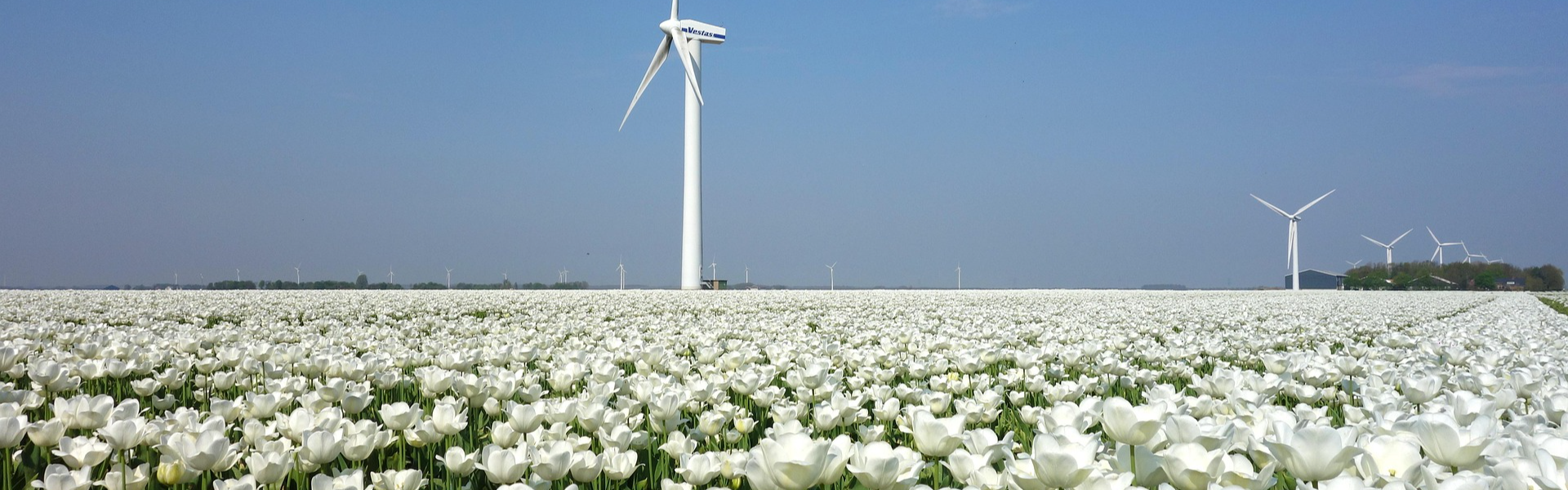
Fifteen minutes from Amsterdam, Haarlem lines up cobbled squares, hidden hofjes courtyards and the Frans Hals Museum. From late March to mid-May, the neighbouring Lisse area becomes the world capital of the tulip: Keukenhof park displays some 7 million flowering bulbs, and the surrounding fields are best toured by bike between red, yellow and purple stripes. Book tickets and rooms weeks ahead.

Maastricht and Limburg

In the far south, wedged between Belgium and Germany, Maastricht surprises: actual hills, Burgundian food culture, a bookshop inside a Gothic church and underground galleries carved into the limestone of Mount Saint Peter. The city pairs easily with Liège or Aachen, minutes away by train or bus.

The budget, in Canadian dollars

ItemBudgetComfortHigh end
Round-trip flight from Montréal$700 to $1,000$1,000 to $1,500$3,500 and up (business)
Accommodation (per night, 2 people)$120 to $200$250 to $400$600 and up
Meals (per day, per person)$40 to $60$80 to $130$200 and up
Local transportation (per day)$15 to $25$25 to $45$80 and up
Activities and sightseeing (per day)$15 to $30$40 to $80$150 and up

These ranges are provided as a guideline, based on rates and prices observed in 2025-2026, with the euro around CAD 1.60. Sleeping in Haarlem, Utrecht or Rotterdam instead of Amsterdam lightens the lodging line considerably; the train gives back in minutes what you save in dollars.

Entry requirements and health for Canadian citizens

  • Visa: no visa required for tourist stays of 90 days or less within any 180-day period (Schengen rule).
  • Passport: valid for at least 3 months beyond your planned departure from the Schengen area.
  • EES and ETIAS: since October 2025, the EES system records a photo and fingerprints on first entry into the Schengen area. ETIAS is not yet in force; launch is expected in late 2026, and applications will go only through the official EU website. Check travel.gc.ca before departure.
  • Official advisory: the Government of Canada advises exercising a high degree of caution in the Netherlands due to the threat of terrorism in Europe.
  • Health: keep routine vaccinations current, including measles. Tick-borne encephalitis carries a low risk in forested areas from April to November.
  • Travel insurance: essential, with medical and evacuation coverage.
  • Money: many shops refuse foreign credit cards; carry a contactless debit card and some cash in euros.

One last tip: a well-paced week combines four nights in Amsterdam or Haarlem with two or three nights split between Rotterdam, The Hague and Utrecht. With more time, add Maastricht or slide into Belgium an hour away by train, where Antwerp, Ghent and Bruges round out the Flemish picture.

Picturing yourself cycling between tulip fields next April? The advisors at Voyages AquaTerra build your custom itinerary. 450-628-6241 | 1-866-628-6241 | info@voyagesaquaterra.com

Voyages AquaTerra is a licensed Quebec travel agency.

Frequently Asked Questions

No visa is required for tourist stays of 90 days or less in the Schengen area within any 180-day period. Your passport must remain valid for at least 3 months beyond your planned departure from the Schengen zone. Since October 2025, the EES system records a photo and fingerprints on first entry.
About 6 hours 45 minutes to 7 hours from Montréal, where KLM and Air Canada each fly nonstop daily. From Toronto, Air Canada, KLM and Air Transat offer four daily nonstops of about 7 hours 30 minutes. Westbound returns run slightly longer.
Mid-March to mid-May for tulips and Keukenhof, with peak bloom in April. June to August brings the longest days and liveliest terraces. September stays mild with thinner crowds. Pack rain gear in any season; showers fall year-round.
The Government of Canada advises exercising a high degree of caution due to the threat of terrorism in Europe, as it does for most neighbouring countries. Day to day, violent crime is low; pickpocketing on trains and in tourist areas is the main nuisance.
As a guideline, plan on CAD 2,200 to 3,500 per person for a week including flights, at a comfortable mid-range level. Amsterdam lodging is the biggest cost; basing yourself in Haarlem, Utrecht or Rotterdam and day-tripping by train trims the bill considerably.
The Netherlands runs 6 hours ahead of Montréal and Toronto most of the year. The gap briefly narrows to 5 hours for two to three weeks in March and about a week in early November, since Europe and North America change their clocks on different dates.
Keukenhof park near Lisse opens each year from roughly late March to mid-May, and the surrounding bulb fields peak in April. Book tickets online and aim for a weekday morning. Outside the season, Amsterdam's floating flower market and the museums keep flower lovers happy.
Not everywhere. Many Dutch supermarkets and small shops take only local debit or contactless payment, and the Government of Canada recommends carrying enough cash. A contactless debit card plus some euros in cash covers nearly every situation.
Very. NS trains link Amsterdam to Rotterdam in about 40 minutes on the Intercity Direct, Utrecht in half an hour and The Hague in under an hour. OVpay contactless payment works with a regular bank card on trains, trams and buses nationwide.
On April 27, the whole country celebrates the King's birthday dressed in orange: street-wide flea markets, concerts and canals packed with boats in Amsterdam. It is a one-of-a-kind experience, but book accommodation months ahead and expect serious crowds.
  • #Netherlands
  • #tourism in the Netherlands
  • #visit Amsterdam
  • #Amsterdam canals
  • #museums in the Netherlands
  • #windmills
  • #tulips in the Netherlands
  • #cycling in the Netherlands
  • #Keukenhof
  • #Hoge Veluwe National Park
  • #Wadden Sea
  • #Rotterdam
  • #modern architecture
  • #Dutch culture
  • #beaches in the Netherlands
  • #Dutch cuisine
  • #festivals in the Netherlands
  • #historical heritage
  • #castles in the Netherlands
  • #family vacations
  • #