Departure

Return


Loading

Milan Travel from Canada: The Complete Guide

Milan is one of the easiest Italian cities to reach from Canada: Air Canada flies nonstop daily from Montréal to Milan Malpensa in about 7 hours 50 minutes, and Toronto travellers connect in roughly 10 to 13 hours through Montréal or a European hub. Canadian citizens do not need a visa for stays of 90 days or less in the Schengen area. The Lombard capital packs the Duomo and its rooftop terraces, Leonardo da Vinci's Last Supper, La Scala and the fashion district into a walkable core, then throws in Lake Como an hour away by train. The best windows to visit run April to June and September to October, with a festive December built around Christmas markets and opening night at La Scala. In February 2026 the city co-hosted the Winter Olympics with Cortina, a reminder of how well it handles the world's attention.

The essentials at a glance

QuestionAnswer
Flight from CanadaNonstop daily from Montréal with Air Canada (about 7 h 50 min); one stop from Toronto in most seasons
Visa for CanadiansNone for stays of 90 days or less (Schengen area)
Time difference6 hours ahead of Montréal and Toronto (briefly 5 during clock changes)
CurrencyEuro; 1 euro is worth about 1.62 Canadian dollars
LanguageItalian; English is widely spoken in shops and hotels
Best time to goApril to June and September to October; Christmas markets in December
DrivingRight side; central Milan has a restricted traffic zone (Area C); an International Driving Permit is recommended
Electricity230 V, 50 Hz, type C, F and L plugs; adapter required

Why Milan

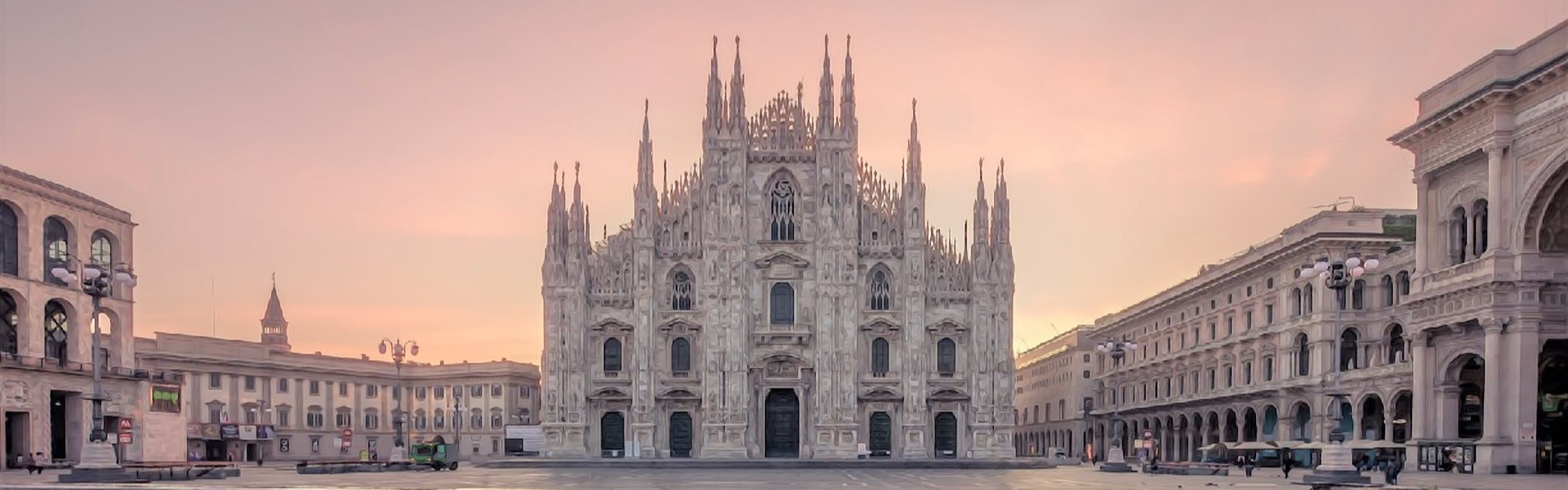
Milan works, creates and reinvents itself faster than the rest of Italy, and you feel it the moment you step out of the Duomo metro station. The white marble cathedral, a construction site for nearly six centuries, can be explored right up to its rooftop terraces, where the view stretches to the Alps on a clear day. Ten minutes away on foot, Sforza Castle holds Michelangelo's final sculpture, the Rondanini Pietà, and the glass-roofed Galleria Vittorio Emanuele II links the cathedral square to La Scala. Few European cities concentrate this many masterpieces in such a short radius.

The city also rewards travellers who go beyond the monument checklist. Brera wraps galleries, artisan workshops and trattorias around its Pinacoteca, where Raphael's Marriage of the Virgin hangs near works by Caravaggio. To the south, the Navigli canals, partly engineered by Leonardo da Vinci, anchor Milan's aperitivo scene: order a drink between 6 and 9 pm and a generous buffet often comes with it. Locals treat it as a light supper, and you should too.

Milan is also the best base camp in northern Italy. Varenna on Lake Como is an hour away by train, Bergamo and its walled upper town 50 minutes, and Turin, Verona and Bologna all sit under two hours away by high-speed rail. Our Italy travel guide shows how to fold Lombardy into a longer itinerary across the peninsula.

When to go

PeriodClimate and atmosphereVerdict
January-FebruaryDamp cold (0 to 8 °C), frequent fog, winter sales, few touristsGood for shopping and opera, less so for wandering
March-MayMild spring (10 to 22 °C); the Salone del Mobile design fair in April sends hotel prices soaringExcellent, but skip design week if you are watching costs
JuneWarm and bright (around 27 °C), packed terraces, long eveningsLovely, just before peak heat
July-AugustHeavy heat (30 °C and up); the city empties in mid-August and many businesses closeAvoid if you can, especially around August 15
September-OctoberStable, mild weather, Fashion Week in late September, beautiful light on the lakesThe best window of the year
NovemberFrequent rain, fog, a quieter cityLow season with attractive rates
DecemberChristmas markets, holiday lights, La Scala season opens December 7A rewarding festive city break

How to get there from Canada

Air Canada links Montréal to Milan Malpensa with a daily year-round nonstop on an Airbus A330, leaving in the evening and landing the next morning after about 7 hours 50 minutes. From Toronto, Air Canada and Star Alliance partners route you through Montréal, Frankfurt, Munich or Zurich with one stop, for 10 to 13 hours of total travel; nonstop Toronto-Milan service has also operated seasonally, so it is worth checking dates. Comparing a one-stop itinerary against the nonstop can save several hundred dollars in peak season.

On arrival, the Malpensa Express train reaches Cadorna or Milano Centrale station in about 50 minutes. Milan has two other airports worth knowing for intra-European hops: Linate, 15 minutes from downtown and connected to metro line M4, and Bergamo Orio al Serio, a low-cost carrier hub. If Milan opens a longer Italian trip, high-speed trains from Milano Centrale reach Rome in about 3 hours 10 minutes, Venice in 2 hours 30 minutes and Florence in under 2 hours.

Milan's neighbourhoods and must-sees

The Duomo and its terraces

The Gothic cathedral, crowned by 135 spires and the golden Madonnina, deserves a full visit: the interior, the archaeological area and above all the rooftop terraces, reached by stairs or elevator. Book a timed slot online to skip the lines, and go late in the day when the marble turns pink. The square is best appreciated from inside the neighbouring Galleria Vittorio Emanuele II, Europe's most elegant covered arcade.

Santa Maria delle Grazie and the Last Supper

Leonardo's fresco is viewed in small groups, 15 minutes at a time, in the refectory of a Dominican convent. Official tickets vanish weeks in advance; a guided tour with admission included is often the realistic plan B. The surrounding residential quarter hides the Atellani house museum and Leonardo's own vineyard.

Brera, the artists' quarter

Cobbled lanes, artisan boutiques, a quiet botanical garden and one of Italy's finest painting collections at the Pinacoteca make Brera an easy half day with no fixed plan. In the evening its restaurants draw as many Milanese as visitors; book ahead for the known addresses, especially Thursday through Saturday.

The Navigli and aperitivo hour

The two surviving canals of the network that once made Milan a water city are now lined with bars, studios and vintage shops. On the last Sunday of each month, an antiques market stretches along the Naviglio Grande. Arrive around 6 pm for aperitivo, then eat late like the locals; the district stays lively well past midnight.

Fashion and design

The Quadrilatero della moda around Via Montenapoleone gathers the flagship stores of the great fashion houses; the shop architecture justifies the walk even if you buy nothing. Contemporary design fans should head to Fondazione Prada, a former distillery reimagined by Rem Koolhaas, or the Museum of Italian Design at the Triennale beside Sempione Park.

Day trips worth the train ticket

Varenna and Bellagio on Lake Como are reachable by train and ferry in just over an hour. Bergamo, 50 minutes away, stacks a UNESCO-listed walled upper town above its modern lower city. Wine lovers can drive an hour to Franciacorta, Italy's traditional-method sparkling wine region between Lake Iseo and the vineyards.

The budget, in Canadian dollars

ItemBudgetComfortHigh end
Round-trip flight from Canada850 to 1,100 dollars1,100 to 1,600 dollars3,500 dollars and up (business class)
Accommodation (per night, 2 people)120 to 190 dollars200 to 380 dollars500 dollars and up
Meals (per day, per person)40 to 60 dollars70 to 120 dollars160 dollars and up
Local transport (per day)8 to 15 dollars15 to 30 dollars60 dollars and up (taxis)
Activities and sightseeing (per day)15 to 30 dollars30 to 70 dollars120 dollars and up

These ranges are provided as a guideline, based on exchange rates and prices observed in 2025-2026. Milan hotel rates swing hard with the trade fair calendar: Salone del Mobile week in April and the February and September Fashion Weeks can double or triple the price of the same room.

Entry requirements and health for Canadian citizens

  • Visa: no visa is required for tourist stays of 90 days or less in the Schengen area, within any 180-day period.
  • Passport: must be valid for at least three months beyond your planned departure from the Schengen area; check that you have blank pages left.
  • EES and ETIAS: the EES entry-exit system has been in force since October 2025, recording your photo and fingerprints at first entry. ETIAS authorization is not yet required; it is expected to launch in late 2026, so check travel.gc.ca before departure.
  • Official advisory: the Government of Canada advises exercising a high degree of caution in Italy due to the threat of terrorism in Europe.
  • Everyday safety: pickpockets work the metro, Centrale station and the Duomo area; keep phones and wallets out of back pockets.
  • Health: keep routine vaccinations up to date; no special vaccines are required for Italy. Medical care is good but billed to visitors.
  • Travel insurance: medical and cancellation coverage is essential, since provincial health plans reimburse only a fraction of costs incurred abroad.
  • Driving: an International Driving Permit is recommended; central Milan applies a congestion-charge restricted zone (Area C) best avoided in a rental car.

One last tip: three or four nights cover Milan's essentials, which makes it the ideal anchor for a week that adds the lakes or a second Italian city. High-speed rail makes Milan-Venice or Milan-Florence pairings effortless, with no rental car needed.

Thinking of pairing Milan with Lake Como and the Alps? The advisors at Voyages AquaTerra build your custom itinerary. 450-628-6241 | 1-866-628-6241 | info@voyagesaquaterra.com

Voyages AquaTerra is a licensed Québec travel agency.

Frequently Asked Questions

No visa is required for tourist stays of 90 days or less in the Schengen area, which includes Italy. Your passport must remain valid for at least three months beyond your planned departure from the Schengen zone. Since October 2025, the EES border system records your photo and fingerprints on first entry.
Air Canada flies nonstop daily from Montréal to Milan Malpensa in about 7 hours 50 minutes. From Toronto, most itineraries connect once, through Montréal or a European hub such as Frankfurt, Munich or Zurich, for a total of roughly 10 to 13 hours; seasonal nonstops have also operated on the Toronto-Milan route.
April to June and September to October combine mild weather with the city at full speed. December adds Christmas markets and the opening night of the La Scala opera season on December 7. Mid-August is the weak spot: many shops and restaurants close for the Italian holidays.
The Government of Canada advises exercising a high degree of caution in Italy due to the threat of terrorism in Europe. Day to day, the main risk is pickpocketing, concentrated around Centrale station, the Duomo and the metro. Keep valuables out of sight and be wary of staged distractions.
As a guideline, plan on 2,500 to 4,000 Canadian dollars per person for a week including flights, at a mid-range comfort level. Budget travellers can manage around 2,000 dollars in simple hotels, while a high-end week with design hotels and fine dining easily passes 6,000 dollars.
Milan runs 6 hours ahead of Montréal and Toronto for most of the year. The gap briefly narrows to 5 hours for a few weeks in spring and fall, because Europe and North America switch to and from daylight time on different dates.
Entry to the Cenacolo at Santa Maria delle Grazie is limited to small groups in 15-minute slots, and official tickets sell out weeks ahead. Book on the official site the moment sales open, or reserve a guided tour that includes admission. Walking up without a booking almost never works in high season.
Yes, and it is one of the easiest day trips in Italy. Regional trains link Milano Centrale to Varenna in about an hour, and ferries connect Varenna with Bellagio and Menaggio. Leave early to enjoy the villages before the tour groups arrive.
The Malpensa Express train reaches Cadorna and Milano Centrale stations in about 50 minutes, departing every 15 to 30 minutes. It beats a taxi at rush hour, when the drive can stretch past an hour. Budget coach services also run to Centrale station.
The metro has five lines covering all the main sights, backed by trams that include vintage 1920s cars still in service. The historic core is compact: the Duomo to Sforza Castle is a 15-minute walk. A car is a liability here, since the centre sits inside a restricted traffic zone with a congestion charge.
  • #Travel
  • #Tourism
  • #Milan
  • #Italy
  • #Visit
  • #Destinations
  • #Fashion
  • #Shopping
  • #Culture
  • #History
  • #Museums
  • #Art
  • #City
  • #Lombardy
  • #Booking
  • #Accommodation
  • #Holidays
  • #Activities
  • #Transportation
  • #Tips
  • #Budget
  • #Itineraries
  • #Gastronomy
  • #Language
  • #Weather
  • #Churches
  • #Cathedral
  • #Galleries
  • #Districts
  • #Nightlife.