Departure

Return


Loading

Reykjavik Travel from Canada: The Complete Guide

Reykjavik is a nonstop hop from Canada: Air Canada flies Montréal to Keflavik in about 5 hours, with Air Transat adding summer service, while Air Canada and Icelandair link Toronto year-round in about 5 hours 45 minutes. Canadian citizens do not need a visa for stays of 90 days or less in the Schengen area. The world's northernmost capital works in every season: long days and easy touring from June to August, northern lights from September to March. Compact and colourful, it pairs museums, geothermal pools and a surprising food scene with day-trip departures to the Golden Circle and the south coast.

The essentials at a glance

QuestionAnswer
Flight from CanadaNonstop from Montréal (about 5 h) and Toronto (about 5 h 45); Keflavik Airport is 50 minutes from town
Visa for CanadiansNone for stays of 90 days or less (Schengen area); EES registration on arrival
Time difference4 hours ahead of Eastern Time in summer, 5 in winter (Iceland never changes its clocks)
CurrencyIcelandic króna (ISK); 1,000 ISK is worth about $11 CAD
LanguageIcelandic; English fluently spoken everywhere
Best time to goJune to August for daylight; September to March for auroras
DrivingUnnecessary in town; rent a car or join guided tours to leave the capital
Electricity230 V, European type C/F plugs; adapter required

Why Reykjavik

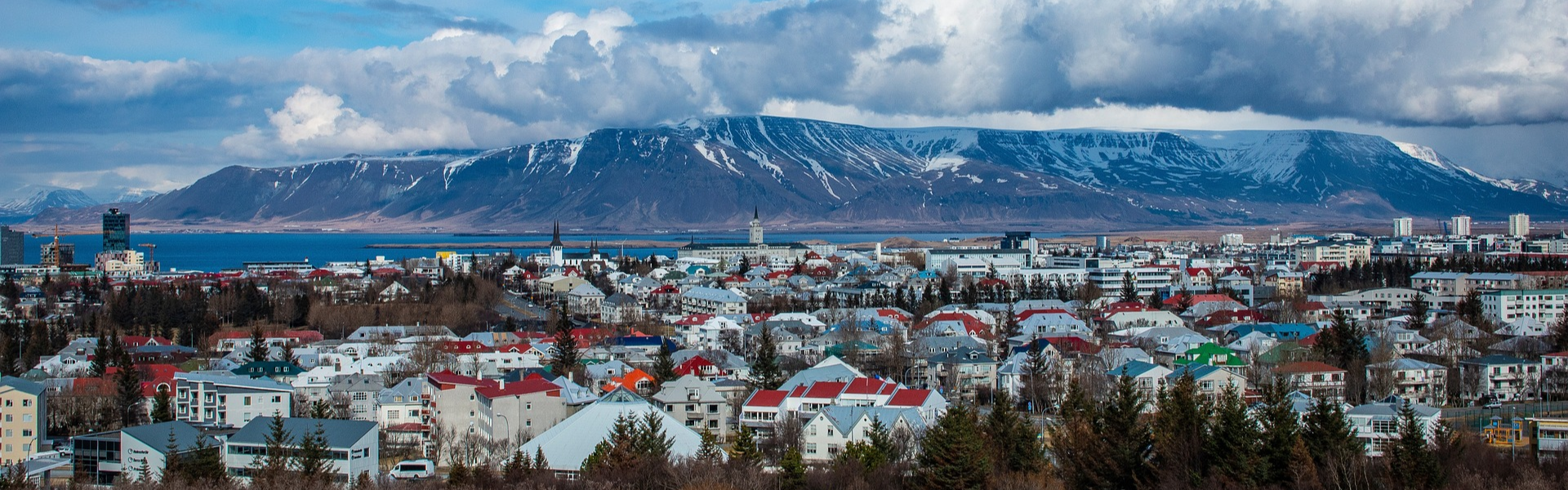
Reykjavik is the natural gateway to Iceland, and it earns more than a stopover. The centre walks in a day: Laugavegur street and its shops, Hallgrímskirkja church and its panoramic tower, the Harpa concert hall with glass facades inspired by basalt columns, and the Old Harbour with its whale watching boats. Corrugated-iron houses in bright colours give the whole place the feel of a Nordic village, set against a cultural life far bigger than the city's size.

The Icelandic capital also surprises at the table. Langoustine, lamb, Arctic char, the cult hot dogs of Bæjarins Beztu Pylsur and a wave of craft breweries add up to a dense food scene for a city of barely 140,000. Add the municipal geothermal pools, where Icelanders soak daily in the hot tubs, and the oceanfront Sky Lagoon: relaxation is part of the itinerary, even in midwinter.

Above all, everything radiates from Reykjavik. The Golden Circle, the south coast, the Snæfellsnes Peninsula, glacier hikes and aurora hunts all run as day tours with hotel pickup. You can see the core of Iceland without driving a single kilometre, a genuine advantage from November to March.

When to go

PeriodClimate and atmosphereVerdict
November to MarchAround 0 °C, wind, 4 to 7 hours of daylight, auroras and ice cave toursPrime aurora season; keep plans flexible
April to MayDays stretching fast, the city shaking off winterGood value season
June to August10 to 15 °C, midnight sun, terraces, festivals, peak seasonThe easiest, liveliest window
September to OctoberAuroras return, fall colours, thinner crowdsExcellent mix of daylight, price and night sky
DecemberHoliday lights, festive mood, 4 to 5 hours of daylightAtmospheric escape; very short days

How to get there from Canada

From Montréal, Air Canada flies nonstop to Keflavik in about 5 hours eastbound, near-daily in high season, with Air Transat adding summer frequencies. From Toronto, Air Canada and Icelandair operate year-round, up to three departures a day, in about 5 hours 45 minutes. Evening departures land early in the morning; many travellers head straight to the Blue Lagoon, 20 minutes from the airport, before checking in downtown.

The transfer to Reykjavik takes 50 minutes: Flybus shuttles timed to flights, public buses or a rental car. In town, walking and the Strætó bus network handle everything. Book a car only for touring days, or rely on guided excursions with hotel pickup.

Reykjavik's neighbourhoods and highlights

Laugavegur and downtown

The main artery strings Icelandic wool shops, galleries, cafés and bars along a kilometre, extended by Skólavörðustígur, the rainbow street climbing toward Hallgrímskirkja. Nights start late here: the weekend bar crawl rarely gets going before 11 p.m.

Hallgrímskirkja and around

The landmark church, inspired by basalt columns, rises 74.5 metres over the city. The tower elevator delivers the best view of the coloured rooftops and the bay, while the statue of explorer Leif Erikson, a 1930 gift from the United States, guards the forecourt. The surrounding streets brim with cafés and artist studios.

The Old Harbour and Harpa

Whale and puffin cruises depart from the Old Harbour, ten minutes on foot from downtown. The Harpa concert hall, its thousands of glass panels shifting with the light, is free to wander. On the waterfront, the Sun Voyager sculpture, a steel dream-ship facing the bay, has become the city's signature photo.

Grandi, the museum quarter

The west harbour's former fish sheds now house the Maritime Museum, Perlan with its indoor ice cave and aurora planetarium, FlyOver Iceland's immersive flight ride, and the Whales of Iceland exhibit with life-size models. A solid rainy-afternoon plan.

The baths: Sky Lagoon and city pools

Ten minutes from the centre, the Sky Lagoon sets its infinity edge against the open Atlantic, complete with a seven-step ritual and a glass-walled sauna. For the local experience, municipal pools such as Laugardalslaug and Sundhöllin cost a few dollars, hot tubs and waterslides included. The Blue Lagoon pairs best with your arrival or departure day.

The day trips

The Golden Circle (Þingvellir, Geysir, Gullfoss) loops in 8 hours; the south coast to Vík and its black beaches takes 10 to 11; Snæfellsnes runs 11 to 12. Winter adds ice caves, glacier hikes and evening aurora hunts. Our Iceland travel page breaks down every region to help build your program.

The budget, in Canadian dollars

ItemBudgetComfortHigh end
Round-trip flight from Montréal$600 to $900$900 to $1,300$2,500 and up (business class via Toronto or Europe)
Accommodation (per night, 2 people)$160 to $230$250 to $400$500 and up
Meals (per day, per person)$50 to $75$80 to $130$180 and up
Local transport (per day)$0 to $15 (walking, buses)$20 to $60 (shuttles, occasional taxis)$150 and up (private driver)
Activities and sightseeing (per day)$10 to $50$80 to $160 (guided day tours)$300 and up (private tours, helicopter)

These ranges are provided as a guideline only, based on rates and prices observed in 2025-2026. Guided excursions are the biggest line item: two or three well-chosen outings usually fill a week nicely.

Entry requirements and health for Canadian citizens

  • Visa: none required for tourist stays of 90 days or less within any 180-day period in the Schengen area.
  • Passport: must be valid for at least 3 months beyond your expected departure from the Schengen area.
  • EES: since October 12, 2025, the European Entry/Exit System records your photo and fingerprints on first entry.
  • ETIAS: not yet in force; launch is expected in late 2026. Check travel.gc.ca before departure.
  • Official advisory: the Government of Canada advises taking normal security precautions, its lowest level.
  • Volcanoes: the Reykjanes Peninsula, between the airport and the city, has seen periodic eruptions since 2023, with no danger to the capital; monitor safetravel.is during your stay.
  • Health: keep routine vaccines up to date; no special vaccines required. Tap water is excellent; run it cold to avoid the faint sulphur note of the hot supply.
  • Travel insurance: strongly recommended, with medical, evacuation and cancellation coverage, since weather can reshuffle excursions.

One last tip: four to five nights make an excellent first visit, with two days in town and two or three day trips. A full week lets you add Snæfellsnes or a south coast overnight before returning to sleep in the capital.

Auroras, whales and hot pools on the same trip? The advisors at Voyages AquaTerra build your custom itinerary. 450-628-6241 | 1-866-628-6241 | info@voyagesaquaterra.com

Voyages AquaTerra is the holder of a Québec travel agency permit.

Frequently Asked Questions

No. Iceland belongs to the Schengen area, where Canadians can stay 90 days or less within any 180-day period without a visa. Your passport must remain valid for at least 3 months beyond your planned departure, and the EES system records your photo and fingerprints on first entry.
About 5 hours nonstop from Montréal with Air Canada, joined by Air Transat in summer, and about 5 hours 45 minutes from Toronto, where Air Canada and Icelandair fly year-round. Keflavik Airport then sits 50 minutes by road from the capital.
June to August for long days and easy touring; September to March for northern lights. December charms with its holiday lights despite only 4 to 5 hours of daylight. May and September strike the best balance between weather and price.
Yes, it ranks among the safest capitals in the world, and the Government of Canada advises only normal security precautions. The real caution applies to nature on day trips: fast-changing weather, strong gusts and the safetravel.is guidelines to follow.
As a guideline, plan on $2,800 to $4,800 CAD per person for a week including flights and a few guided excursions. The city itself takes two days; most of the budget goes to day trips toward the Golden Circle, the south coast or the auroras.
Iceland stays on GMT all year, with no daylight saving. Reykjavik is therefore 4 hours ahead of Montréal and Toronto during Eastern daylight time (March to November) and 5 hours ahead in winter.
Yes. Guided tours from the capital cover the Golden Circle, the south coast, Snæfellsnes, glacier hikes and aurora hunts, with hotel pickup included. That is the recommended formula in winter, when driving turns demanding.
It lies about 50 minutes from the city and 20 minutes from Keflavik Airport, so many travellers go on arrival or departure day. Book your time slot in advance. In town, the Sky Lagoon and its oceanfront infinity pool make a striking alternative.
Yes, from September to March, whenever skies are clear and solar activity cooperates. Within the city, head away from the lights, to the Grótta lighthouse for instance. Evening aurora tours raise your odds considerably by chasing breaks in the cloud cover.
Cruises leave from the Old Harbour, a short walk from downtown, year-round. From April to October, Faxaflói Bay delivers the best sightings of minke whales, white-beaked dolphins and sometimes humpbacks. Count on about 3 hours at sea and dress warmly, even in summer.
  • #Travel
  • #Tourism
  • #Reykjavik
  • #Iceland
  • #Visit
  • #Capital
  • #Attractions
  • #Hotels
  • #Restaurants
  • #Culture
  • #Nightlife
  • #Information
  • #Neighborhoods
  • #Activities
  • #Tours
  • #Shopping
  • #Airport
  • #Transportation
  • #Museums
  • #Art
  • #Architecture
  • #Nature
  • #Beaches
  • #Temperature
  • #Northern Lights
  • #Climate
  • #Best Time to Visit
  • #Itineraries
  • #Tips
  • #Budget.