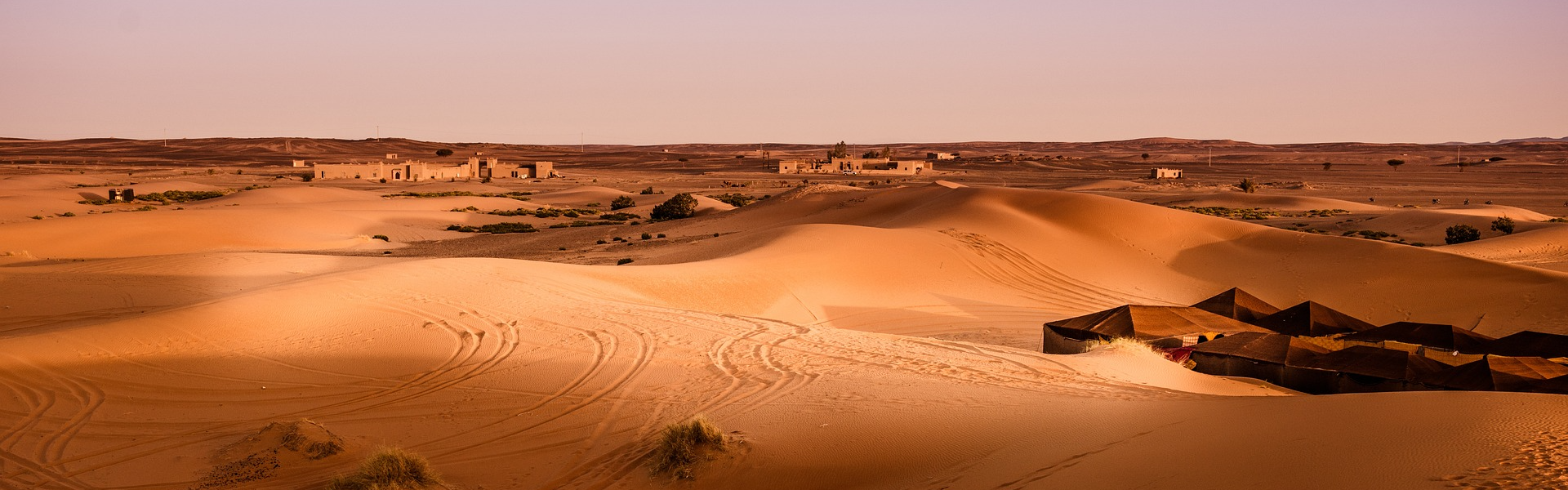
To plan this trip, see also our Morocco guide and art and antique markets.
Departure
Return
Loading
Choose a country or city
Morroco Destinations
Frequently Asked Questions
No visa is required for Canadian citizens staying less than 90 days as tourists. Your passport must be valid for at least six months beyond your departure date from Morocco. Stays beyond 90 days require authorization from the local police.
Nonstop flights take about 7 hours from Montréal to Casablanca with Air Canada or Royal Air Maroc, and about 7 hours 20 minutes from Toronto with Royal Air Maroc. Air Transat also flies nonstop from Montréal to Marrakech in just under 7 hours during part of the year.
Spring (March to May) and fall (September to November) bring pleasant temperatures of 22 to 30 °C across the country. Summer works well on the Atlantic coast and in the mountains, but Marrakech and the desert regularly top 40 °C in July and August.
The Government of Canada advises exercising a high degree of caution in Morocco due to the threat of terrorism, but does not advise against travel. The classic tourist circuits are well travelled; pickpocketing in the medinas is the most common risk. Border areas with Algeria and the Western Sahara territory should be avoided.
As a rough guide, budget travellers spend $1,800 to $2,400 CAD per person for a week including flights, while a comfortable trip with charming riads and occasional private drivers runs $2,500 to $3,800 CAD. Daily costs on the ground are well below Canadian levels.
Morocco stays on GMT+1 year-round, so it is 5 hours ahead of Montréal and Toronto in summer and 6 hours ahead in winter. During Ramadan the country temporarily moves back one hour, narrowing the gap by an hour.
Arabic and Amazigh are the official languages, but French is the everyday language of business, hotels and restaurants. English is increasingly common in Marrakech and major hotels, though less so in smaller towns, so a few French phrases go a long way.
Bottled water is recommended for drinking, even in the big cities. Stick to cooked food and fruit you peel yourself. Hepatitis A vaccination is advised before departure; a travel clinic can tailor recommendations to your itinerary.
No, and it is difficult anyway: the dirham is a closed currency that is essentially not exported. Exchange Canadian dollars on arrival at banks or official exchange offices, and convert leftover dirhams back before flying home. ATMs are reliable in every city.
Yes. The ONCF network is reliable and inexpensive, and the Al Boraq high-speed train links Tangier and Casablanca in about 2 hours 10 minutes. Classic trains serve Rabat, Fès, Meknès and Marrakech; for the desert and the southern valleys you will need buses, a rental car or a private driver.


