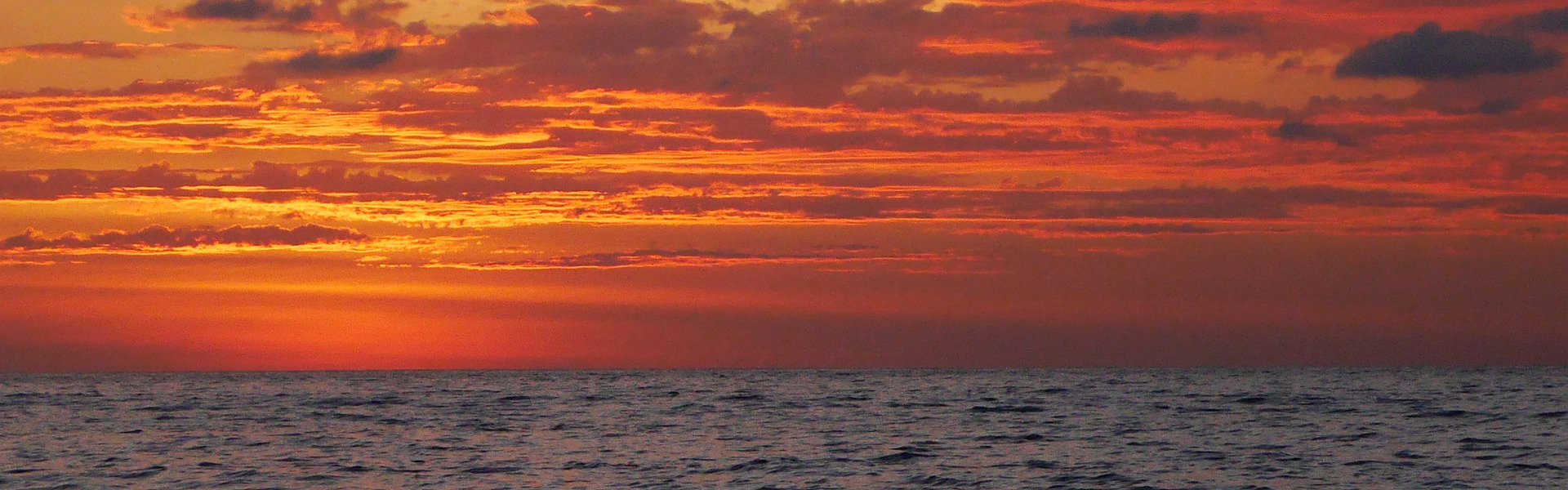
El Jobo lies at the far northwest of Costa Rica, in Bahía Salinas, about ten kilometres from the Nicaraguan border. It is the most isolated stretch of the Costa Rican Pacific coast: a handful of crescent beaches separated by rocky points, dry forest, a fishing village and almost no building. People come for the quiet, and for the wind.
The essentials in four lines
- About five and a half hours non-stop from Montreal to Liberia (LIR), then an hour and fifteen minutes north by road.
- Costa Rica runs one hour behind Montreal in winter and two in summer.
- No sargassum. The beaches are pale to golden sand, with generally calm water in the coves.
- From December to March, a steady wind sweeps Bahía Salinas almost every day.
The beaches
Playa El Jobo, the main one, forms a sheltered cove where the water stays calm and shallow: it is the village beach and the one the local hotels use. Playa Rajada, minutes away, is wider and more open, with very pale sand and a gentle slope; it is the finest in the area and one of the few in the country angled to give the sunset straight down the beach.
Playa Jobito and Playa La Coyotera complete the set, both tiny and often empty. None has services: bring water and shade.
Wind and kiteboarding
Bahía Salinas is one of the three or four best-known kiteboarding spots in Central America. From December to March, the trade wind accelerated by the Lake Nicaragua gap blows almost daily at twenty-five to thirty-five knots over flat, shallow water. Two or three schools operate on the bay, twenty minutes from the village.
That same wind keeps the region cooler than the rest of Guanacaste in the dry season, and explains the near-total absence of mosquitoes.
Around
Bolaños Island, a few kilometres offshore, is a protected national refuge where frigatebirds, American oystercatchers and one of the country’s few brown pelican colonies nest. You approach by boat without landing.
Santa Rosa national park, forty-five minutes south, protects the last large tropical dry forest in Central America and holds a site of national historical importance. Rincón de la Vieja volcano, with its hot springs and mud pools, is an hour and a half away.
The Nicaraguan border is twenty minutes away, which makes a day trip to San Juan del Sur or Ometepe island possible, subject to the usual formalities.
Accommodation
The area has few properties: one large all-inclusive resort on the bay, a few small hotels and rentals. There is no tourist village, no shopping street, and very few restaurants outside the hotels and a couple of sodas.
So it is a choice for anyone who wants a quiet beach, a comfortable hotel and surroundings that have stayed wild, accepting dependence on the resort or a rental car. If you prefer to walk out in the evening, Tamarindo or Playa del Coco suit better. Our criteria for choosing an all-inclusive hotel help decide.
When to go
From December to April the dry season is emphatic: constant sky, air around 33 °C, very little rain and a great deal of wind. From May to November, late-day showers green the forest again, the wind drops and prices fall markedly. September and October are the wettest months.
Our guide on when to travel south from Montreal sets out the pricing calendar from Quebec.
To plan this trip, see also our Costa Rica page, San José, Tamarindo and judging value for money.


