Astoria OR Oregon

625 Cruises availables At departure or passage at this port

American Cruise Lines (586 Cruises)

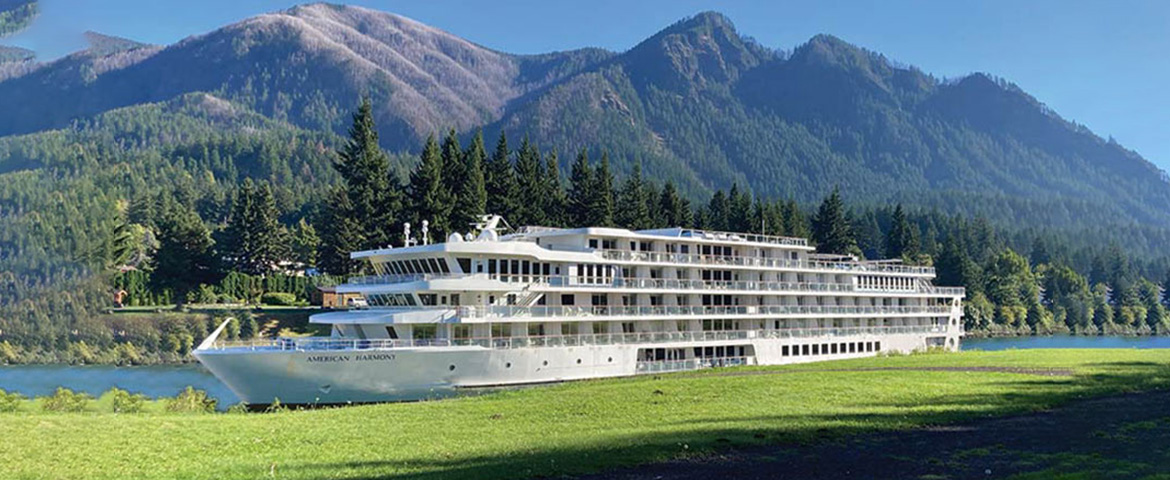
American Harmony

240 Passengers
Visit the ship's page

American Pride

2700 tons
Visit the ship's page

American Song

241 Passengers
2700 tons
Visit the ship's page

A steel bridge more than six kilometres long spans the mouth of the Columbia River, so long it disappears into the mist before reaching the far shore. That's the first sight of Astoria, and it sets the scale: here, the river that opened up the American West meets the Pacific in a stretch of water well known among sailors for its treacherous sandbars. On the south shore, Victorian houses cling to the hillside, and sea lions noisily claim the marina docks, by the hundreds in some months, much to the frustration of boat owners.

The Oldest Town in the West

Founded in 1811 as a fur trading post on behalf of John Jacob Astor, Astoria claims the title of the oldest American settlement west of the Rockies. Its history as a fishing port and salmon cannery town has left behind a waterfront of pilings and warehouses, now converted into cafés, workshops and craft breweries. The town has real character: a mix of dockworkers, artists and film buffs, since several cult films from the 1980s were shot on its steep streets. Up on the hill, the Victorian home of Captain Flavel, topped with a turret from which the shipping magnate once kept watch over his vessels, is open to visitors as a period museum.

The Waterfront Trolley

For getting your bearings, nothing beats the Riverfront Trolley: this 1913 streetcar, restored by volunteers who also serve as its conductors and guides, runs along the waterfront for about five kilometres, stopping at museums, restaurants and shops. Riders can hop on and off as they like for a few dollars. The riverside trail follows the same route for those who prefer to walk, past the pilings of the old canneries alongside life-size historical photos. These salmon canneries once employed thousands of seasonal workers from Scandinavia and China; their descendants still bring festivals and cafés to life today.

The Museum That Tells the River's Story

The Columbia River Maritime Museum stands out as the main cultural stop of this port call. Its exhibits tell the story of this river mouth, one of the most dangerous passages in the world, where hundreds of ships have been lost; simulators, lifeboats and pilots' accounts bring the subject to life, and the lightship Columbia, moored right in front of the museum, can be toured as well. Visitors leave with a whole new way of looking at the river.

The Column atop the Hill

Up on the heights, the Astoria Column, built in 1926, wraps its shaft in a spiral mural tracing the region's history. An interior staircase of 164 steps leads to the viewing platform: the reward takes in the estuary, the ocean, the forests and the coastal mountain range. By tradition, visitors launch a small balsa wood glider, sold in the gift shop, from the top. A taxi or excursion shuttle avoids the steep climb on foot from downtown.

Astoria Port Call at a Glance

LandmarkAccess
Downtown and waterfrontOn foot or by shuttle, depending on the berth
Maritime MuseumAlong the trolley route
Astoria ColumnUp on the hill, taxi recommended
Astoria-Megler BridgeVisible from everywhere, over 6 km long

As the day winds down, foghorns answer the barking of the sea lions, and the bridge lights switch on one by one above the water. This town has neither the size nor the pretensions of the larger Pacific ports of call; it has something better: a rich history, a legendary river, and a way all its own of blending fog, salmon and painted wood. Passengers leave with the urge to read the stories of the pioneers whose journey once ended right here.

Frequently Asked Questions

At the waterfront cruise pier on the south bank of the Columbia, within walking distance of the historic centre. The riverfront trolley runs past the old cannery warehouses and covers the rest.
A steel bridge more than six kilometres long spanning the mouth of the Columbia, so long it vanishes into the mist before reaching the far shore. It is the first image of the call, and it sets the scale.
Because it was founded in 1811 as a fur trading post on behalf of John Jacob Astor, which lets it claim the title of oldest American settlement west of the Rockies.
The pile-built waterfront with its cafés, workshops and microbreweries, the Columbia River Maritime Museum, then the hill of Victorian houses. Anyone who likes climbing goes up the Astoria Column for the view over the river mouth.
Because they take over the marina docks, noisily and by the hundred in some months, to the despair of the boat owners. It is the call's free and unintended attraction.
It has a solid reputation among sailors for its formidable sand bars, where the river that opened the American West meets the Pacific. Local pilots board every ship that crosses.
That of a fishing port reinvented without denying itself: a mix of dock workers, artists and retirees, in cannery warehouses turned into cafés and studios. This is not a showcase town.
The US dollar, cards accepted everywhere. Good news for shopping: Oregon levies no sales tax, so the shelf price is the price you pay.
Yes. The sea lions, the riverfront trolley and the maritime museum make an effective trio. The town is steep: save some energy for the climb to the Victorian houses.
May through October, peaking in September with the West Coast repositioning calls. Mist is part of the landscape almost year-round: a windbreaker still earns its place in August.