The hidden twin, and why her calendar looks short
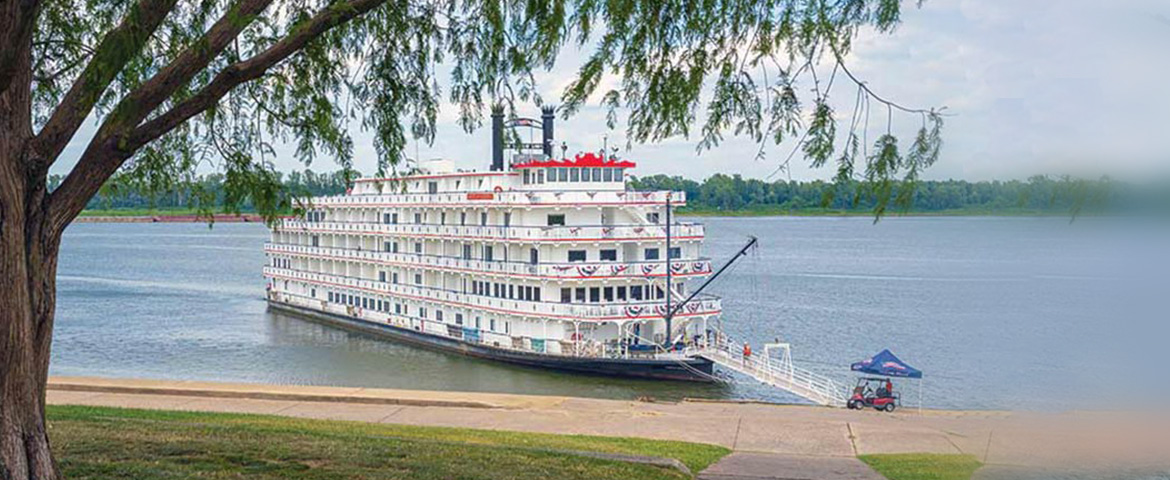
The American Heritage entered service in 2015, under the same original name
as the 2012 hull. Two successive queens of the Mississippi, three years apart,
and third-party sources still confusing them. The first became the Columbia
ship; this one stayed on the Mississippi.
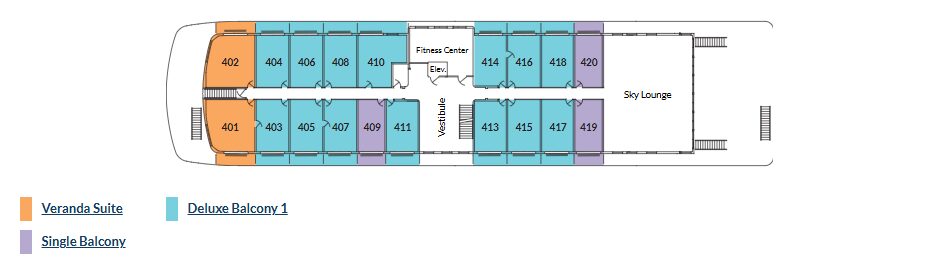
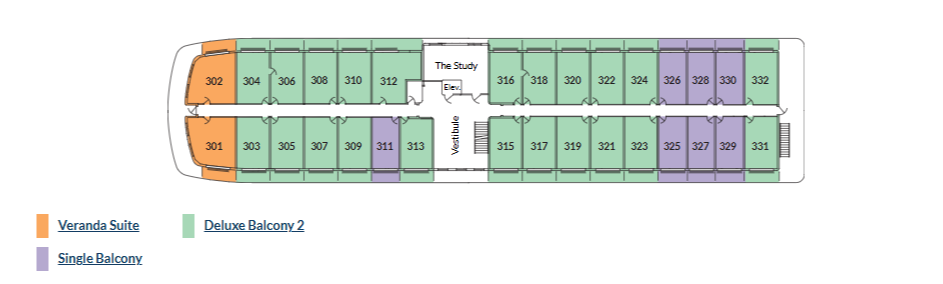
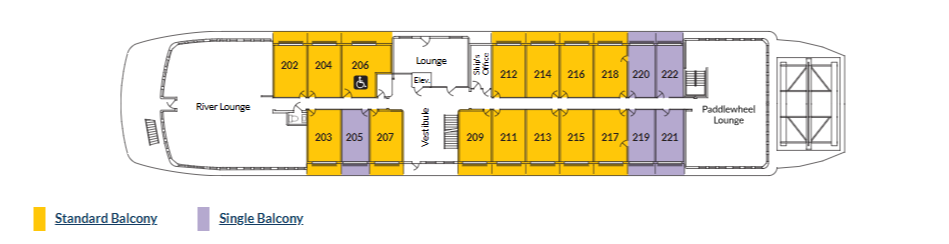
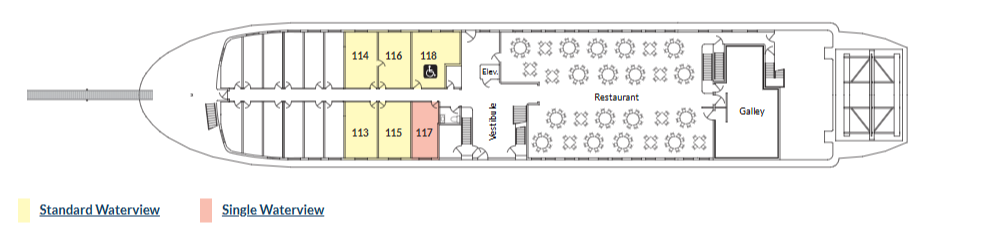
Ninety metres, 78 cabins, 150 travellers, a lift serving every passenger
deck. The cabin count varies with the source, from seventy-eight to
eighty-four: we keep the lower figure, lacking a way to settle it.
One hundred and ten dates, and what that does not mean
One hundred and ten dates with us, against more than two hundred for her
cousins. It is neither a withdrawal nor a breakdown, and the reason is worth
explaining. This ship sells long routes: fifteen-night crossings consume two
weeks of calendar for a single departure date, where a seven-night loop
produces three times as many.
Add a shortened 2026 season, with a late entrance and a long autumn break.
Her 2027 and 2028 calendar, by contrast, is published and full, and her main
home port becomes New Orleans.
Neighbouring ships
The American Splendor and the American Symphony are her Mississippi cousins. The American Pride is the first hull to
have carried her original name. The American Melody shares the river with her.
The flag, the yard, and what it changes
Eighteen hulls, eighteen owned. None chartered. Seventeen come from the same
Maryland shipyard, held by the same family as the cruise line. Design, build,
operate and sell: four steps under one roof, which explains how fast this fleet
grows.
Now the law. You often read that this line "cannot" leave American waters.
That is wrong. The 1886 passenger law targets foreign ships, requiring them to
insert a foreign call between two American ports. An American ship is not
required to.
What the line does with that freedom is stay home. It makes a selling point
of it: no customs, no formality between calls, and a river network almost
nobody else can work. For a Canadian traveller the distinction matters at the
documents stage, and we come back to it below.
The fare, item by item
Included: the cabin, full board, crew gratuities, the pre-cruise hotel
night, transfers between hotel, ship and airport, at least one excursion per
call, port taxes and satellite internet.
Not included: air travel, travel insurance, so-called premium or signature
excursions, and drinks outside the scheduled service. Beer and wine are served
with meals and a cocktail hour is offered in the late afternoon, but there is
no bar open all day on several ships.
On excursions, the most constant criticism in the reviews deserves repeating
as it stands: the most interesting outings are often the paid ones, and the
quay is not always in the heart of town. The included outing is then a coach
ride. Ask for the detail before choosing a date.
Aboard, and for whom
Small ships, one dining room, a panorama lounge, a sun deck. Evenings are
talks rather than shows, and they end early. That is not a shortfall, it is the
format; but a traveller looking for a big ship's bustle will be happier
elsewhere.
The clientele is markedly older than the line announces: a professional
review speaks of seventy-five and over for most passengers, almost all
American. No facility for children exists aboard. A couple of fifty will be the
youngest on board by twenty years.
Accessibility calls for particular care. In January 2024 the line reached a
settlement with the United States Department of Justice on the accessibility of
its seventeen ships of the time, and the follow-up to its remediation plan is
not public. It advertises accessible cabins without publishing an inventory.
Any booking of this kind is confirmed in writing.
Leaving from Quebec
A valid Canadian passport is required. The line promises its clients they
can leave it at home, but that holds for an American, not for you: reaching an
American port means entering the United States. Two itineraries need the
passport aboard as well, Alaska which transits Canadian waters and the Great
Lakes which use a canal in Canadian territory.
The flight is booked separately. The pre-cruise hotel night, the transfer to
the ship and the return transfer to the airport are included in the fare, which
simplifies the arrival day considerably.
The contract of passage provides for American maritime law and the courts of
Connecticut, with short claim deadlines. Your Quebec protection therefore does
not come from the line: it comes from the licensed agency you buy through.
Voyages AquaTerra deposits your payments in a trust account and your file falls
under the Compensation Fund for Customers of Travel Agents.