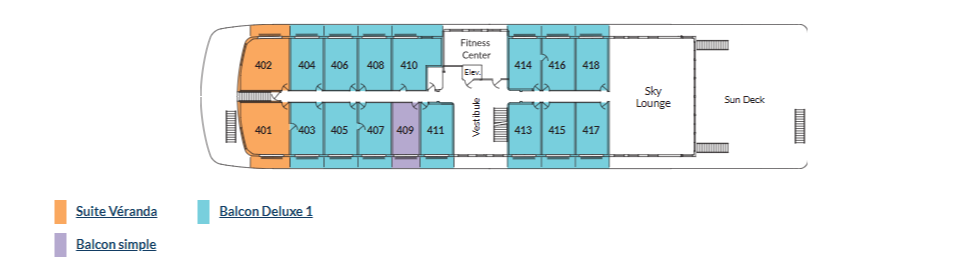
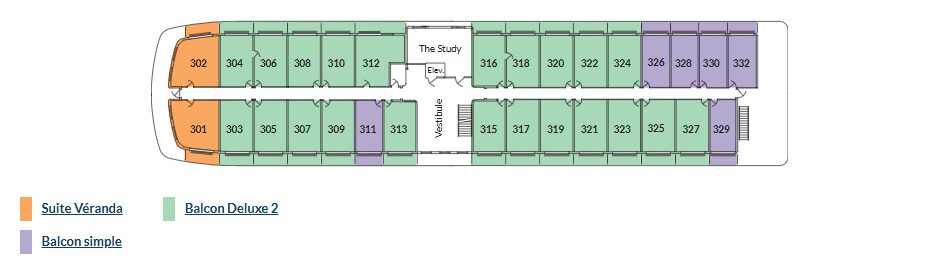
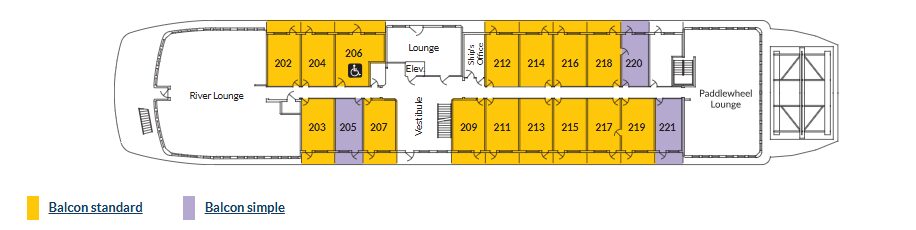
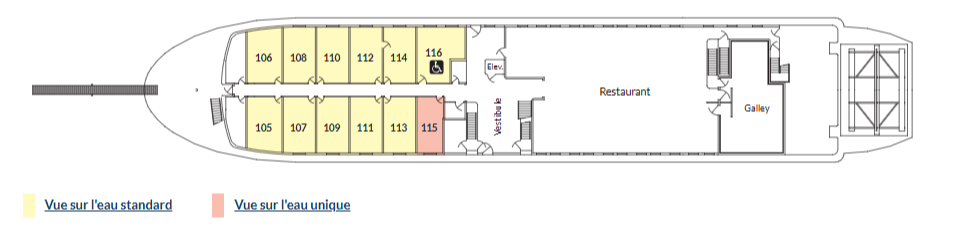
The hull that founded the programme, and was pushed out
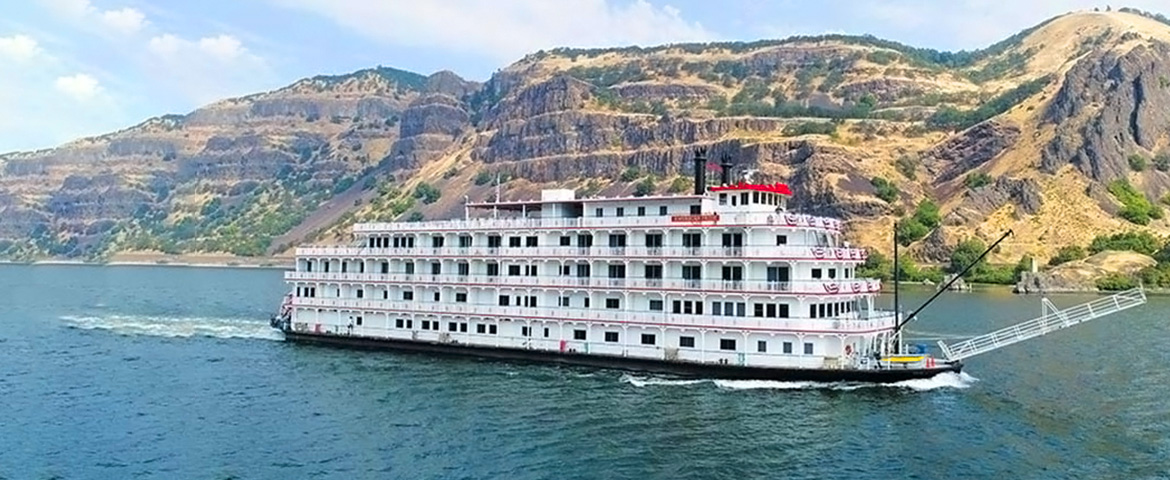
The American Pride entered service in 2012 under another name, that of a
queen of the Mississippi. She is the hull that launched this line's
paddlewheeler programme. Ninety metres, 78 cabins, 150 travellers, five
passenger decks.
Yet she never finished her career on the river that gave her that first
name. In 2016 a larger hull arrived on the Mississippi and replaced her; this
ship was sent to the Pacific Northwest and renamed. Ten years on she is the
most heavily programmed paddlewheeler in the fleet, with two hundred and
eighteen dates with us, all on the Columbia and the Snake.
What to know before choosing a cabin
One lift, a single one, serving the five passenger decks. That is little for
a ninety-metre hull, and it shows at peak hours, before dinner in
particular.
On cabins: about two thirds have a real balcony with a full-height sliding
door. The remaining third has a panoramic window that does not open. There are
also two categories of dedicated single cabins, with and without balcony, which
is rare and worth knowing when you travel alone.
Neighbouring ships
The American Splendor and the American Heritage are her Mississippi paddlewheeler cousins. The American Song shares
the Columbia with her. The American Eagle is an east coast catamaran.
Owner, builder and operator
Three roles usually held apart, gathered here in one hand. The line owns the
eighteen ships it sells, builds seventeen of them in a family shipyard in
Maryland, and operates them itself with an American crew. No chartered hull, no
third-party owner, no capacity announced by someone other than the seller.
That settles a question which arises everywhere else: when the builder's
sheet and the seller's diverge, here they are the same house. The gaps in
figures that remain come from third-party databases, not from two businesses
contradicting each other.
On the flag: the American law of 1886 targets foreign ships, imposing a
foreign call between two American ports. An American ship is exempt. This line
could leave American waters; it has chosen not to.
The fare in detail
Included are the cabin, full board, crew gratuities, the pre-cruise hotel
night and transfers, at least one excursion per call, port taxes and satellite
internet access. That is generous content for the North American market, and it
should be said.
Two reservations. The first is alcohol: beer and wine at lunch and dinner, a
cocktail hour in the late afternoon, and nothing resembling a permanently open
bar. Several reviews note that the evening fades early aboard.
The second is excursions: at least one is included at every call, but
premium and signature outings are paid. The flight is never included; an
optional air package exists and must be added well before embarkation.
The ship, the clientele, and what cannot be checked
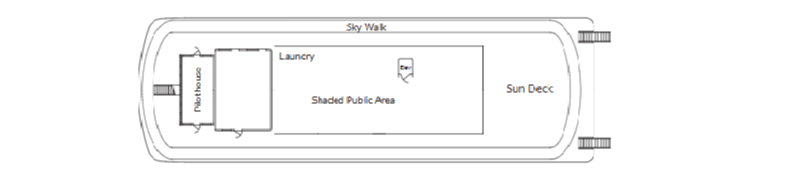
One dining room with a single seating, a panorama lounge, a sun deck, talks
in the evening. The day happens ashore, not aboard. No facility for children
exists on any ship in the fleet, and the clientele is markedly older than the
line announces: seventy-five and over for most, according to a professional
review.
Accessibility first. A settlement reached in January 2024 with the United
States Department of Justice covered the accessibility of the seventeen ships
operated at that date. The line advertises accessible cabins without publishing
a per-ship inventory. Written confirmation required, case by case.
One last point nobody makes. The CDC's vessel sanitation programme only
monitors ships with a foreign itinerary. No ship in this fleet has one. There
is therefore no public sanitation data on these ships, neither good nor bad. It
is a regulatory blind spot, not a clean bill of health.
What this trip asks of you from Quebec
A valid Canadian passport, first. The line sells its American clients the
idea of leaving the passport at home; you enter the United States to reach the
ship. And on two itineraries, Alaska and the Great Lakes, the ship herself
skirts or crosses Canadian waters.
The flight is booked separately, but the pre-cruise hotel night and both
transfers are included. That is generous content which cuts the risk of a
missed embarkation, provided you arrive the day before as planned.
A word on recourse. The contract of passage provides for United States
maritime law, the courts of Connecticut, and short claim deadlines. Nothing
establishes a Quebec licence in the line's name. Voyages AquaTerra holds that
licence: trust account, Compensation Fund for Customers of Travel Agents, and
one file for flight, cruise, hotel and insurance.