MS Anne-Marie: 22 passengers and 6 crew on the canals of Provence
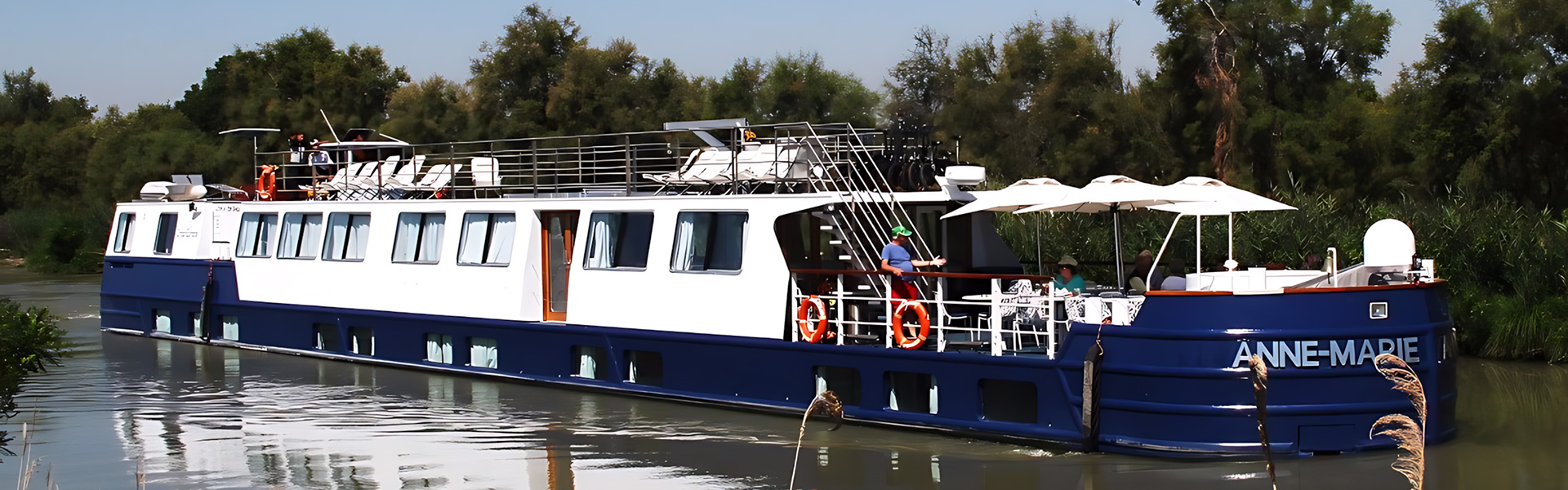
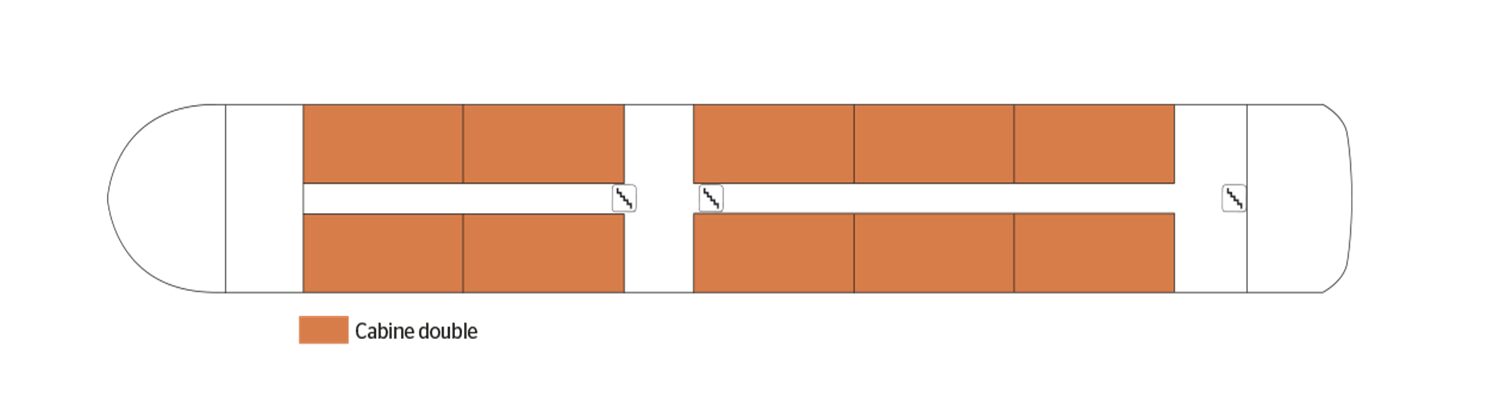
The MS Anne-Marie is a hotel barge 38.50 metres long and 5.07 metres wide. She carries 22 passengers in 11 cabins with 6 crew, one crew member for fewer than 4 passengers. On the river ships in the same fleet the ratio is one to 5 or 6. That gap is the one thing to hold on to before comparing a barge with a ship: the service is not the same job.
She was built in 2014 and CroisiEurope rates her at 5 anchors, its top level for this type of vessel. The rating covers service and equipment, not cabin size, which starts at 8 square metres. That is small, and it is better known before booking than at the cabin door: the MS La Bohème, a river ship in the same fleet, publishes 10 square metres, and you will not have the same crew ratio there.
An accessible cabin, and the question it forces
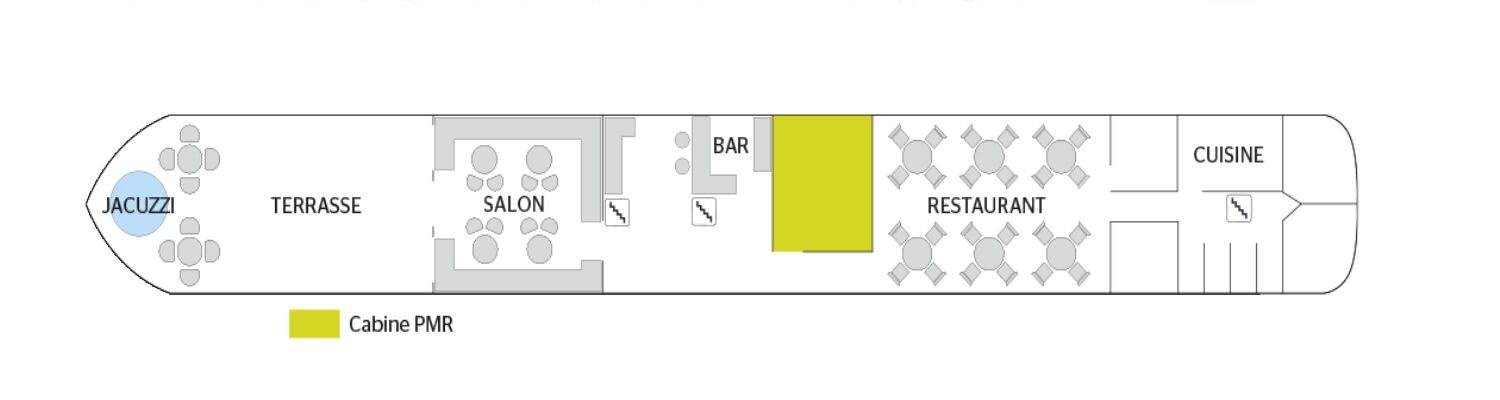
An accessible cabin for passengers with reduced mobility is provided on board, at 11 square metres. That is larger than the standard cabins. But the barge has 2 decks and no lift: the restaurant, the lounge-bar and the jacuzzi are on the upper deck, and the sun deck is reached by stairs. An accessible cabin does not make the whole vessel accessible, and we check with CroisiEurope, itinerary by itinerary, what actually is before you commit. Nobody should find that out on the gangway.
The barge in figures, so you can compare without a brochure: 38.50 metres long, 5.07 metres wide, 22 passengers, 11 cabins, 6 crew, 2 decks, 5 anchors, built in 2014. CroisiEurope's 6 hotel barges share those dimensions to the centimetre and were built between 2013 and 2016. What distinguishes them comes down to one word: the region. Provence for this one, Burgundy, Champagne, Alsace and Belgian Flanders for the other 5.
What Provence does to a canal itinerary
The Anne-Marie sails in Provence. A barge moves at the pace of an unhurried cyclist, which changes the relationship with the landscape entirely: you do not watch the bank go past, you move through it. Locks are worked one at a time, often a few metres from a towpath where somebody is walking a dog. The stops are villages rather than ports, and the barge ties to a stone quay rather than a terminal.
The Provençal season is long. The mistral blows mainly in winter and spring; in summer the light holds late and the sun deck becomes the main room on board. CroisiEurope also programmes year-end departures on this barge, built around santons and Provençal Christmas traditions, which is a season in its own right rather than a low-season filler.
Getting there from Montreal
Lyon is served non-stop from Montreal-Trudeau, which puts Provence one flight and one train or car transfer away. That is a real advantage over the Alsace barges, which require a connection. Marseille, by contrast, has no non-stop service from Montreal. We build in arrival the day before embarkation, as always: a 22-passenger barge waits for you no longer than a 150-passenger ship.
What is included and what is not
The CroisiEurope barge formula covers full board, drinks with meals and at the bar, and the excursions in the programme, which is not the case on every river ship in the fleet. Gratuities are not included. Travel insurance never is. We give you the line-by-line detail and explain what Quebec's FICAV fund covers before you sign.
Who she suits
Small groups, extended families taking the whole barge, and anyone who disliked the crowds on a large ship. She does not suit anyone who needs space in the cabin, or who wants an evening show: with 22 passengers, the entertainment is the table. If you are weighing regions, compare the MS Danièle in Burgundy, the MS Madeleine in Alsace and the MS Raymonde in Belgian Flanders. The full fleet is on our CroisiEurope cruises page.