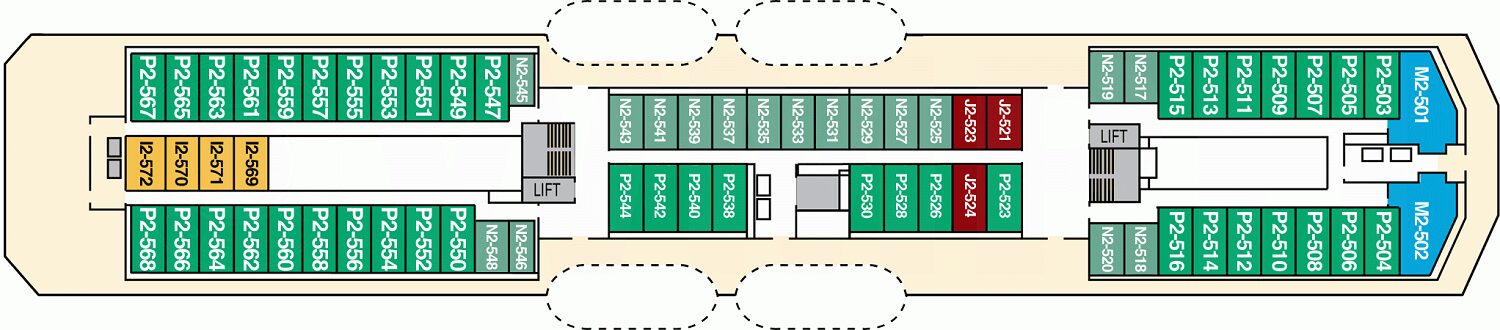
Two suites out of 218 cabins
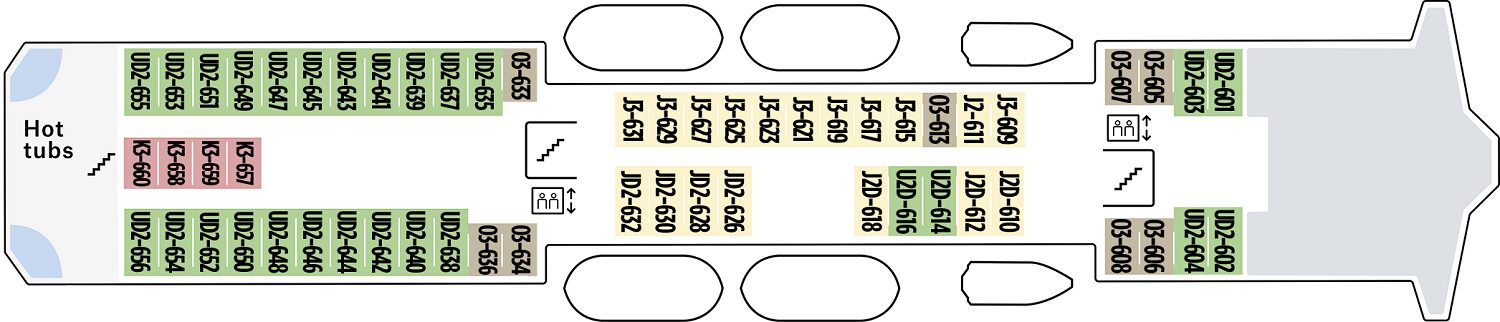
It is the lowest ratio in the fleet, and it says exactly what this ship is: a
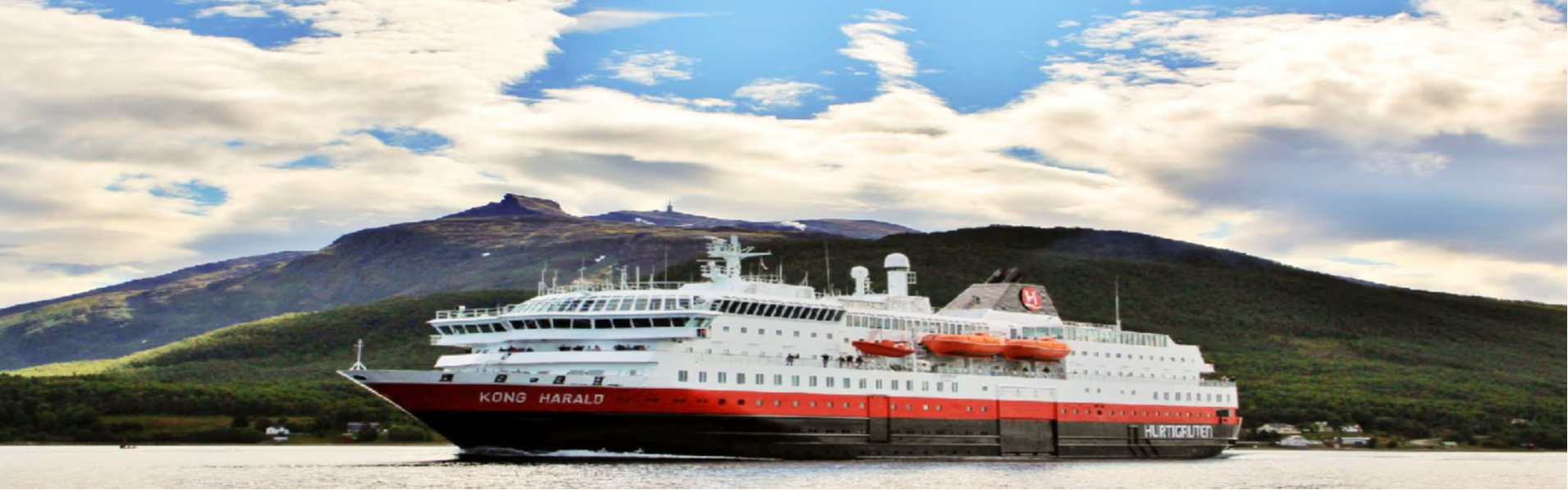
coastal carrier, not a liner. The Kong Harald has 218 cabins and two suites, over
one hundred and twenty-one metres. She left the Volkswerft yard at Stralsund,
Germany, in 1993, and was refitted in 2016 and again in 2023.
Our calendar covers 2026, 2027 and 2028. If you are looking for a suite with a balcony, this is not the ship in the
fleet for it, and better to know before booking than to find out on the deck
plan.
Two groundings and a loss of propulsion
On 4 March 2013, at the entrance to the Trollfjord, the ship ran aground; the
inquiry attributed it to an error by the master. Two hundred and fifty-eight
travellers and fifty-seven crew were aboard, she stayed aground about three
hours and the damage to the bow stayed minor. On 24 August 2021, near Molde, she
lost propulsion: two anchors were dropped while an engine was restarted, with
three hundred and eight travellers aboard. A norovirus outbreak had hit the ship
in April 2010.
Three adapted cabins
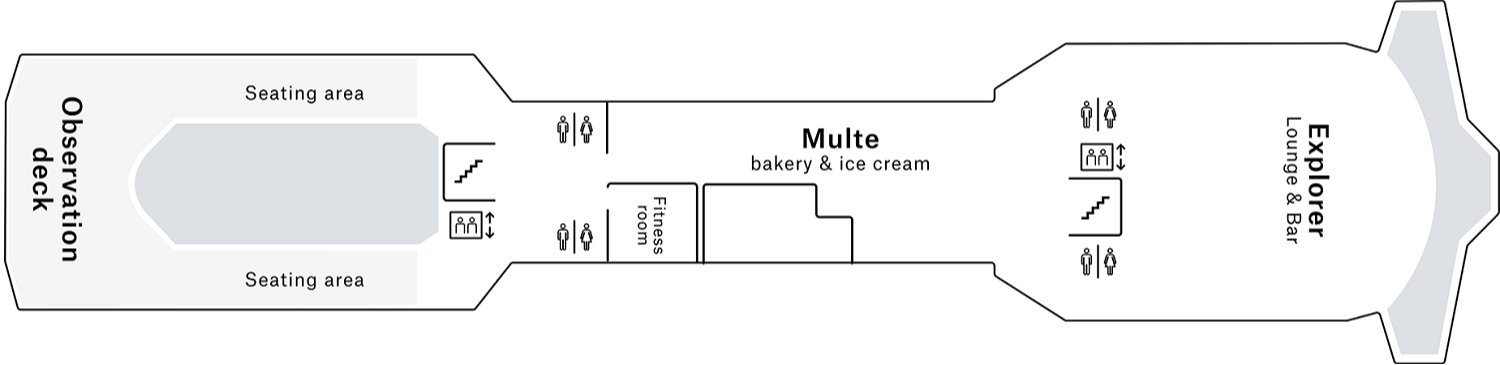
Cabins 331, 333 and 335, with automatic doors, and two accessible toilets on
decks 4 and 7. The same layout as her sisters from the Stralsund series.
The other ships on the route
The MS Richard With is her twin, from the same yard in the same year. The MS Nordlys followed a
year later. The MS Nordkapp carries the largest inventory. The MS Polarlys has been converted to
battery hybrid.
A transport timetable, not a cruise itinerary
What you buy here comes under a contract between the Norwegian state and two
shipowners, running from 2021 to 2030. It requires calls at every port on the
route every day of the year, freight carriage over the northern half, and a
guaranteed minimum of berths and pallets per ship. Heavy fuel oil is banned and
shore power connection is mandatory where it exists.
Hold on to this above all: the calls are set by the contract, not by tourist
interest. Fifteen minutes at some quays, three or four hours at the larger
ports, and eight night calls. And the contract is shared with Havila Kystruten:
the two companies alternate departure days, so a given date belongs to one or
the other. Your advisor checks which before booking.
Full voyage or segment ticket: two products
The full voyage includes full board in the main restaurant, with tea, filter
coffee and water. It does not include alcohol, excursions, transfers, flights or
gratuities. That last point deserves naming: they are not included here, unlike
the same group's expedition offer, where they are.
Port-to-port is sold as transport. Meals are not included, a cabin is
required only beyond twenty-three hours of sailing, its location is never
chosen and suites are excluded. As for Wi-Fi, the carrier gives three different
versions depending on the page you read: free, reserved for the higher fare, or
excluded. So we promise nothing.
Northern lights: what is promised and what is not
Nobody can guarantee a natural phenomenon, and the carrier does not claim to
either. What it offers is compensation if no aurora was observed, under strict
conditions: an eleven-day voyage minimum, a departure between 20 September and
31 March, and the higher fare, the entry fare being excluded.
The definition of a sighting is the heart of the matter. An aurora logged by
the bridge officers and announced on board is enough to extinguish the
guarantee, whether you saw it or not, and the ship's decision is final. The
compensation takes the form of a classic coastal voyage the following season, in
a two-berth inside cabin, to be claimed within twenty-eight days of return.
Reduced mobility: the rules before the brochure
A companion is required, and it is not a suggestion: the carrier writes it
for safety reasons. The crew provides no personal care, no lifting, no escort
between cabin and public areas. Mobility scooters are admitted provided an
adapted cabin is booked and they are stowed in the cabin, never in public
spaces.
Ashore, the reservation is major: the carrier states it offers no excursions
designed for wheelchair users and does not guarantee ramp-equipped coaches. Only
first-level excursions may be suitable. And it publishes no list of the calls
where quay access is impossible.
Where a dispute is heard
In Bergen, Norway, under Norwegian law. The contract provides no arbitration
clause: a dispute therefore goes before a court, and that court is Norwegian.
The limitation periods are one year for an ordinary claim and two years for
personal injury, counted from disembarkation.
No Quebec licence is established for this carrier. It is the agency that
brings the protection from here: a licence from the Office de la protection du
consommateur, a trust account separate from the firm's own funds, and the
Compensation Fund for Customers of Travel Agents. Those three follow a booking
made here, and only that one.