---
Choose a Cruiseline or a ship
Question or 
quote?

Ask an agent

Itineraries of the National Geographic Explorer

Price and Availability Notice
Prices displayed are provided for informational purposes only. They reflect the rates in effect at the time of their most recent update and are shown in Canadian dollars, per person, based on double occupancy, unless otherwise specified.

Supplier rates, exchange rates, taxes and fees, room or cabin categories, and promotions are subject to change at any time. The applicable price is the one confirmed by a travel advisor at the time of booking, subject to availability. Only the confirmed price shall be considered valid.

It is the traveler's responsibility to confirm the price, inclusions, and applicable terms and conditions before making a reservation. While every effort is made to keep our content up to date, transmission, display, or pricing errors may occur. In such cases, the correct price will be communicated to the traveler before any booking is confirmed. Certain terms, restrictions, and exclusions may apply.

decks plans

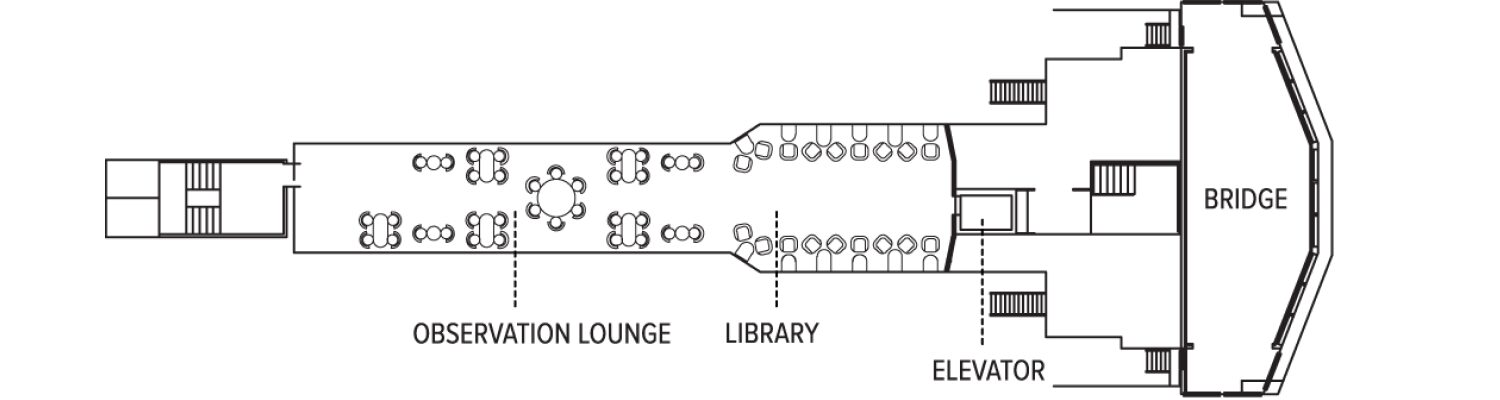
Deck - 6

Observation lounge
Lindblad Expeditions National Geographic Explorer Bridge Deck

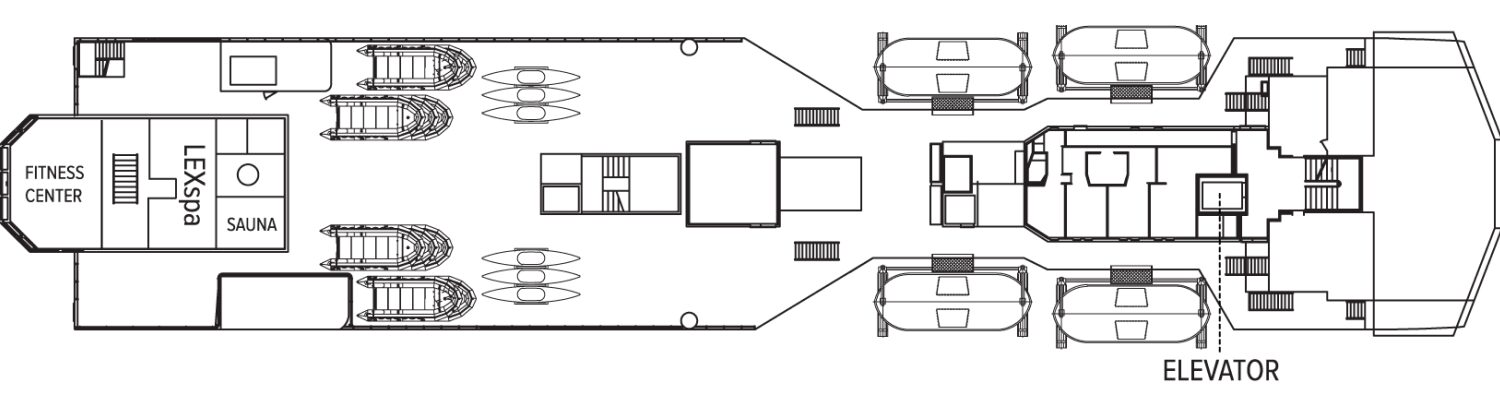
Deck - 5

Fitness center
Lindblad Expeditions National Geographic Explorer Wellness Deck

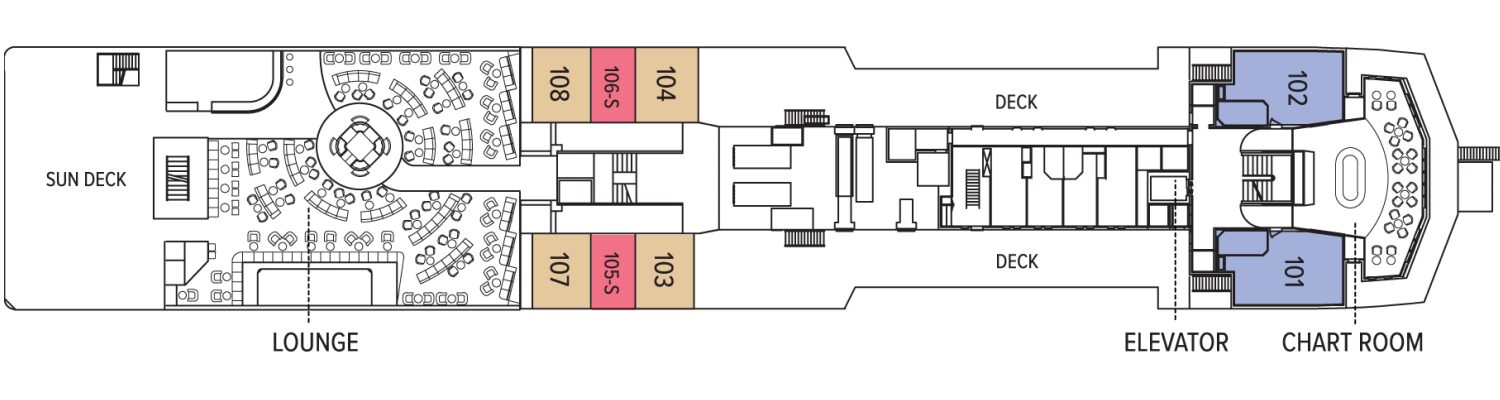
Deck - 4

Lounge
Lindblad Expeditions National Geographic Explorer Veranda Deck

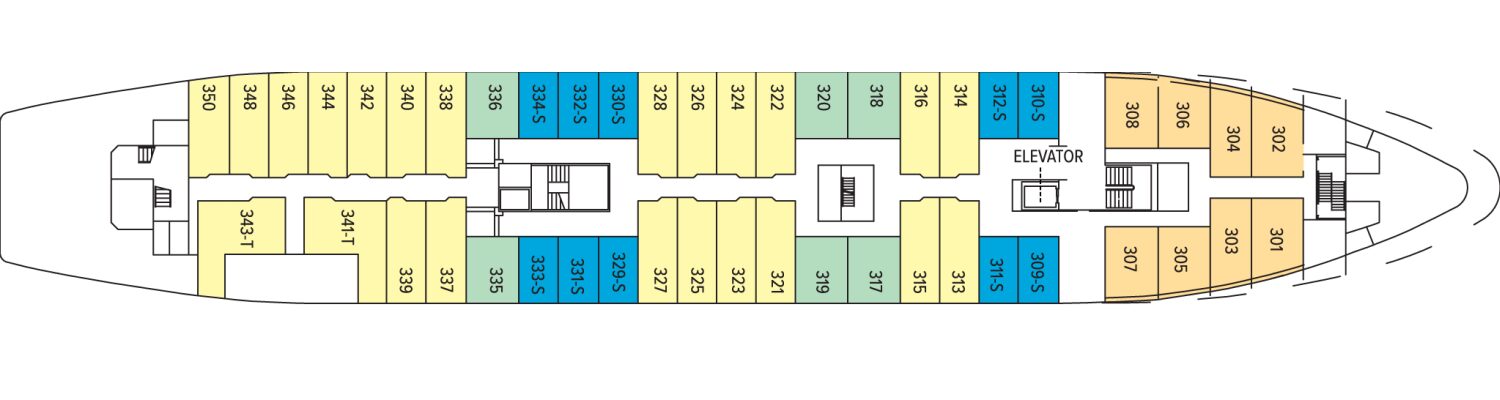
Deck - 3

Reception
Lindblad Expeditions National Geographic Explorer Upper Deck

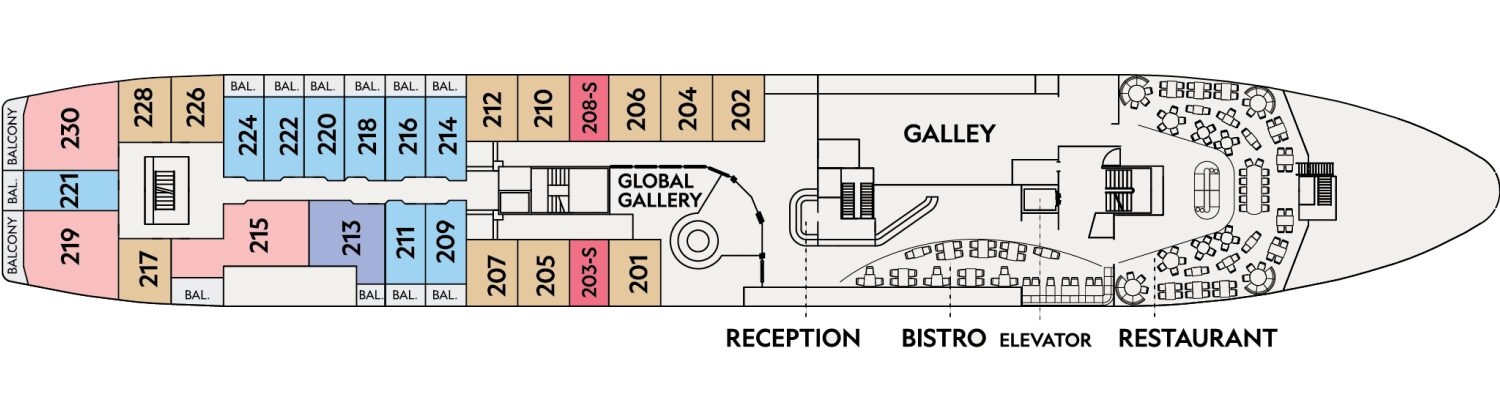
Deck - 2

Chambers
Lindblad Expeditions National Geographic Explorer Main Deck

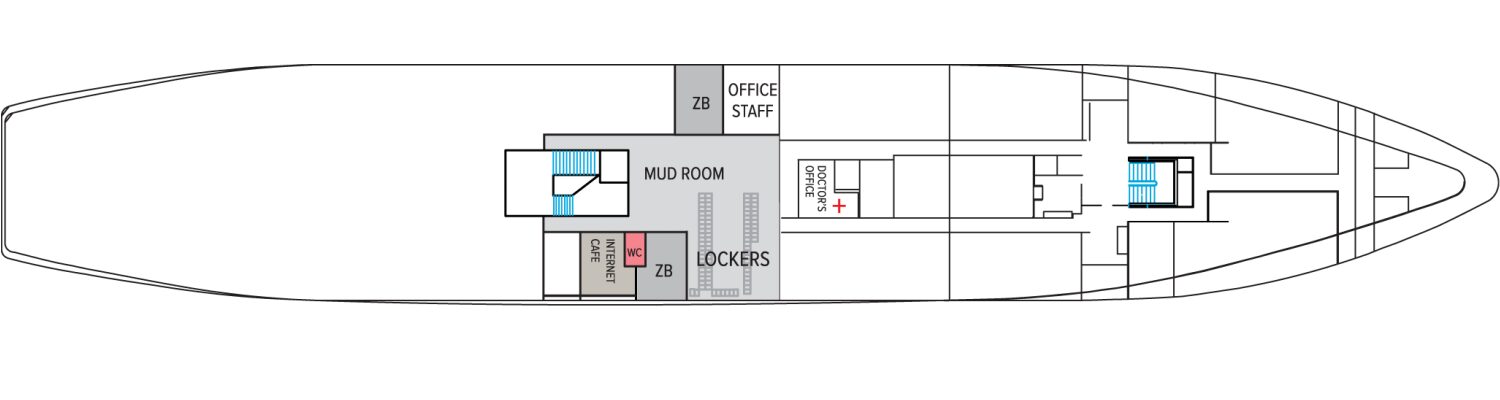
Deck - 1

Doctor's office
Lindblad Expeditions National Geographic Explorer B Deck

Technical specifications

  • Speed:  18.0 knots
  • Passengers:  218
  • Decks:  6
  • Length:  112 m
  • Width:  16 m

History

  • 1982: Année de construction
  • 2017: Année de rénovation

Forty-four years of hull, and a lift that stops too soon

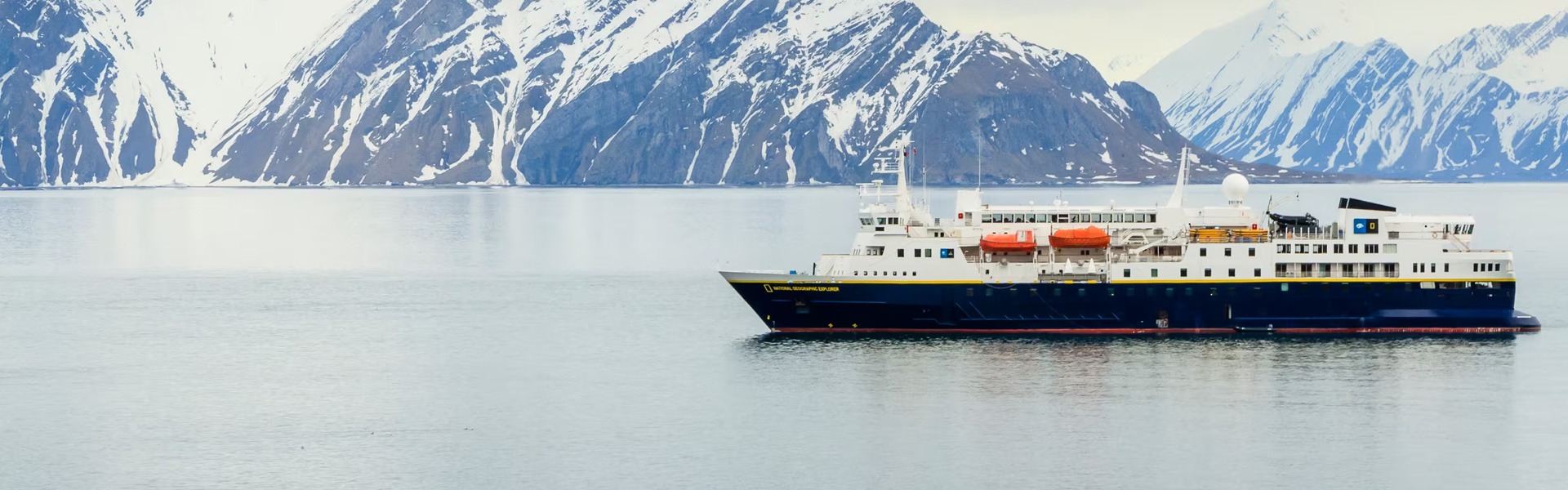
The National Geographic Explorer dates from 1982. She was a ferry before being converted into an expedition ship, and she now carries the largest capacity in the fleet: 148 travellers, 81 cabins, one hundred and twelve metres, six decks. The original yard is confirmed by no reliable source, and the line writes "ice-strengthened hull" without ever giving the exact rating. We do not invent one.

The most concrete flaw is an architectural detail. The lift does not descend to the lowest deck, the one with the mudroom, where you put on your gear and board the Zodiacs. In other words the lift stops exactly short of where it would be most useful. For a traveller with limited mobility that is the decisive obstacle, and it appears on no commercial deck plan.

What the ship has, and what she does not

She has a bridge open to travellers, three dining spaces, a gallery, a library and a mudroom with lockers. Crew gratuities are included and a National Geographic photographer is aboard: this ship is one of only four in that position.

She has no hot tub, no butler service, no submersible, and a single seating per meal. Her unrenovated cabins are described as dark because of a dated interior style. And she has no inverted bow: her behaviour in the Drake Passage is clearly less favourable than that of the Endurance or the Resolution. If comfort in the Drake is your priority, this is not the ship for you.

The other ships in the fleet

The National Geographic Endurance and the National Geographic Resolution have the inverted bow and a higher ice class. The National Geographic Orion covers the South Pacific and Asia. The National Geographic Gemini holds the Galapagos.

What the fare covers, and the detail that surprises

Included: the landings and outings of the expedition programme, use of the Zodiacs, kayaks, paddleboards and snorkelling gear, park entrance fees and special access permits, port taxes, airport transfers within the recommended window, and meals aboard. Alcohol is included on every ship but four, which the line names one by one.

Here is the detail that surprises people. Crew gratuities are included on only four ships in the fleet: the Endurance, the Resolution, the Explorer and the Orion. On the other eight ships of the brand they stay on your account. It is a two-speed mechanism inside one company, and nothing on a ship's page warns you about it.

The National Geographic photographer follows exactly the same rule: aboard those same four ships and no others. Everywhere else you will find a certified photo instructor. That is a real and useful role, but it is not the same thing, and confusing the two is the first source of disappointment on this fleet.

International air travel is not included. Some internal flights essential to the route are, when the itinerary says so in black and white.

What "expedition" means here

The programme is not decided in advance. Landings happen where ice, wind and wildlife allow, and the expedition leader may change the day's plan at lunch. That is the very principle of this kind of travel, and a traveller attached to a fixed itinerary will be happier elsewhere.

You go ashore by Zodiac. Often in a wet landing, meaning feet in the water, from a craft that moves. That calls for being able to go down a gangway ladder, step over a pontoon and keep your balance. No lift compensates for it.

On accessibility, let us say things as they are. The line publishes no accessibility policy, and no wheelchair-accessible cabin is documented on any ship in the fleet, lift or no lift. A professional review sums it up in one sentence: the ship has elevators but no cabins or accommodations for travellers with disabilities. Any booking for a traveller with reduced mobility must go through written confirmation from the line.

From Quebec

None of these routes begins here, and international air travel is not included in the fare. Depending on the region, expect one or two connections, and sometimes a compulsory internal flight the itinerary specifies.

Arrive the day before at the very least. On an expedition the ship leaves on time and does not come back for you. A delayed bag or a shifted flight can be absorbed by one spare day, and cannot be absorbed at all otherwise.

Our advisors assemble the flight, the expedition, hotel nights, transfers and insurance in a single file, under the protection of Quebec's compensation fund for travel agency customers. Write to us and we will look at what the season allows.
Frequently Asked Questions

She dates from 1982: forty-four years in 2026. She was a ferry before her conversion into an expedition ship. This is not a hull designed from the outset for polar expedition.
No, and that is the ship's most concrete flaw. It does not descend to the mudroom on the lowest deck, where you put on your gear and board the Zodiacs.
It is not established. The line writes ice-strengthened hull without ever giving the rating. We would rather say so than repeat a figure found on a third-party database.
One hundred and forty-eight, in eighty-one cabins. That is the largest capacity in the fleet, which changes the rhythm of landings: more people to put ashore, so longer rotations.
On this ship, yes. It is one of only four in the fleet where they are: the Endurance, the Resolution, the Explorer and the Orion. On the brand's other eight ships they stay on the traveller's account.
Yes, on this ship. There is one on only four ships in the fleet. On all the others, photographic guidance comes from a certified instructor, which is a different role.
She crosses it, but without an inverted bow her behaviour is clearly less favourable than the Endurance's or the Resolution's. If comfort in the Drake is your priority, choose one of those two.
Not all. A review describes the unrenovated cabins as dark because of a dated interior style. The ship as a whole is called older and traditional rather than contemporary.
No, unlike the recent ships in the fleet. There is no butler service and no alternative restaurant either: one dining room, one seating per meal.
No, and a review flags its absence explicitly for this ship. No vessel in this fleet carries one, unlike some expedition competitors.
No. It is a brand licence agreement, extended to 2040. National Geographic does not own the line and operates no ship. What it contributes are lecturers and specialists who sail aboard.
The line publishes no accessibility policy and no wheelchair-accessible cabin is documented on any of its ships. Access to sites is by Zodiac, often as a wet landing.
A bridge open to travellers, three dining spaces, a gallery, a library and a mudroom with lockers for wet gear. There is no hot tub and no alternative restaurant, unlike the newer ships.
Antarctica in the southern summer, the Arctic, Greenland and northern Europe in the northern one. It is the classic seasonal pattern of this line's polar fleet.
For the trust account and the Compensation Fund for Customers of Travel Agents, neither of which follows a booking made elsewhere. And to have someone answer when a connection collapses the night before departure.
  • #National Geographic Explorer
  • #Lindblad Expeditions Arctic cruise
  • #Antarctic cruise
  • #polar expedition cruise
  • #expedition travel
  • #Svalbard cruise
  • #Greenland cruise
  • #Norway fjords cruise
  • #Northern Lights cruise
  • #Midnight Sun cruise
  • #ice navigation expedition
  • #wildlife expedition cruise
  • #whale watching cruise
  • #polar bears viewing
  • #Antarctic penguins
  • #scientific expedition cruise
  • #eco expedition travel
  • #sustainable expedition cruise
  • #adventure cruise
  • #remote exploration voyage
  • #polar research ship