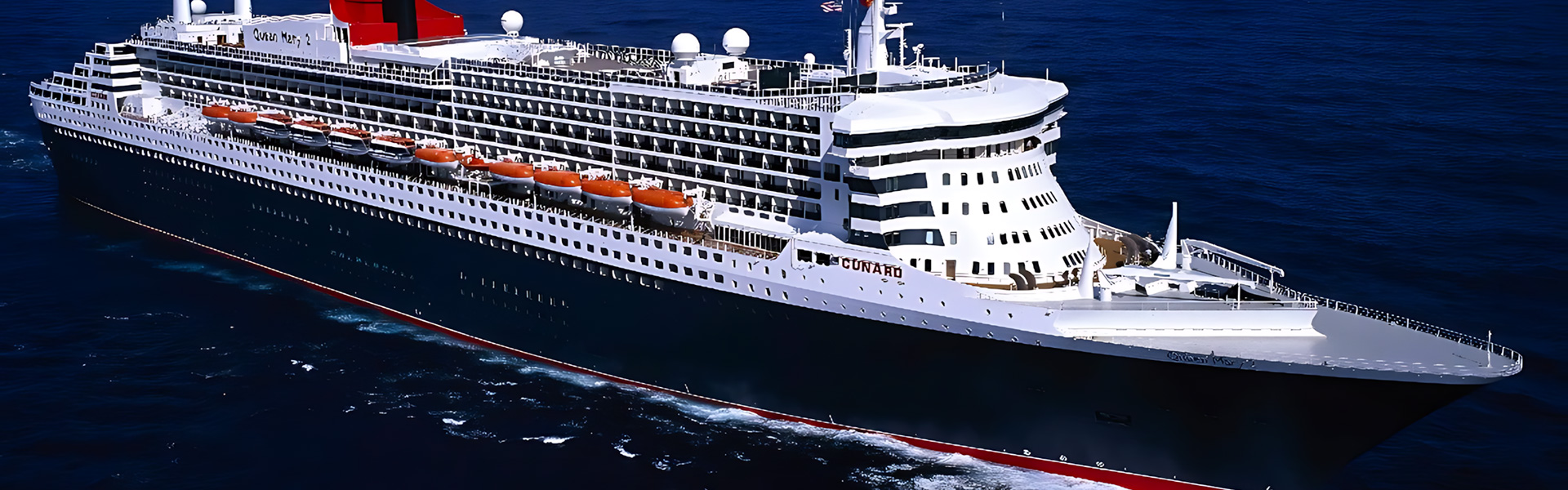
The world's last transatlantic liner
That is not a turn of phrase. The Queen Mary 2 is built differently from a
cruise ship: thicker hull plating, deeper draught, higher freeboard, and a
service speed reaching thirty knots. Those choices are expensive and serve one
purpose, holding the North Atlantic in winter, when the sea there is bad. No
other ship in service is built for it.
She left Chantiers de l'Atlantique at Saint-Nazaire in 2004. One hundred and
forty-nine thousand two hundred and fifteen gross tons, three hundred and
forty-five metres, up to two thousand six hundred and ninety-five guests and
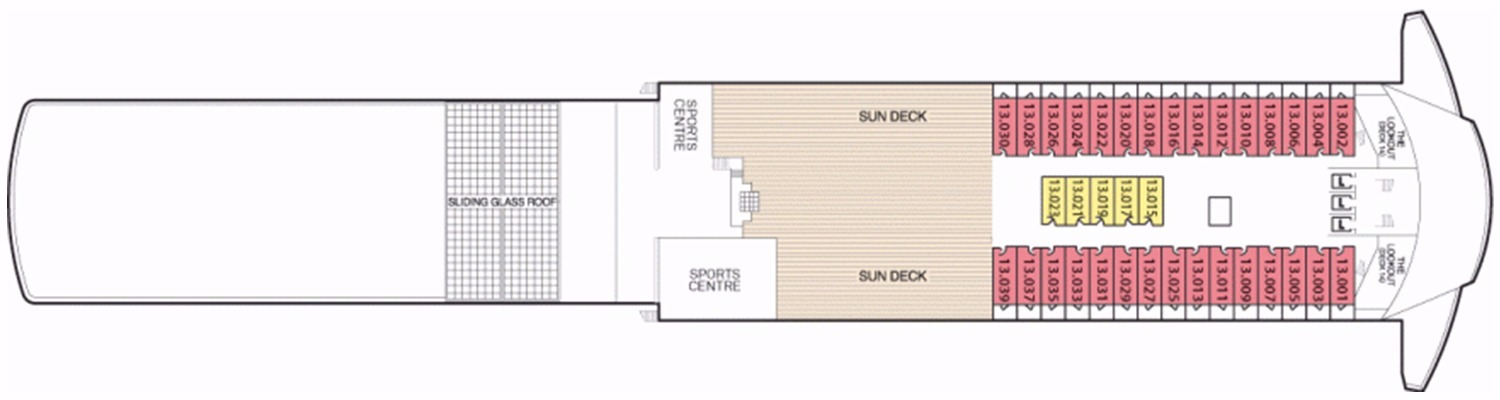
about one thousand two hundred and fifty-three crew across thirteen decks.
The only ship that carries dogs
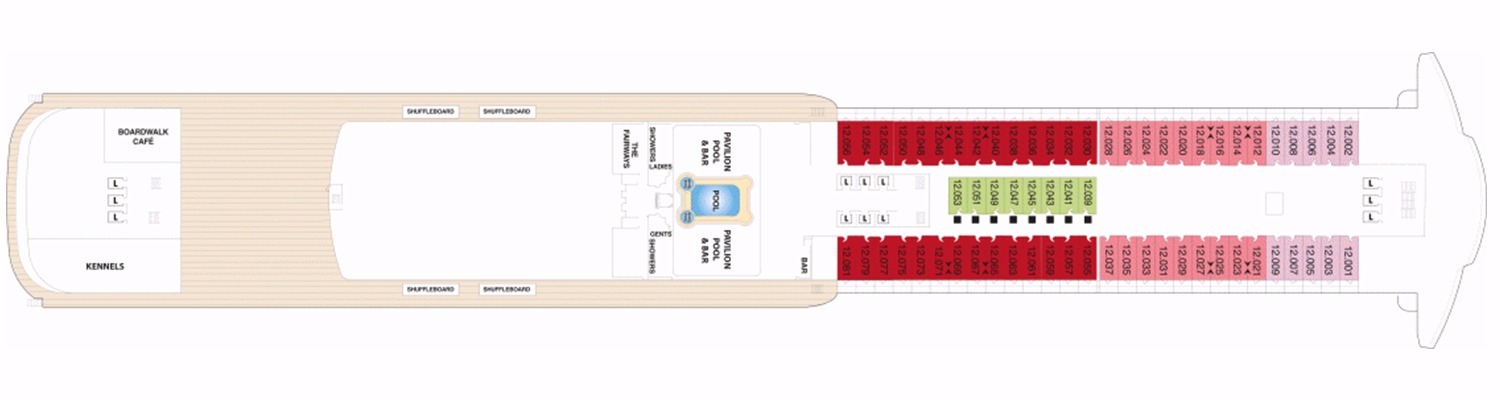
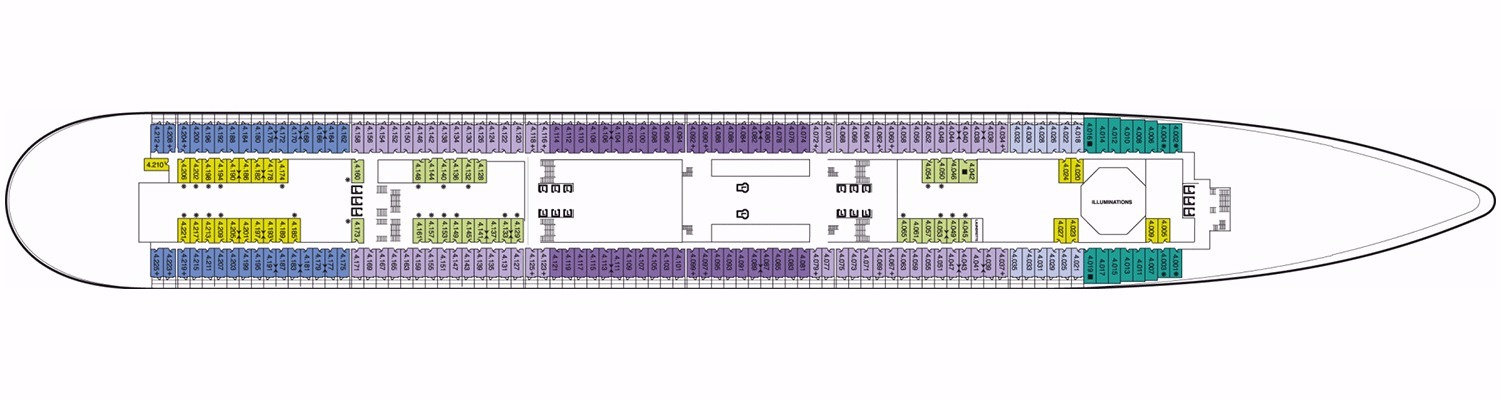
She has kennels, on an upper deck, with a kennel master aboard. Dogs and cats
travel on the transatlantic crossings, which no other cruise ship allows. For a
family moving between Europe and America, it is sometimes the only way to move
an animal without putting it in an aircraft hold. The places are few and go
very early.
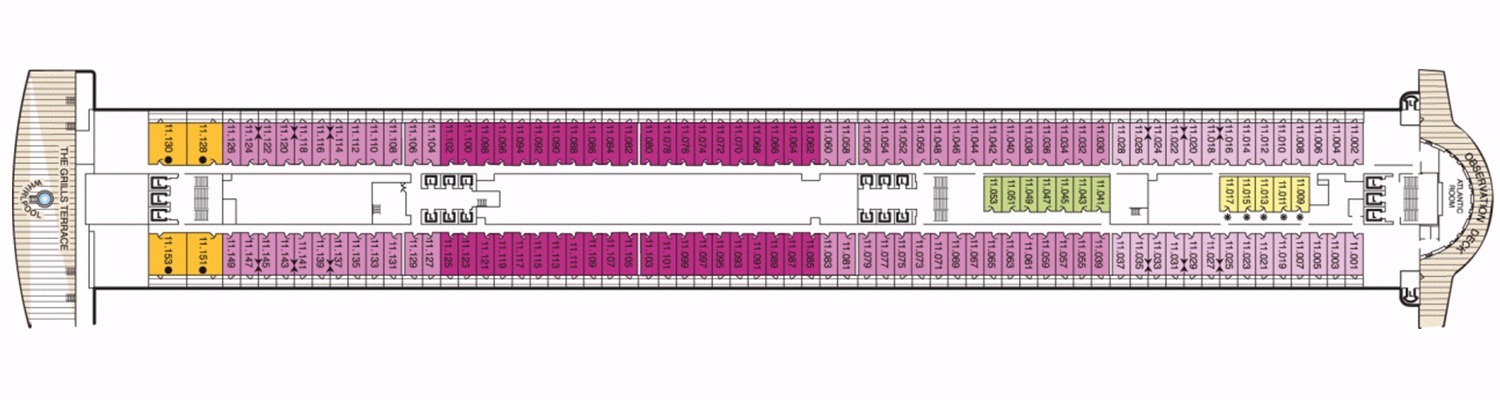
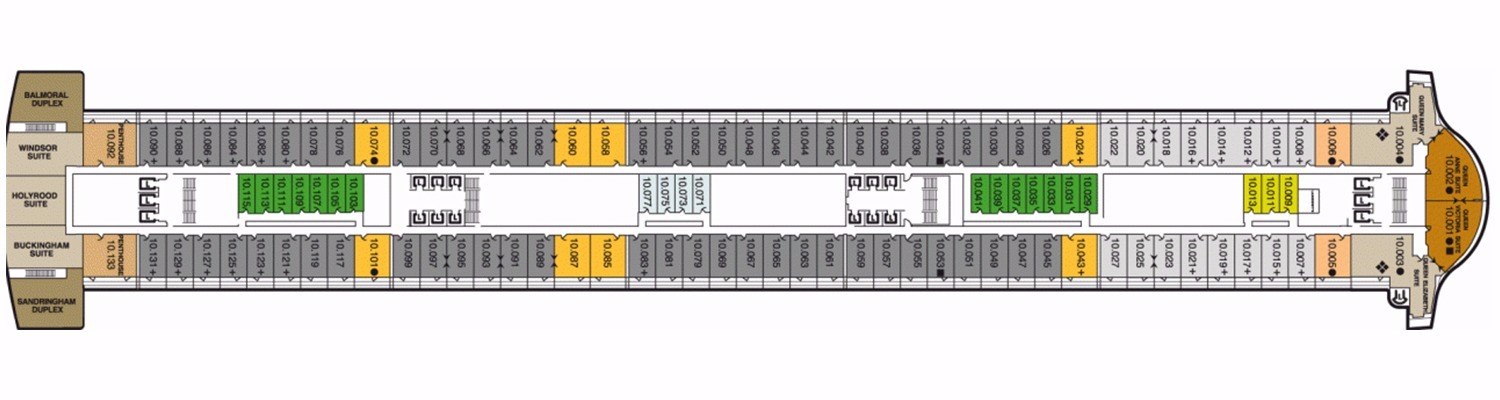
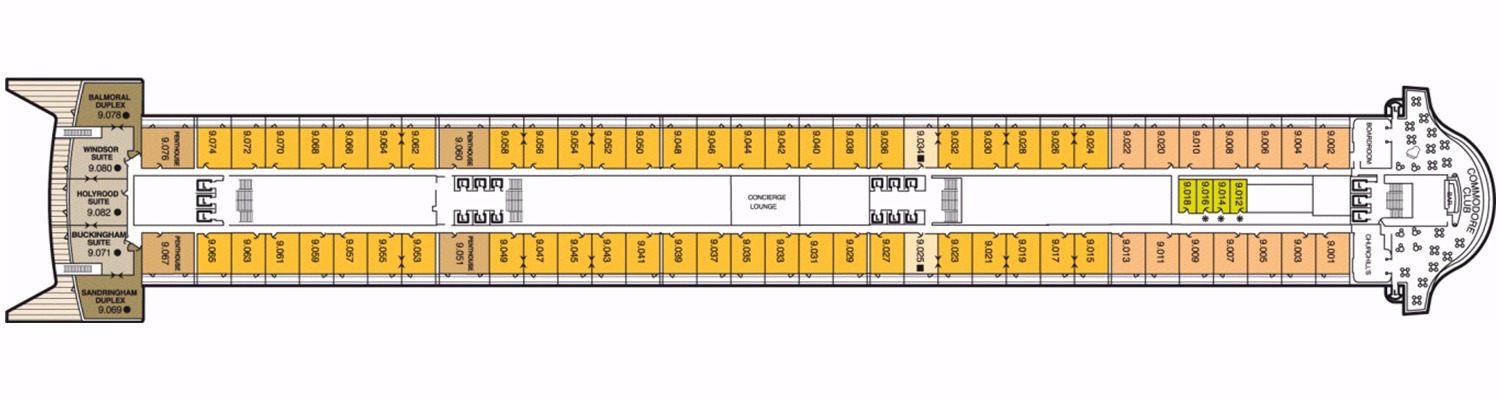
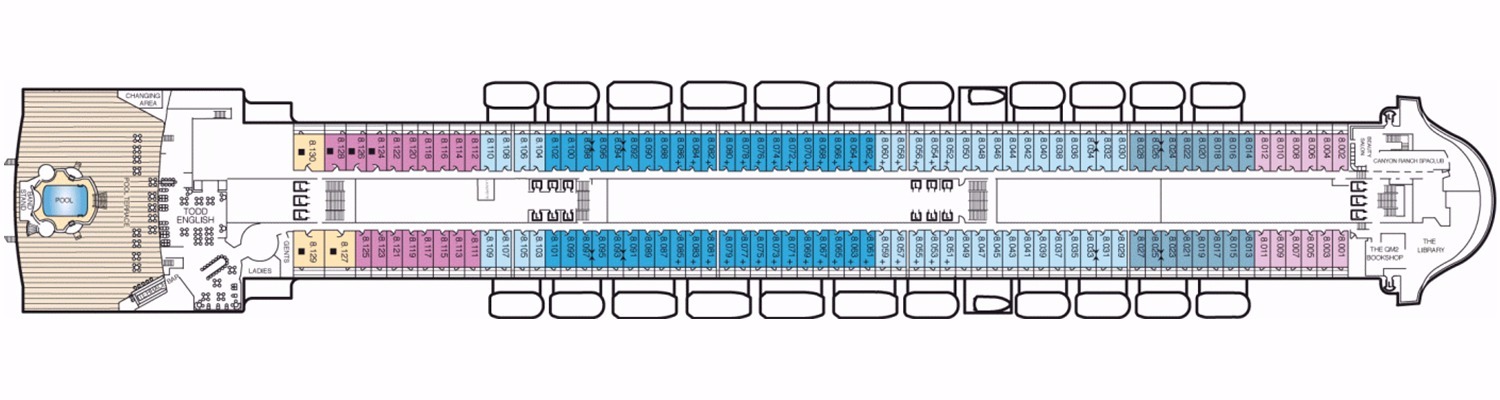
The class system, and why to know it before booking
This is the line's distinguishing feature and the source of most
disappointment when nobody explains it. The stateroom grade you book
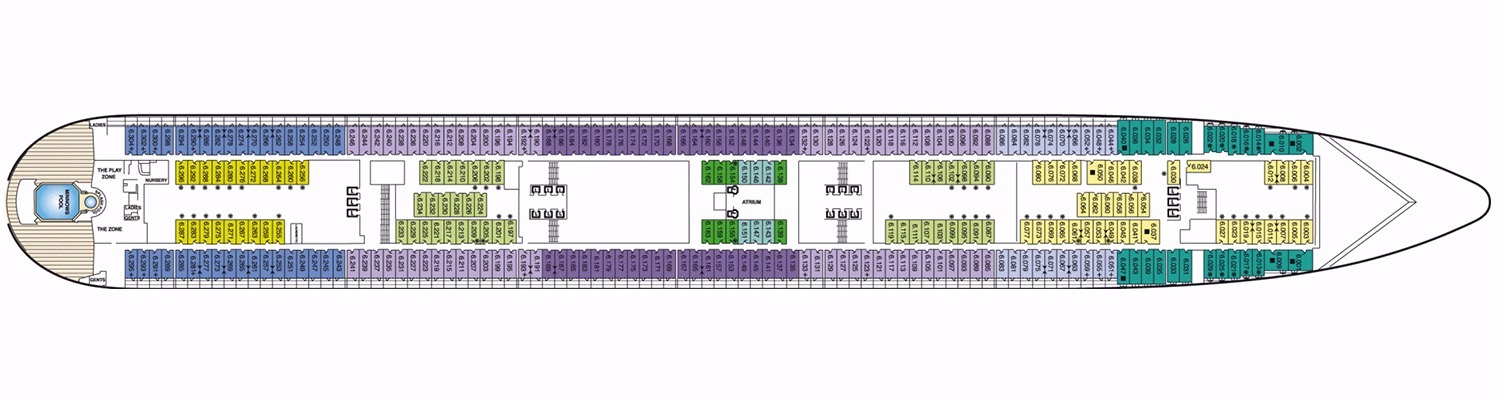
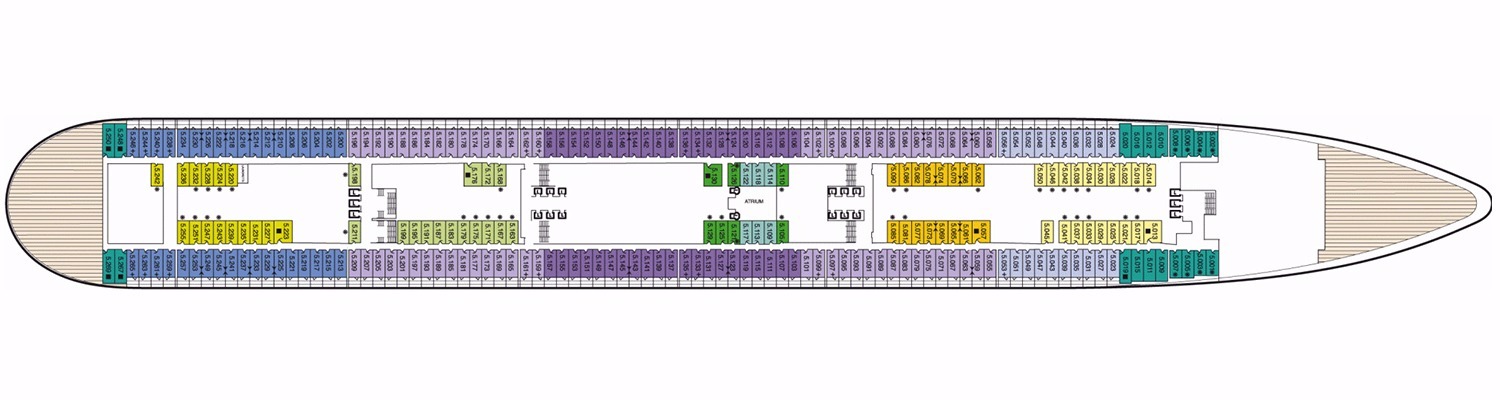
decides which restaurant you eat in for the entire voyage. Four tiers:
Britannia, Britannia Club, Princess Grill, Queens Grill.
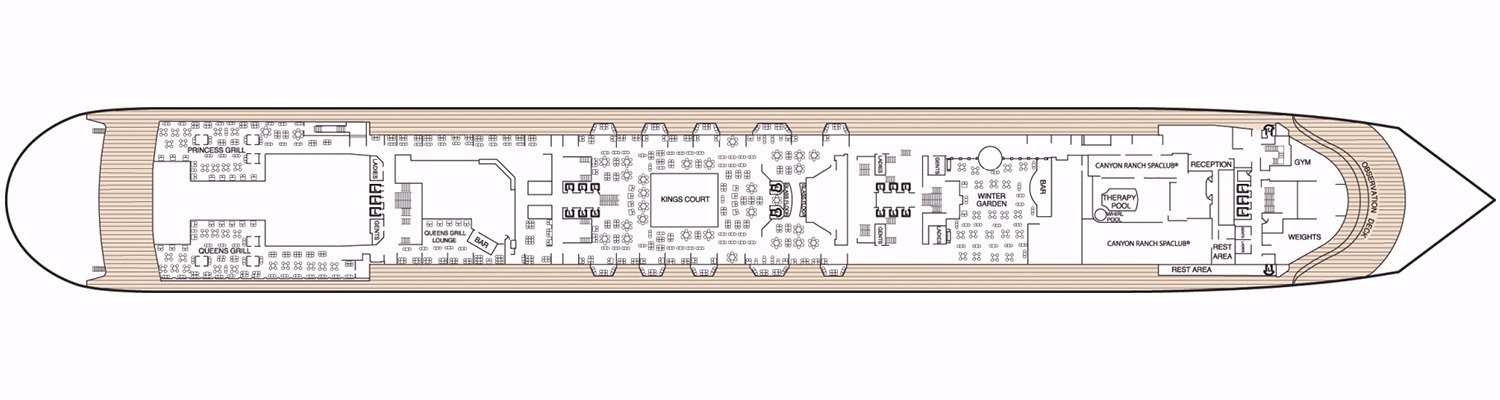
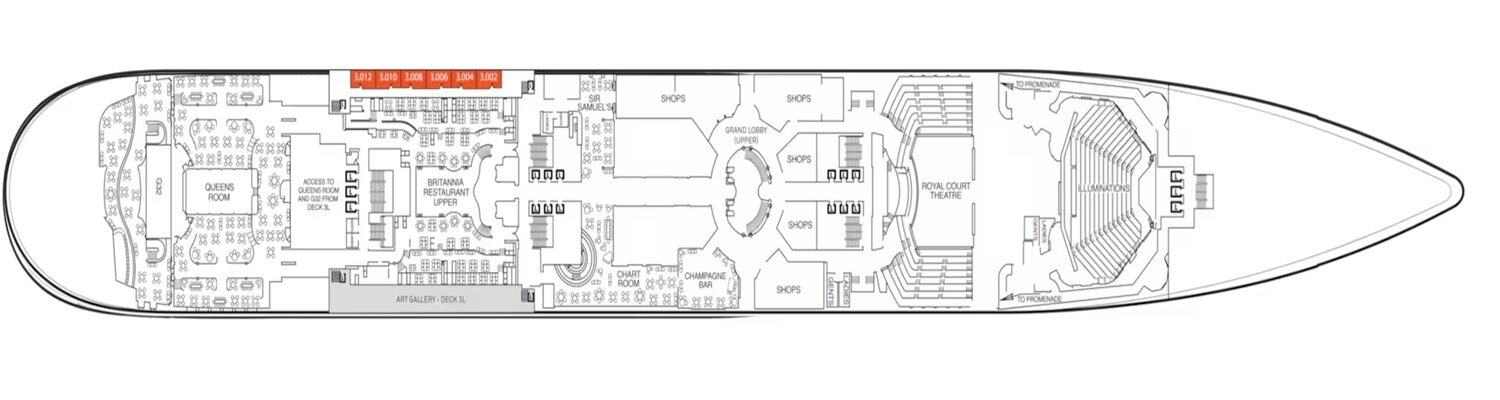
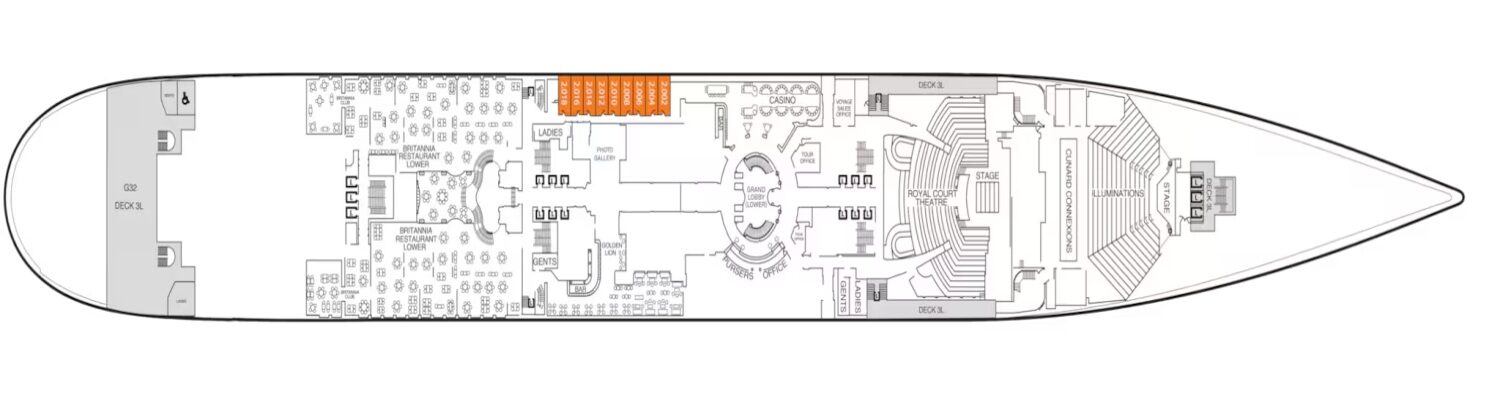
Grill guests have their own dining room, their own lounge and their own open
deck, reached by coded keycard. A Britannia guest cannot book a table there,
and it does not change once aboard. In Britannia, dinner is taken at one of two
fixed sittings, or within a window aligned to the first.
This is neither a fault nor a trap: it is a deliberate inheritance, from the
liners where people travelled by class. But a guest used to ships where
everyone eats anywhere needs to know it before choosing a stateroom, because
the difference is lived three times a day for a fortnight.
The number of wheelchair-accessible staterooms is published for
no ship in this fleet. We check it at booking rather than quote a figure.
What the fare covers, and what it does not
The grand liner setting suggests all-inclusive. It is not.
The fare covers the stateroom, meals in the dining rooms and buffets, the shows
and the talks. The rest is charged.
A daily hotel and dining charge is posted automatically to your onboard
account, at a rate that varies with stateroom grade. It can be prepaid before
departure and adjusted at the Purser's Office once aboard, but it does not
vanish on its own. A separate service charge is added to bar purchases and spa
treatments.
Alcoholic drinks are charged or bought as a package. Wi-Fi is charged. Shore
excursions are charged. Some restaurants carry a supplement. None of this is
unusual in this segment, but it is worth allowing for when comparing against a
line where those items are in the fare.
Meanwhile, in the fleet
The other three are cruise ships, not liners: the
Queen Victoria and the
Queen Elizabeth from the same series, and the
Queen Anne, the newest. The fleet numbers
four.
Booking from Quebec
The contract is with Carnival plc, trading as Cunard Line, and is governed by
the general federal maritime law of the United States despite the English home
port. The competent court changes with the itinerary: Los Angeles County,
California, for any voyage calling at a US port, and the courts of Southampton,
England, for those calling at none. From Montreal, neither is convenient.
This contract requires no arbitration, unlike several of its
competitors: a dispute is litigated before a court. It does impose a
class-action waiver, which obliges each guest to act alone.
The deadlines are tight and the second one especially so. Six months'
written notice and one year to sue, for personal injury, with ninety days to
serve. But fifteen days' notice after the voyage ends for any
other claim, and six months to act. Fifteen days. Damaged luggage, a dropped
call, a service not delivered: note your disembarkation date. Baggage liability
is also capped very low; the cap rises with the line's protection programme,
and valuables are not covered at all.
The carrier reserves the right to cancel the voyage, deviate from scheduled
ports or substitute the ship, without notice. Nothing establishes a Quebec
licence for it. Your protection comes from here: Voyages AquaTerra holds a
licence from the Office de la protection du consommateur, your payments pass
through a trust account, and your departure is covered by the compensation fund
for travel agency customers.