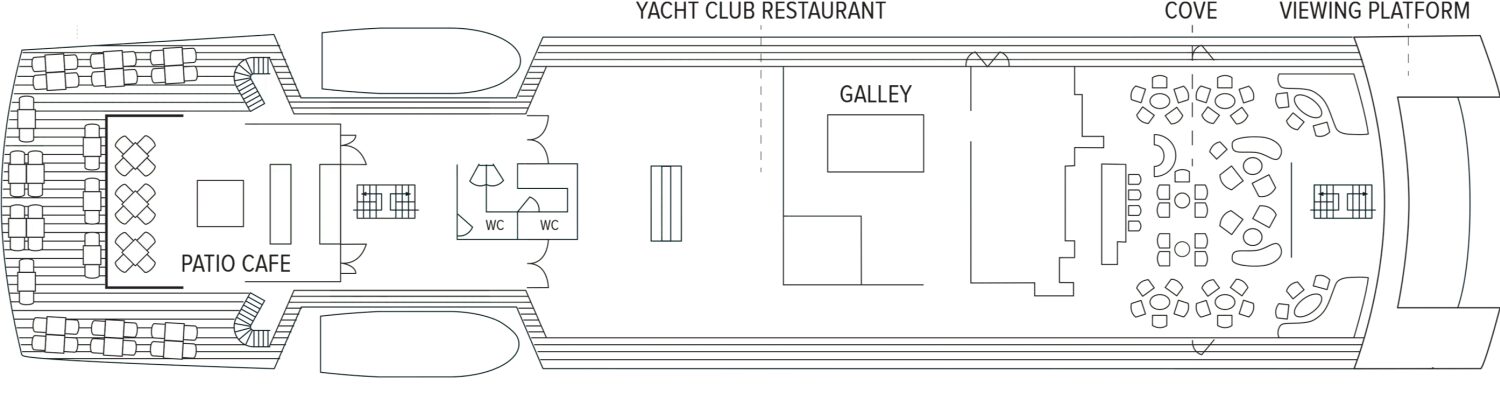
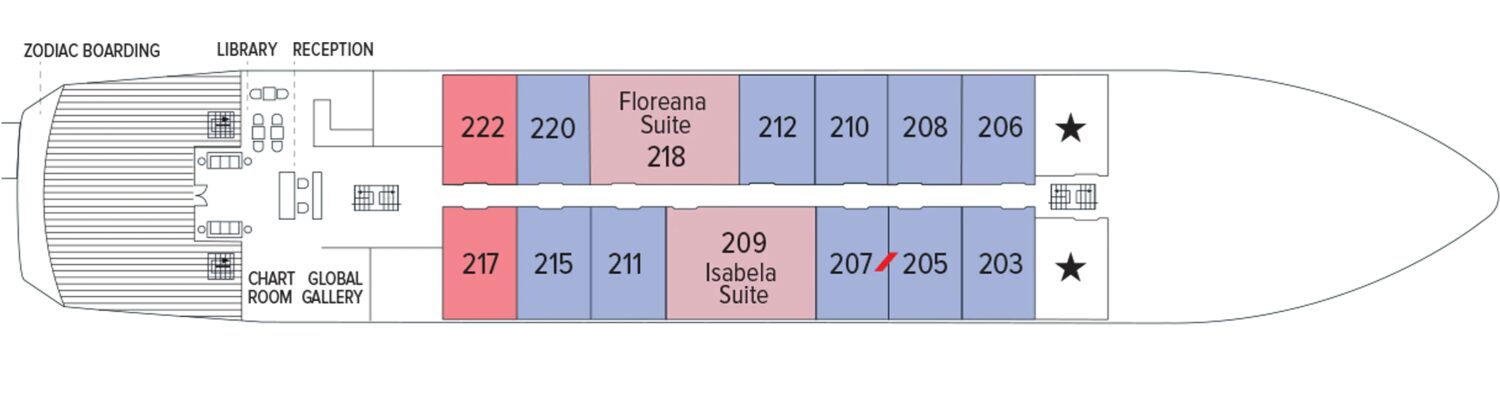
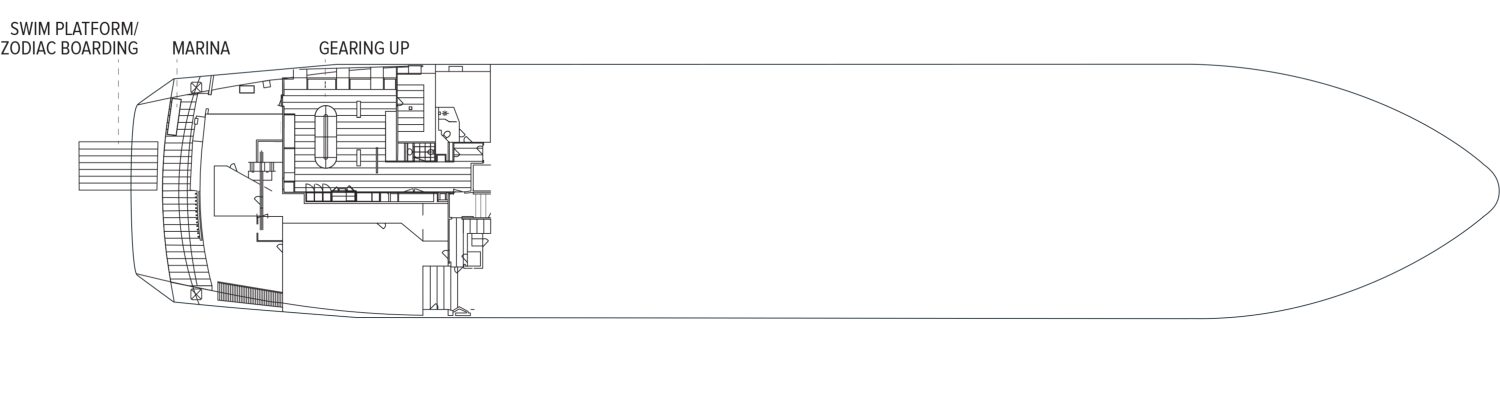
Five decks, no lift
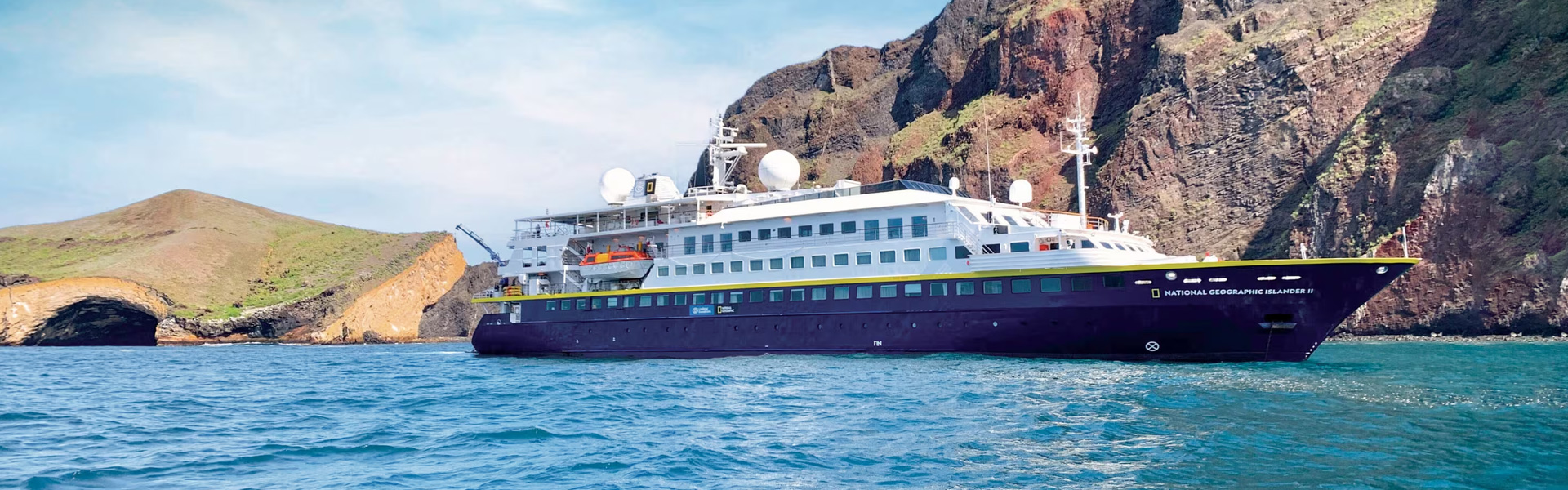
The National Geographic Islander II is positioned as the most refined ship in
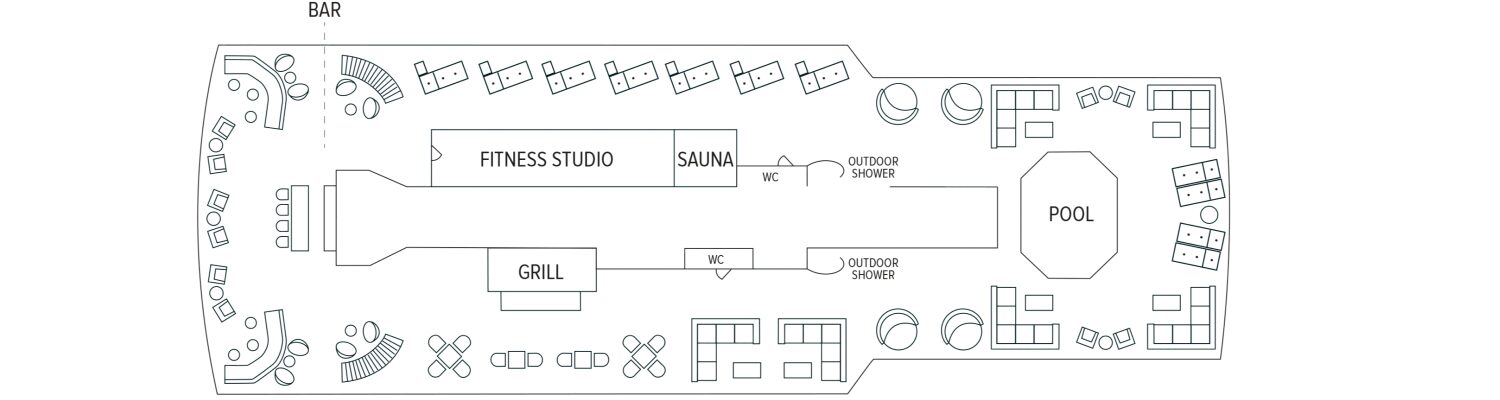
the archipelago fleet: teak decks, a temperature-controlled marina, an infinity
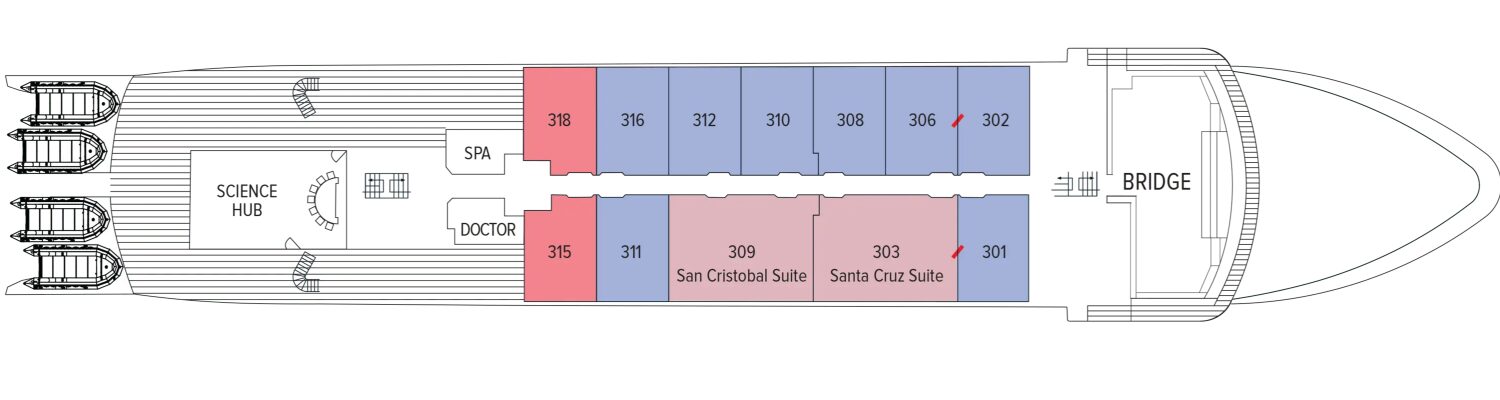
plunge pool, a science hub with a video microscope, and suites of two hundred and
eighty square feet rising past five hundred for the largest. Sixty-one metres,
five decks, 26 cabins, 48 travellers.
And no lift. A professional review makes it the ship's principal flaw, and
that is hard to argue with: five decks without a lift, on a ship sold at the
price of refinement, is a contradiction the traveller discovers at
embarkation.
A 1991 hull, four names before this one
The hull was built in Germany, keel laid in 1988 and completed in December
1991. She carried four names and served four operators before joining this fleet,
rebuilt in 2021 and 2022. Thirty-five years old in 2026: the refit is real, and
so is the age of the hull.
One remark from a review deserves quoting: the itineraries are so intense that
several of the ship's refinements are lost on travellers who, after a long day
ashore, are simply too tired to enjoy them in the evening. That is this ship's
paradox.
Crew gratuities are not included and there is no National Geographic
photographer aboard: this ship appears on neither list.
The other ships in the fleet
The National Geographic Gemini offers single cabins with a balcony. The National Geographic Endeavour II is the largest of the four.
The National Geographic Delfina is the smallest. The Delfin II sails the Peruvian Amazon.
What is included, and what is not
The fare covers life aboard and the expedition itself: meals, guided
outings, Zodiacs, kayaks, paddleboards, snorkelling gear, national park
entrance fees, access permits and port taxes. It also covers the services of a
medical professional "where applicable" — the phrase is the line's own, and it
means a doctor is not guaranteed on every ship.
Outside it: international flights, visas, insurance, treatments, premium
spirits and upgraded Wi-Fi packages. And crew gratuities on eight ships out of
twelve: they are included only on the Endurance, the Resolution, the Explorer
and the Orion.
The same rule governs the National Geographic photographer, aboard those
four ships alone. Elsewhere a certified photo instructor accompanies the group.
Always ask which of the two sails on the date you are considering.
Aboard
Public rooms are plain and functional: one dining room with a single seating,
an observation lounge, a library, and a mudroom for wet gear on the ships that
have one. Evenings are talks rather than shows. That is not a shortfall; it is
the format.
Expedition equipment is included and never charged: Zodiacs, kayaks,
paddleboards, snorkelling gear. No ship in this fleet carries a submersible,
unlike some expedition competitors: the confusion is easy and worth clearing
up.
On accessibility, plainly: no wheelchair-accessible cabin is documented on any
ship in the fleet, and the line publishes no policy on the matter. Access to
sites is by Zodiac, often as a wet landing. A lift aboard changes nothing about
that step.
What this trip asks of you from Montreal
An international flight not included in the fare, and often an internal flight
on top. Total travel time surprises many people: these regions are not reached
in a day.
Arrive the day before at the very least. It is the only margin that absorbs a
delay, a lost bag or a sleepless flight. Many of our clients take two nights on
site before embarking and have never regretted the expense.
Our advisors bring flight, expedition, hotels, transfers and insurance into a
single file protected by Quebec's compensation fund for travel agency customers.
We verify the real dates before anything is booked.