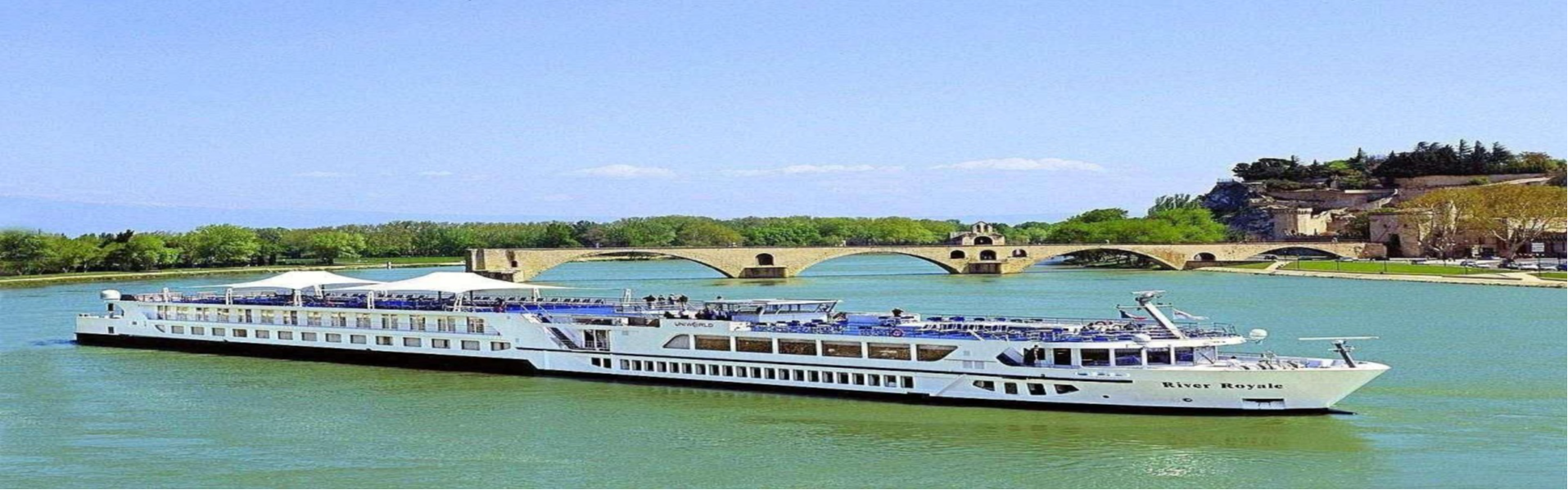
Same hull, another name: the S.S. Bon Voyage
The River Royale was built in 2006 for the Garonne, the Dordogne and the
Gironde, around Bordeaux. In April 2019 the hull came out of the yard fully
rebuilt and renamed S.S. Bon Voyage. She still sails, on the
same waters, under the same operator. This is not a different ship: it is this
one, under another name.
Our site therefore carries two pages for one hull. This one holds no dates
at all any more. The live page, the one carrying the inventory and the current
programme, is the S.S. Bon Voyage page.
What the rebuild changed, and what it did not
Capacity went from one hundred and twenty-eight to 124 travellers: the
rebuild widened some cabins rather than adding any. The present 62 cabins sit
along one hundred and ten metres, a length imposed by the Garonne locks and
unchanged by a single metre since 2006.
The hull is twenty years old. A rebuild redoes the interiors, not the steel.
And as with the other renamed ships in this fleet, the official page for the
rebuilt vessel nowhere mentions her original name: a traveller who sailed
aboard before 2019 cannot find her unaided.
Where to look for a departure
The S.S. Bon Voyage is this same hull, current. The S.S. Joie de Vivre covers the Seine, the S.S. Catherine the Rhone
and the Saone, the S.S. Sao Gabriel the Portuguese Douro.
Renting a ship, owning a ship
The line does both. Some hulls belong to it, others are operated by a third
party that leases them by the season. The line has itself belonged since 2004
to a large travel group, under sale to American investment funds since July
2024.
Keep the mechanism in mind, because it comes back on almost every page in
this batch: when a ship leaves the catalogue, you need to know whether it was
sold, transferred to a sister brand, or simply handed back to its owner. The
three do not carry the same consequences for a traveller trying to find it
again.
What the fare covers, and where it stops
It covers onboard gratuities, which removes the daily service charge posted
to the account. It covers drinks at meals and the itinerary excursions. It
covers internet access, whose speed and continuity nobody guarantees.
It stops at the air, which is not included. It stops as well at gratuities
to coach drivers ashore, which are not included either. The airport transfer is
offered only if the flight was booked through the line; otherwise it is paid
separately.
Accessibility, as it reads
The line publishes no inventory of adapted cabins. Its accessibility
statement concerns its website, not its ships. So each question has to be asked
one at a time, before booking rather than after.
The known rules are firm: able companion required, folding wheelchair only,
mobility scooter refused, disembarkation possible with no refund if the crew
judges the traveller can no longer follow. Grab bars are fitted in the
bathrooms, which does not make those bathrooms accessible.
The legal frame, without dodging it
Transport falls to a Swiss company established at Rheinfelden, and the venue
named varies with the document you read: the stated head office and the named
court do not always agree. The Canadian entity litigates in Ontario, the
American one in California.
The deadlines are short and easily lost: injury notice within six months,
suit filed within one year, absolute bar at three. Nothing establishes a Quebec
licence for this line. Voyages AquaTerra holds one, with a trust account and
the Compensation Fund for Customers of Travel Agents, and someone who answers
when a connection collapses the night before departure.