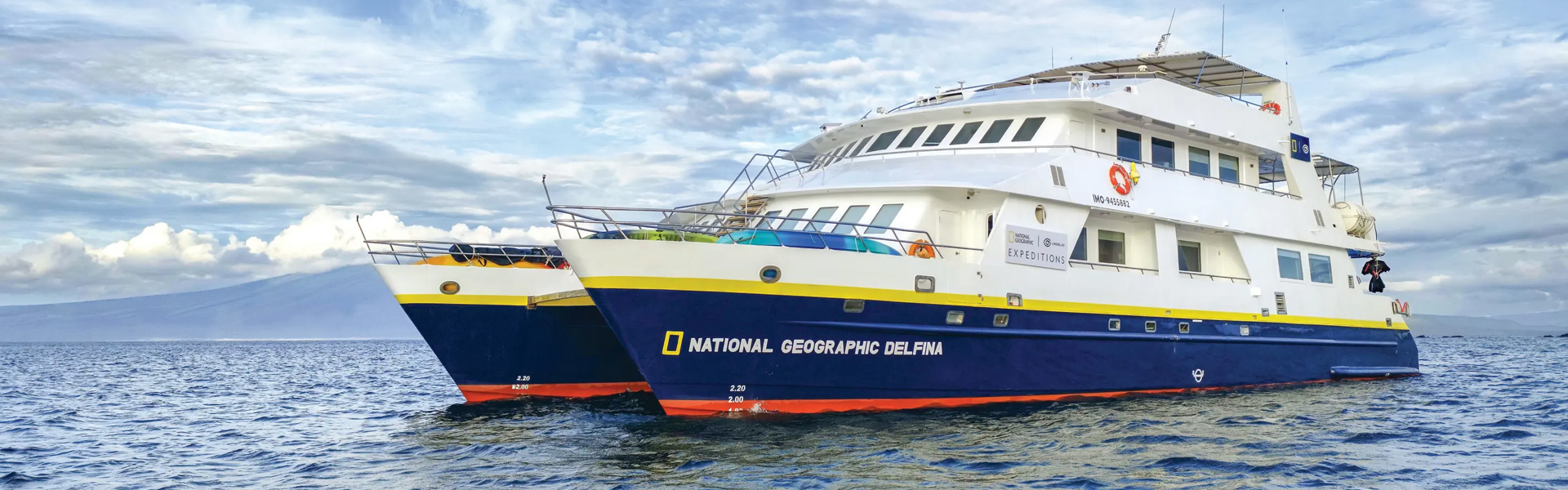
A 2007 hull presented as a 2025 ship
Let us start where the sources contradict each other, because that is what
concerns you. The ship's official page announces the year 2025. The hull was in
fact built in 2007 in Ecuador and carried two other names before this one. What
dates from 2025 is the refit and entry into service under this flag: the
inaugural voyage took place on 14 February 2025.
The distinction is not cosmetic. A client reading "2025" believes they are
buying a new ship. They are buying a nineteen-year-old hull entirely rebuilt,
which is perfectly respectable but is not the same thing. We would rather tell
you beforehand than afterwards.
The smallest ship in the fleet
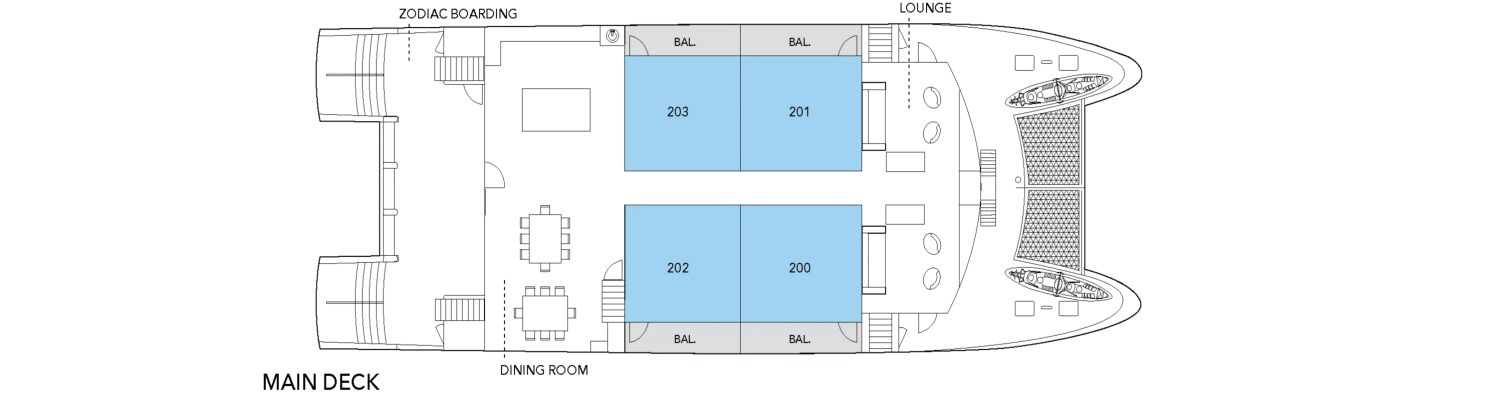
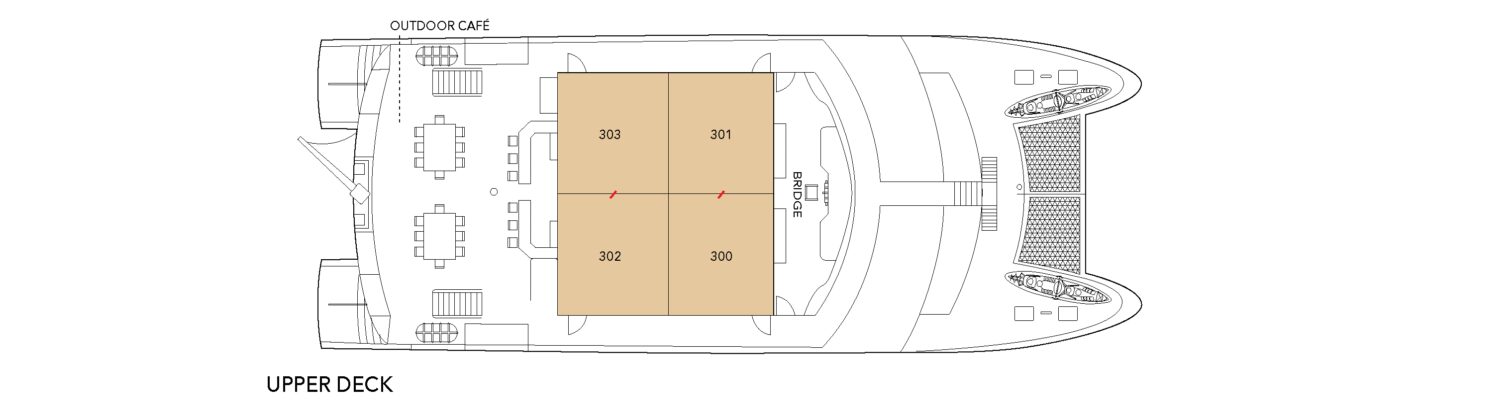
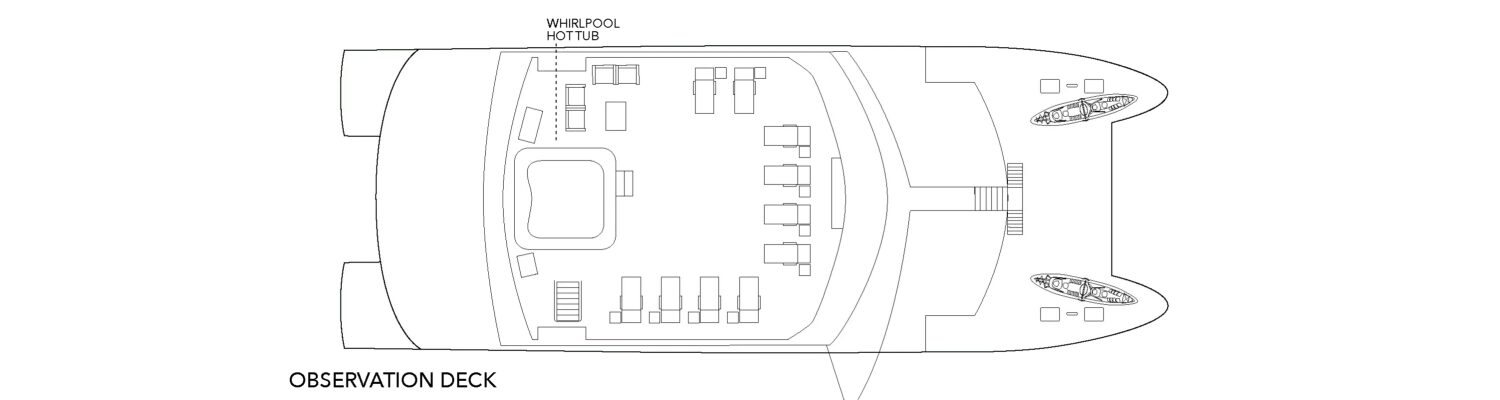
Sixteen travellers, eight cabins, a thirty-metre catamaran on three decks,
twelve crew. It is the most intimate format in the fleet, much sought after for
private charters and extended families.
The twin hull brings real stability in the archipelago's waters. An
observation deck runs around the ship, with a hot tub. The galley is entrusted
to Ecuadorian chefs.
What the format imposes: no lift across three decks, no gym, no spa, one
dining room. And there is no National Geographic photographer aboard, and no
crew gratuities included: this ship appears on neither official list.
The other ships in the fleet
The National Geographic Gemini is larger and offers single cabins. The National Geographic Islander II positions itself as a
private yacht. The National Geographic Endeavour II is the largest of the four. The Delfin II sails the Peruvian
Amazon.
The fare, item by item
Included: the cabin, all meals aboard, the outings of the expedition
programme, use of the Zodiacs and outdoor equipment, park entrance fees,
special access permits, port taxes and airport transfers within the planned
window. Basic Wi-Fi is included, enough for email and messaging; packages for
streaming are paid aboard.
Not included: international air travel, visas, travel insurance, wellness
treatments, upgraded Wi-Fi packages. And, on eight of the brand's twelve ships,
crew gratuities. They are included only on the Endurance, the Resolution, the
Explorer and the Orion.
One point worth reading twice: the National Geographic photographer sails on
those same four ships only. On all the others, photographic guidance comes from
a certified instructor. The two roles look alike on paper and do not look alike
aboard.
On polar routes, rental of boots and waterproof trousers is charged extra,
where several competitors in the same category supply them.
The typical day, and what it asks
Two outings a day as a rule, early morning and late afternoon, when light and
wildlife line up. Between them, naturalist talks, time on the bridge — open to
travellers on most ships — and rest. In the evening there is no show and no
casino: the day's recap is the programme.
Landings are by Zodiac, sometimes onto a beach with feet in the water. You go
down a gangway ladder and step over the pontoon of a craft that moves. It is the
compulsory passage of this kind of travel, and it is where real mobility gets
measured.
On accessibility, the line publishes no policy and no wheelchair-accessible
cabin is documented on any of its ships. Some have a lift, others do not; none
has an adapted cabin. We would rather say so here than let you discover it at
the gangway.
Leaving from Quebec
The international flight is not included in the fare. Some essential internal
flights are, when the itinerary says so. From Montreal, most of these regions
need at least one connection, often two, and door-to-door time exceeds what the
brochure suggests.
A rule learned the hard way: arrive at least a day before embarkation, two if
the time difference is large. On an expedition there is no catching up: the ship
has sailed.
We assemble flight, expedition, hotels, transfers and insurance into one file,
with the protection of Quebec's compensation fund for travel agency customers.
Tell us about the trip before picking the date.