MSC Armonia: the Adriatic in 2026, then 26 nights through Suez to Durban
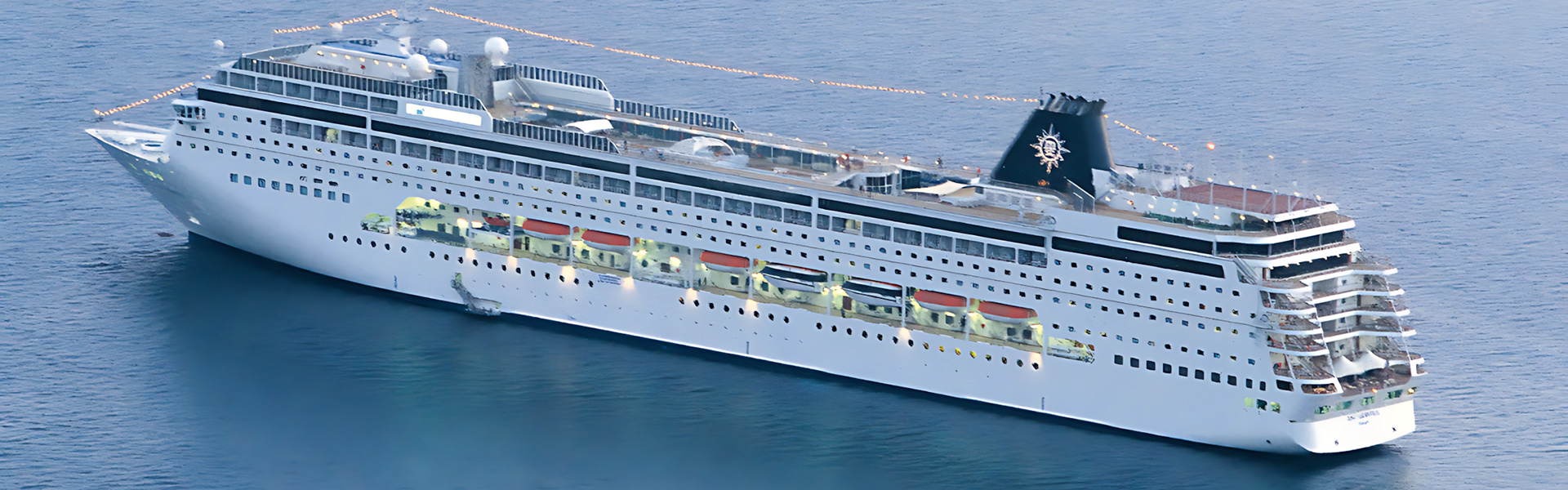
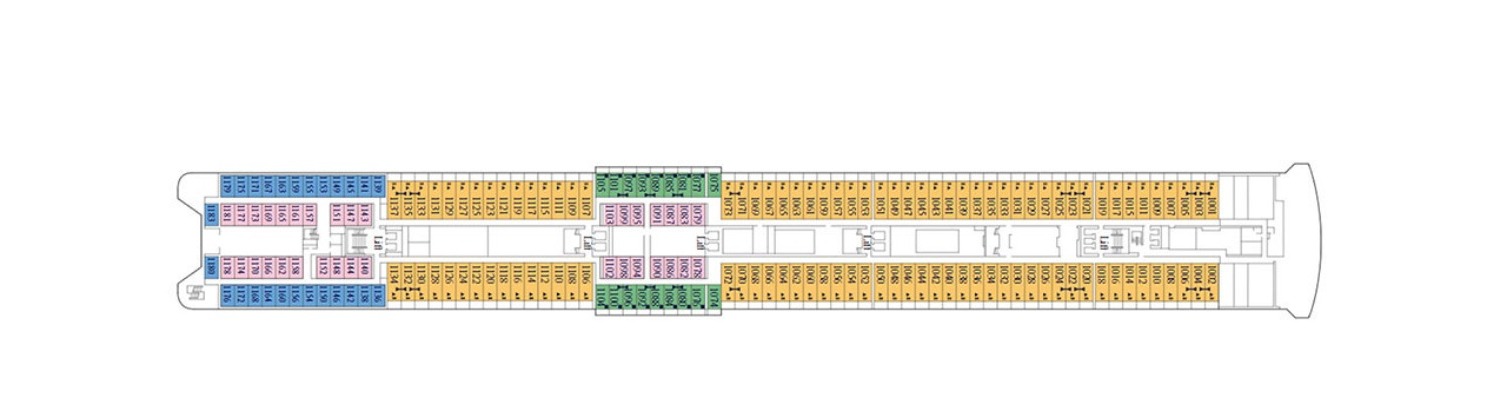
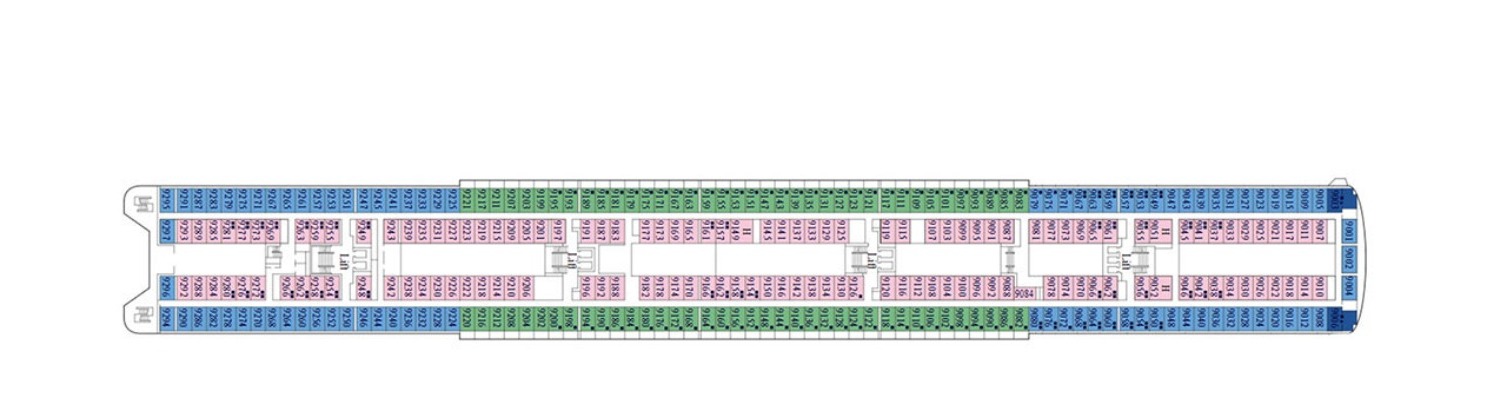
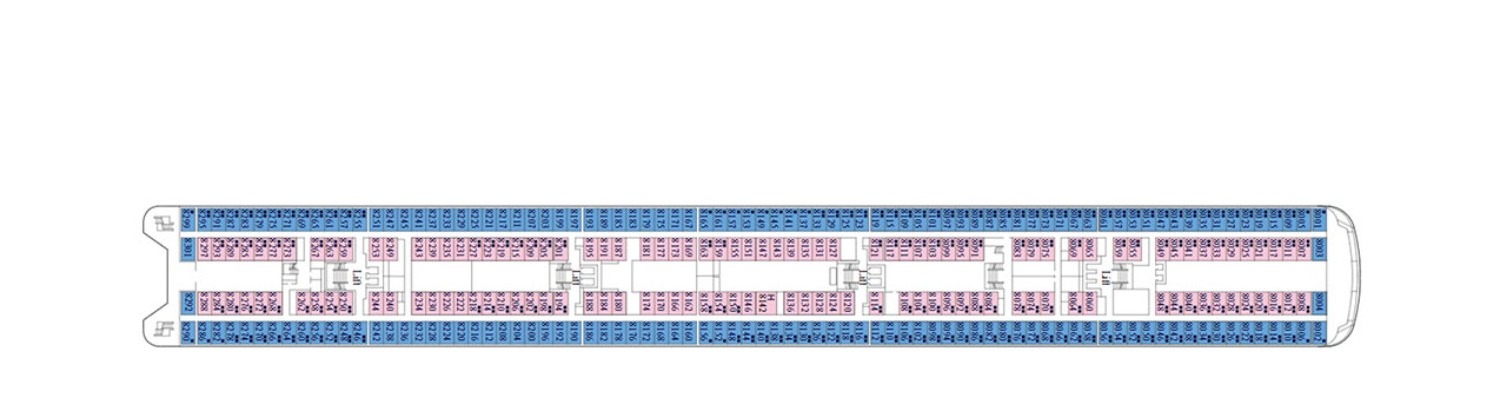
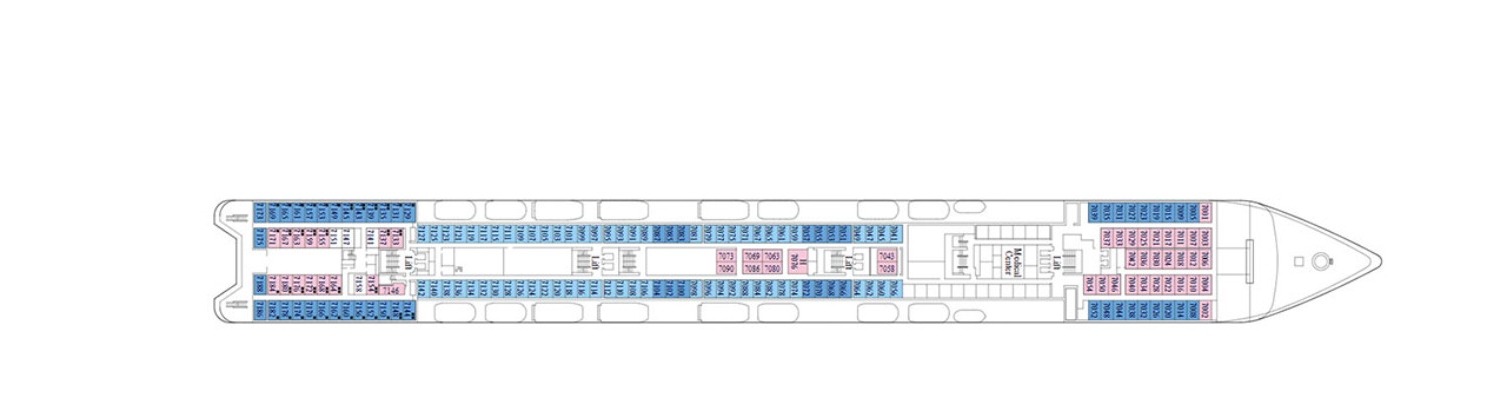
MSC Armonia is rated at 65,542 gross tons, on a hull of 274.9 by 28.8 metres, with 13 decks in total and 9 of them for guests. Her 976 cabins, 5 of them accessible, provide about 1,952 lower berths at double occupancy and up to 2,620 guests at full capacity, with 721 crew. Built in 2001 by Chantiers de l'Atlantique for Festival Cruises under the name European Vision, she came under the MSC flag in 2004. Her home port for summer and autumn 2026 is Venice-Marghera, with Split and Brindisi as alternates.
Born European Vision, first in the fleet to be stretched
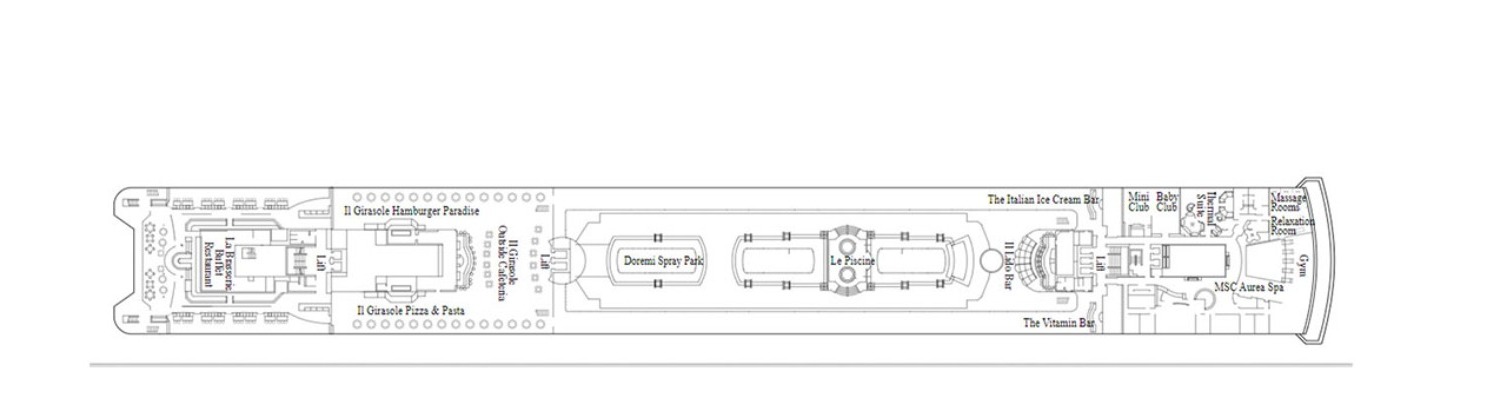
MSC Armonia is the oldest ship MSC still operates. Weeks after delivery she was a secured floating hotel for the July 2001 G8 summit in Genoa. That past with a line that no longer exists changes her story, not her quality: her hull came off the same Saint-Nazaire slipway as Lirica and Opera, which MSC ordered new. She also opened the Renaissance programme at Fincantieri in Palermo, entering in late August 2014 and leaving on 17 November, a full year ahead of her sisters. The new 24-metre section earned her 193 extra guest cabins, 59 more for crew, a spray park and a buffet open twenty hours a day. Worth knowing: the 32-metre beam MSC publishes on its own Armonia page is overall width including the bridge wings; all four hulls in the class measure 28.8 metres.
Where she sails, and what it costs in flying hours
Eight-day Adriatic loops out of Split, Brindisi and Venice-Marghera, a mainland terminal 30 to 45 minutes by road from the historic centre, through to the end of October 2026. On 1 November 2026 she casts off at Marghera for 26 nights by way of the Suez Canal: Greece, Jordan, Egypt, then the Seychelles, Madagascar, Mauritius, Réunion and Mozambique. MSC warns that this routing will be revised if the Red Sea stays risky. She then takes the place of MSC Opera at Durban from November 2026 to March 2027, on two- to five-night formats: Mozambique Island, Pomene Bay, Portuguese Island, with a Cape Town call in March. From Montreal the Adriatic season is reached through Venice; the Durban season needs at least two connections and a full day in transit.
The Yacht Club stops at the door of the Lirica class
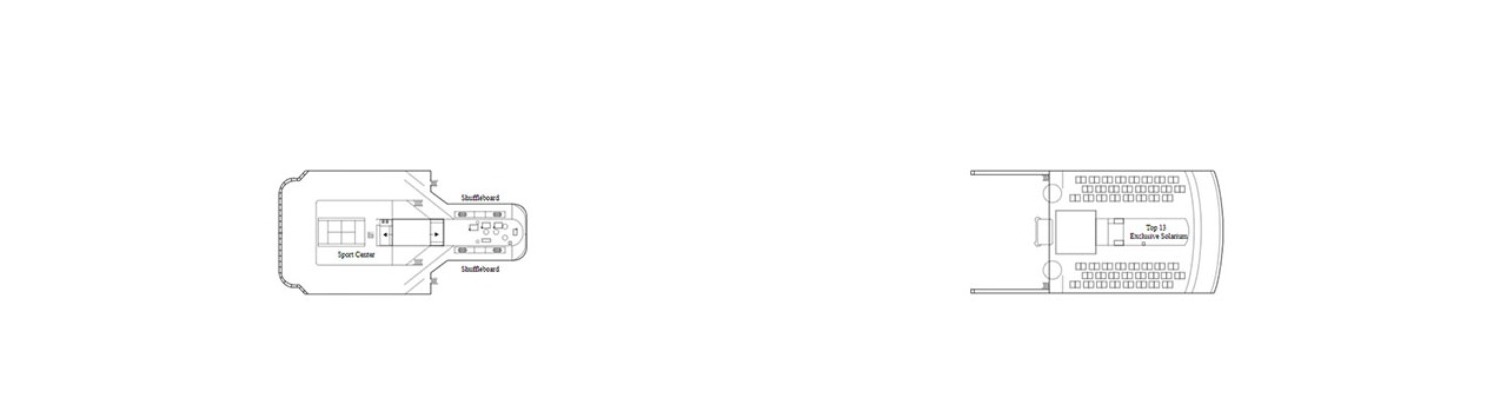
The reserved lift, the butler and the private dining room that MSC Cruises markets across almost its entire fleet never appear on the Lirica class. MSC Armonia and her three sisters are the only MSC quartet without a Yacht Club, and the following generation is pulling further away as it receives a 63-suite enclave ship by ship since late 2025. The upper category here is called Aurea: thermal spa, a separate solarium, flexible dining times. Useful, but a long way from a ship within a ship.
Her real condition, and how much French you will hear
Her last major yard period ran from 18 November to 8 December 2019 at Freeport in the Bahamas. Nothing substantial has been announced since, for 2026 or for 2027, so you will sail on seven-year-old interiors, which is the main satisfaction risk here. Three episodes belong on the record. On 10 April 2018 her hull touched a dock at Roatán, Honduras, with nobody hurt. On 15 December 2023 a man went overboard and the search came up empty. In April 2024 visa irregularities involving crew members pinned the ship in Barcelona. Service, meanwhile, runs in six languages including French: prominent in the Adriatic in summer, far quieter in winter in front of a largely South African crowd.
Two ships worth weighing against MSC Armonia
MSC Sinfonia is her near-exact twin, bought from Festival Cruises the same year, but she came out of dry dock in March 2024: five years of maintenance in her favour. MSC Poesia shows what the next generation does with its size; she took delivery of 63 Yacht Club suites in early 2026 and headed for Alaska in April, a region the Lirica class never visits.
Who MSC Armonia is wrong for
Anyone shopping for water slides, a surf simulator or a dozen paid tables: the hull dates from 2001 and the 2014 yard period did not change that. Food is her acknowledged weak point, with little variety, shaky consistency in the main dining room, service that drags at times and orders that arrive wrong. Staterooms measure less than on newer ships, noise travels out of the dining rooms, and the run of announcements wears on part of the ship by mid-week. Travellers who want closely spaced ports, a European atmosphere and service in their own language do well here.