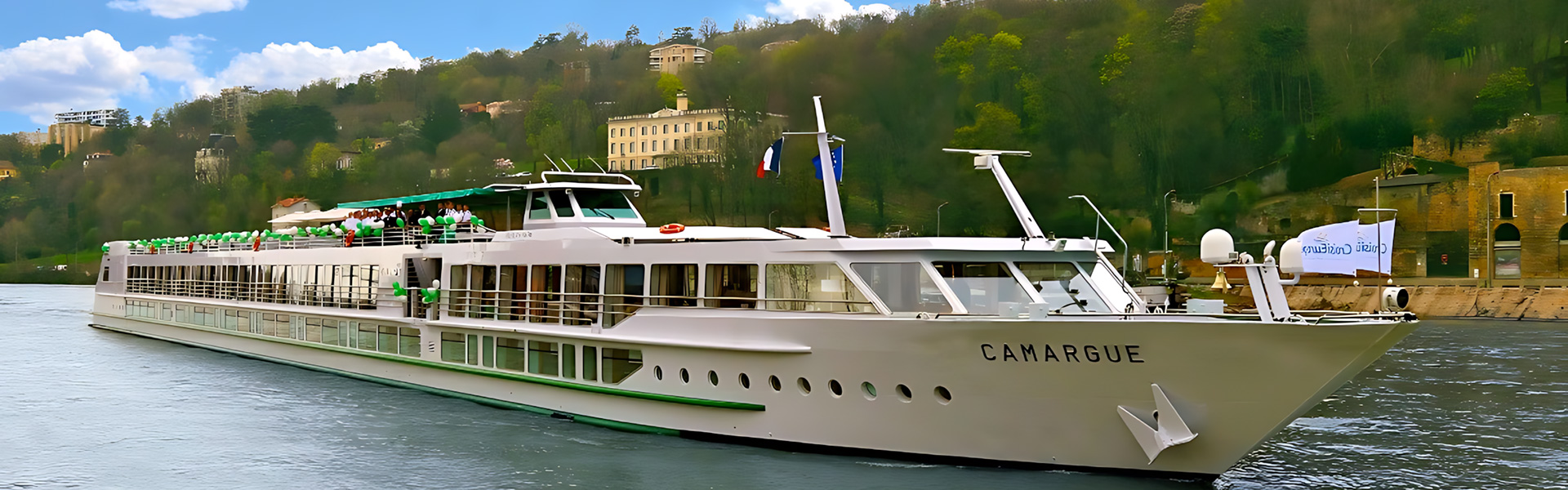
MS Camargue: the same hull as the MS La Bohème, with fifty fewer passengers on board
The MS Camargue is 110 m long by 10.10 m wide, has 2 decks and 54 cabins, and carries 104 passengers with 25 crew. Built in 1995, refurbished in 2015, rated 5 anchors, which is 31 years of hull and 11 years since the last published refit. She sails the Rhône and the Saône from Lyon, at 4.2 guests per crew member.
Three boats, one hull, three densities
CroisiEurope built 3 boats on the 110 m by 10.10 m template, instead of the 11.40 m Rhine standard. The MS La Bohème carries 154 in 77 cabins. The MS Douce France carries 107 in 55 cabins. The Camargue carries 104 in 54 cabins. 50 passengers of difference inside exactly the same volume of steel, which shows up as wider cabins, clearer corridors and a sun deck where you can still find a lounger in July. It is the most useful figure on this page, and no comparison site puts it in front of you.
The Rhône is not the Rhine
The Rhône runs fast and its locks are among the deepest in Europe. The Lyon to Arles passage happens largely in daylight, unlike the long night runs of the Rhine, and the landscape genuinely changes hour by hour: the vineyard slopes at Tain-l'Hermitage, then Provençal light from Viviers onward. A guest who has done the Rhine and found it repetitive will find the opposite here.
Where she sails, and how to get there
Four programmes in 2026. Colours of Provence in 6 days, Lyon to Martigues via Avignon, Arles and Port-Saint-Louis. Highlights of the Rhône in 7 days via Tain-l'Hermitage, Avignon, Arles and Viviers, including a version with a Paul Bocuse dinner. And Burgundy to the Camargue in 8 days, working up the Saône to Mâcon before turning south.
Lyon is served non-stop from Montreal-Trudeau on a seasonal route few travellers know about: most route through Paris and lose half a day to a connection or a TGV. You board in Lyon, you leave the boat in Lyon or Martigues depending on the programme, and the domestic transfer disappears.
Choosing a cabin
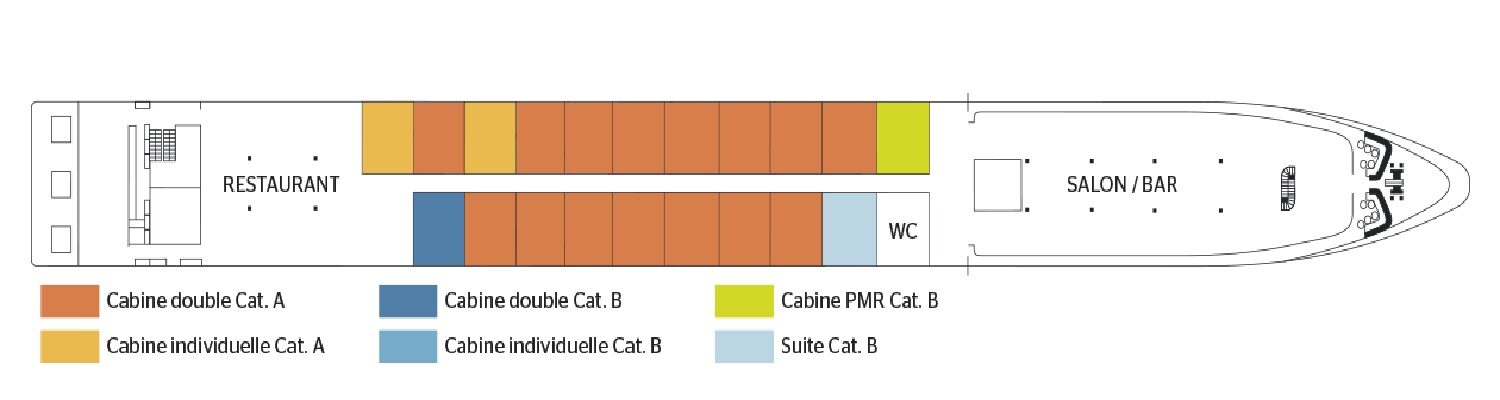
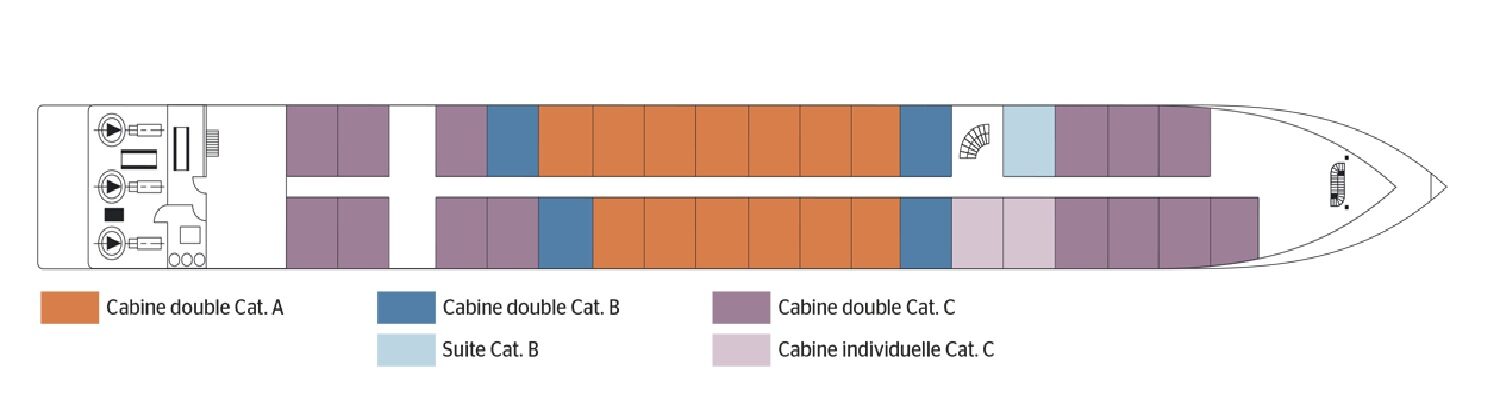
The 54 cabins sit on two decks. Upper deck cabins have a French balcony, in categories A and B; main deck cabins have large windows, in category C. Be precise about the word: a French balcony is a glazed opening onto a railing, not a space for two chairs. You breathe there, you do not have lunch there. That said, on the Rhône, where the cruising happens in daylight, a window that opens is worth more than it is elsewhere.
Two decks, so no lift
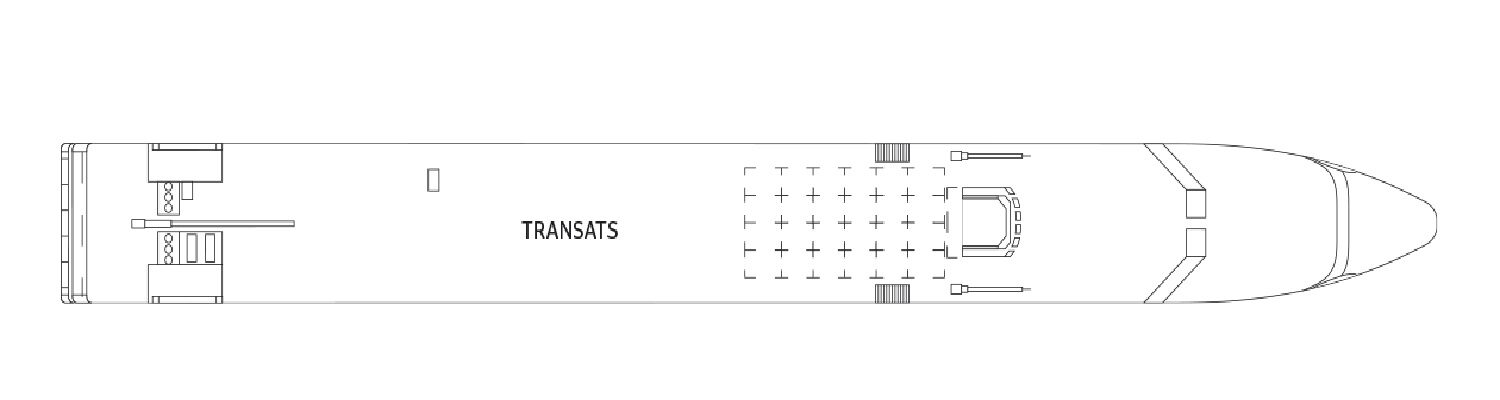
The boat has two passenger decks and an open sun deck. She has no lift, following the operator's rule of fitting them only to three-level boats. The lounge bar is forward on the upper deck and the restaurant aft on the same deck, so life on board is concentrated upstairs. A guest on the main deck will use the stairs several times a day.
What the fare includes and what it does not
Included: full board, drinks with meals and at the bar, Wi-Fi, port taxes and onboard entertainment. Not included: shore excursions, gratuities, the premium wine list and transfers. The Paul Bocuse dinner is part of the programme that carries it in its title: it is not an add-on, it defines that cruise.
Who this boat is not for
Anyone who cannot manage stairs. Anyone who thinks a category A cabin buys a real balcony. Anyone looking for a pool, a spa or a gym, none of which are on board. And anyone who hates wind: between Viviers and Arles the mistral blows and empties the sun deck several days a season. See also the MS Van Gogh and the MS Mistral, which share these waters, and our CroisiEurope page.