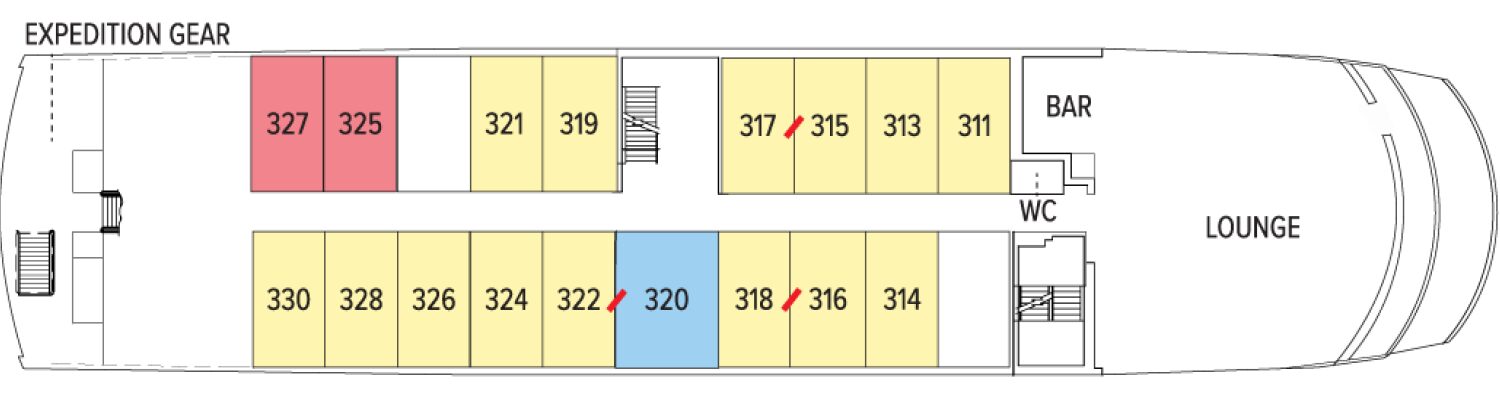
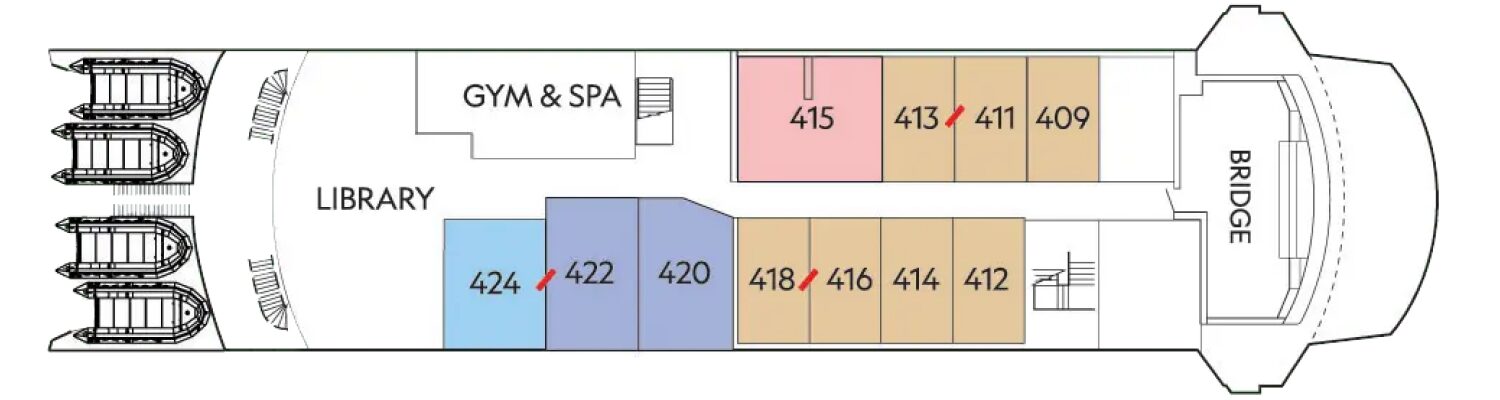
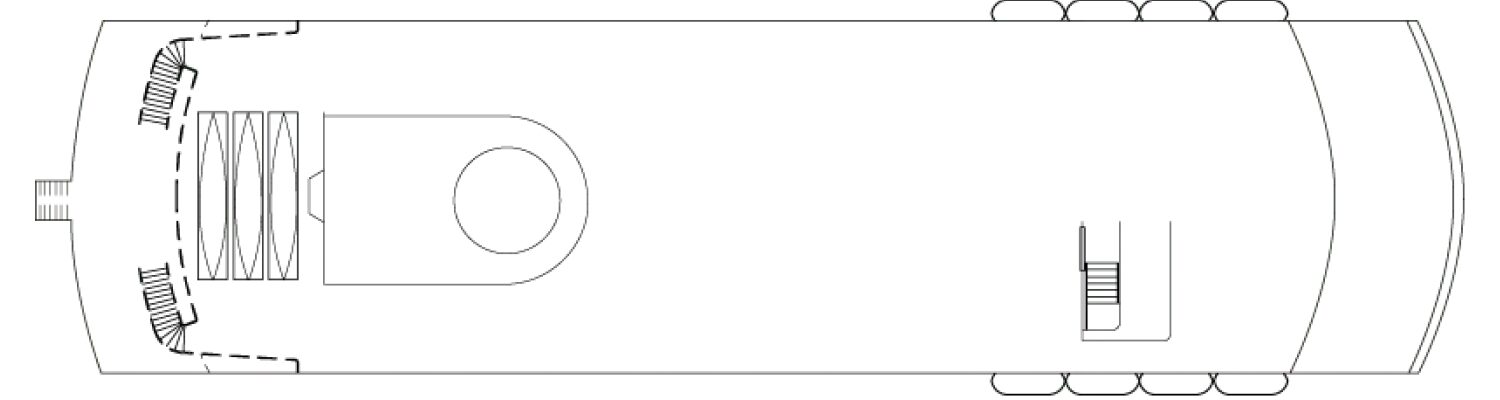
The largest of the four, and the group effect
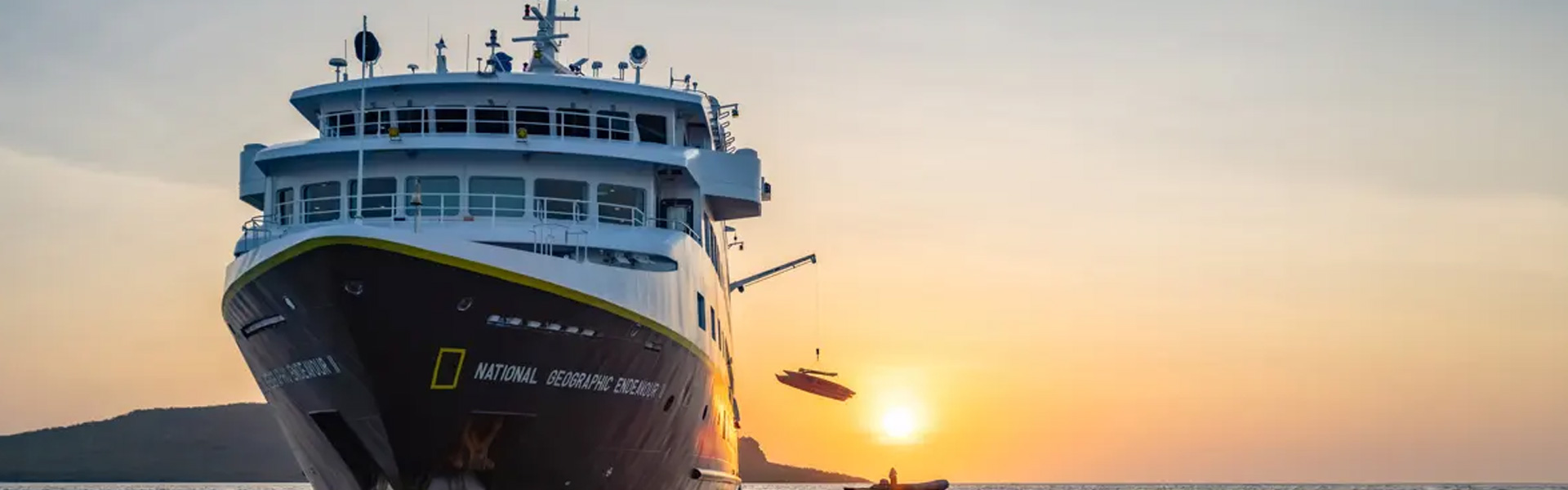
The National Geographic Endeavour II was built in Chile in 2005 and converted
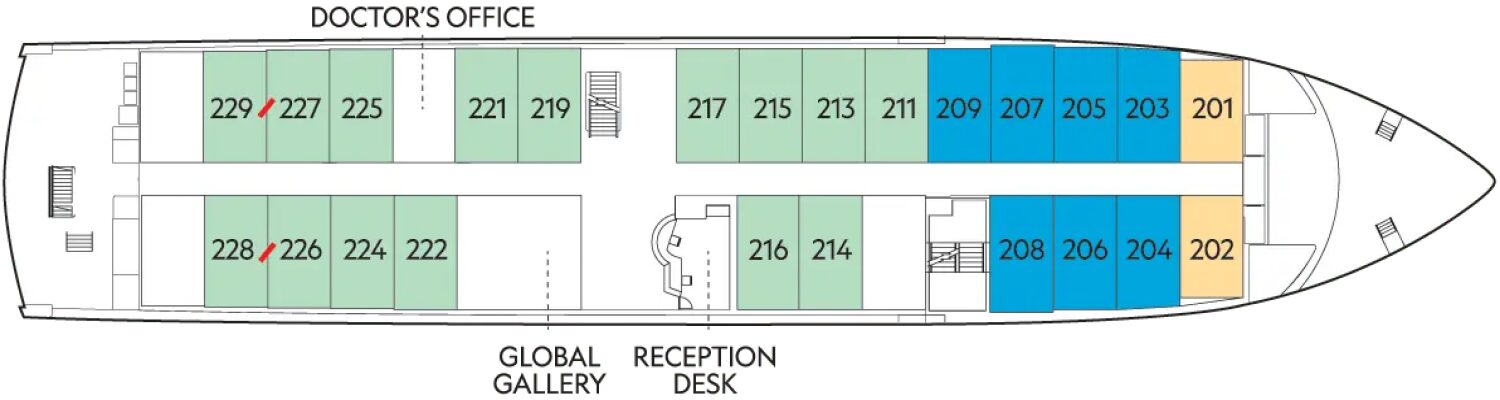
for the archipelago. Seventy-two metres, five decks, 52 cabins, 96 travellers.
She is the brand's largest ship in the Galapagos, and that is also what defines
her.
A traveller who sailed aboard sums it up plainly: with around ninety people
there are inevitable moments when you feel herded. That is not a crew failing;
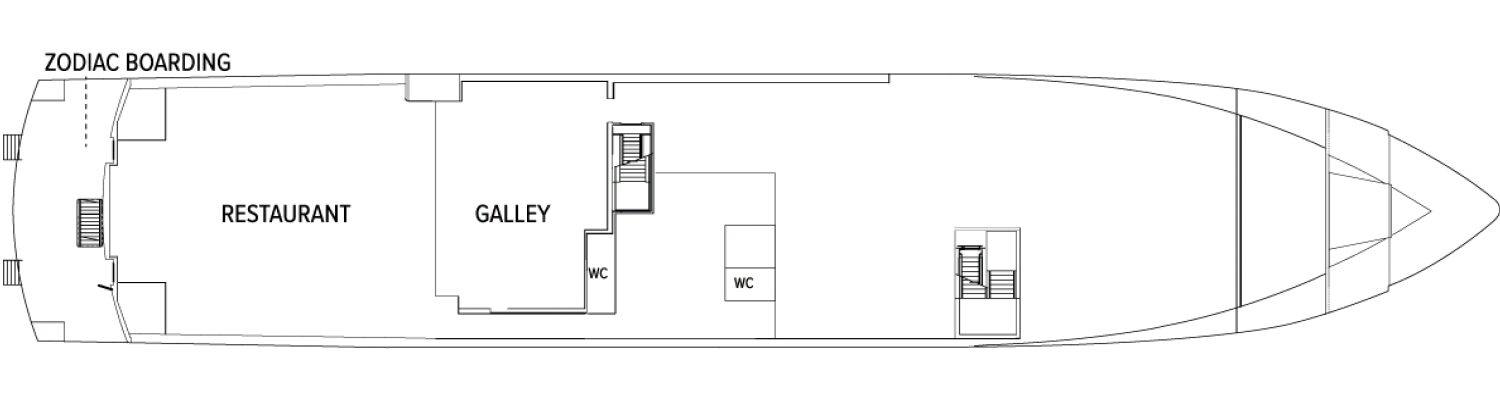
it is arithmetic. Ninety-six people to land by Zodiac means rotations, waiting
and larger groups ashore.
In exchange there is space: a forward lounge able to hold everyone at once,
large cabin windows and a double embarkation platform that speeds up
rotations.
What to know before booking
Crew gratuities are not included on this ship: the official page names her
explicitly among those where they are not. There is no National Geographic
photographer aboard either.
The ship is often sold as a family choice. A professional review nonetheless
flags the complete absence of children's facilities, leaving young ones at loose
ends aboard. The programme ashore is dense; the problem is the time between
outings, not the outings.
The presence of a lift is confirmed by no source, on a five-deck ship. For a
traveller with limited mobility, that should be checked in writing before
booking.
The other ships in the fleet
The National Geographic Gemini offers single cabins with a balcony. The National Geographic Islander II positions itself as a
private yacht. The National Geographic Delfina is the smallest in the archipelago. The National Geographic Venture holds Alaska and
Baja California.
What is included, and what is not
The fare covers life aboard and the expedition itself: meals, guided
outings, Zodiacs, kayaks, paddleboards, snorkelling gear, national park
entrance fees, access permits and port taxes. It also covers the services of a
medical professional "where applicable" — the phrase is the line's own, and it
means a doctor is not guaranteed on every ship.
Outside it: international flights, visas, insurance, treatments, premium
spirits and upgraded Wi-Fi packages. And crew gratuities on eight ships out of
twelve: they are included only on the Endurance, the Resolution, the Explorer
and the Orion.
The same rule governs the National Geographic photographer, aboard those
four ships alone. Elsewhere a certified photo instructor accompanies the group.
Always ask which of the two sails on the date you are considering.
Aboard
Public rooms are plain and functional: one dining room with a single seating,
an observation lounge, a library, and a mudroom for wet gear on the ships that
have one. Evenings are talks rather than shows. That is not a shortfall; it is
the format.
Expedition equipment is included and never charged: Zodiacs, kayaks,
paddleboards, snorkelling gear. No ship in this fleet carries a submersible,
unlike some expedition competitors: the confusion is easy and worth clearing
up.
On accessibility, plainly: no wheelchair-accessible cabin is documented on any
ship in the fleet, and the line publishes no policy on the matter. Access to
sites is by Zodiac, often as a wet landing. A lift aboard changes nothing about
that step.
What this trip asks of you from Montreal
An international flight not included in the fare, and often an internal flight
on top. Total travel time surprises many people: these regions are not reached
in a day.
Arrive the day before at the very least. It is the only margin that absorbs a
delay, a lost bag or a sleepless flight. Many of our clients take two nights on
site before embarking and have never regretted the expense.
Our advisors bring flight, expedition, hotels, transfers and insurance into a
single file protected by Quebec's compensation fund for travel agency customers.
We verify the real dates before anything is booked.